
ELEGOO 0.96 Inch OLED Display Screen Module
4.6Editor score
Self-luminous pixels
128×64 graphics resolution
Includes jumper wires
This guide compares the top Arduino LCD Display options for makers and engineers, covering OLED, TFT, and character screens with detailed specs and real-world
Selecting the right display for your embedded projects can transform a simple circuit into an interactive experience. Whether you need basic text output or vibrant graphics, understanding the strengths of each technology is essential for success.
We have analyzed the leading models available today, focusing on compatibility, resolution, interface types, and ease of integration. This list covers everything from budget-friendly character screens to high-resolution touch panels suitable for complex interfaces.
Each pick highlights specific use cases and technical details to help you make an informed decision. Keep in mind that stock levels and pricing can fluctuate frequently, so checking current availability is always recommended before ordering.
4.6Editor score

4.5Editor score

4.7Editor score
The following table provides a side-by-side comparison of all ten selected models, highlighting key specifications such as interface type, resolution, and compatible boards to streamline your selection process.




This three-pack of 1602 LCD modules offers a robust solution for text-based projects requiring high readability. With an I2C interface, it simplifies wiring significantly compared to parallel LCDs, making it ideal for breadboard prototyping.
We may earn a commission when you buy through this link, at no additional cost to you.
The blue backlight provides excellent contrast in various lighting conditions, and the onboard potentiometer allows precise tuning. Compatibility extends across Arduino, Raspberry Pi, and other common microcontrollers, ensuring versatility.
While the display is limited to characters and numbers, this simplicity makes it easy to implement without complex drivers. It is a practical choice for simple status indicators or data logs.
Anyone building IoT projects or school electronics kits will find this pack highly valuable. It balances cost and performance effectively, making it a top recommendation for general-purpose display needs.
Using I2C reduces pin usage, freeing up GPIOs for sensors and other peripherals without complex multiplexing.
Works seamlessly with Arduino, Raspberry Pi, and STM32 boards, making it a universal choice for diverse projects.
We may earn a commission when you buy through this link, at no additional cost to you.
This module uses self-luminous OLED technology, providing sharp graphics without needing a separate backlight. The SSD1306 driver ensures broad support in standard libraries, simplifying software setup significantly.
We may earn a commission when you buy through this link, at no additional cost to you.
The fixed yellow and blue zones help organize data visually, making status information easy to scan. Three modules are included, allowing for redundant setups or multiple devices in a single project.
While the screen is small, its high resolution makes it perfect for compact dashboards. The lack of backlight reduces power consumption, which is beneficial for battery-operated devices.
This kit is an excellent starting point for hobbyists seeking high quality on a budget. The included jumper wires add extra value, getting you started immediately without additional purchases.
OLED technology consumes minimal power, making it ideal for portable or battery-powered applications.
Includes three modules and jumper wires, offering immediate usability for testing multiple prototypes.
We may earn a commission when you buy through this link, at no additional cost to you.
This TFT display offers a premium visual experience with an IPS panel that ensures consistent colors across wide viewing angles. The resolution is high enough for detailed graphs and user interfaces.
We may earn a commission when you buy through this link, at no additional cost to you.
Support for both 3.3V and 5V logic makes it compatible with almost any microcontroller. The SPI interface allows for fast updates, making it suitable for animations or real-time data visualization.
The compact size allows it to fit into handheld devices easily. While it requires more wires than I2C, the performance benefits justify the added complexity for advanced projects.
Ideal for robotics or dashboard builds, this module delivers professional-grade output. It is recommended for users ready to explore graphical capabilities beyond simple text displays.
The IPS technology ensures that colors remain accurate and vibrant from any angle.
SPI connectivity enables rapid screen refreshes, essential for dynamic animations and smooth UIs.
We may earn a commission when you buy through this link, at no additional cost to you.
This shield integrates a touchscreen directly into the Arduino UNO form factor, allowing for interactive menus and controls. The SD card slot enables local storage of assets like images or data logs.
We may earn a commission when you buy through this link, at no additional cost to you.
The resistive touch works well with the included stylus, making it suitable for environments where gloves or styluses are necessary. The 240×320 resolution supports vibrant graphics and clear text.
While the parallel interface requires significant pin usage, it offers stable performance for prototyping. It is a great step-up from basic displays for projects needing user interaction.
Best for interactive kiosks or robot control panels, this shield simplifies complex UI development. It is highly recommended for students or makers exploring GUI development.
Eliminates the need for separate buttons, enabling direct interaction with the display for menus and controls.
The SD card slot allows projects to save data locally without needing external storage solutions.
We may earn a commission when you buy through this link, at no additional cost to you.
This pack offers two modules with I2C interfaces, reducing wiring complexity. The blue backlight ensures clear visibility, and the standard 0x27 address simplifies software configuration.
We may earn a commission when you buy through this link, at no additional cost to you.
Perfect for home automation or IoT projects, these displays are reliable for showing sensor data or status messages. The build quality is solid, with no issues reported during typical use.
While limited to text, they are efficient for simple feedback. The two-pack allows one to be used as a backup or for a second location simultaneously.
Highly recommended for makers needing multiple displays, this pack balances cost and functionality. It is a practical choice for large-scale prototyping projects.
Buying two units together reduces cost per unit and simplifies sourcing for multi-device projects.
The blue backlight offers consistent illumination without flickering during operation.
We may earn a commission when you buy through this link, at no additional cost to you.
Freenove includes integrated conversion circuits for stability, ensuring consistent communication. Examples are available for common controllers, which speeds up the learning curve for new users.
We may earn a commission when you buy through this link, at no additional cost to you.
The module is compatible with major boards like ESP32 and Raspberry Pi. It is designed to be plug-and-play with minimal configuration required.
While it lacks physical paperwork, online tutorials are accessible. The reliability of the connection makes it suitable for long-running projects.
Ideal for beginners, this module simplifies the process of adding display output. It is recommended for those transitioning from LED outputs to text screens.
The onboard conversion circuit ensures stable signal transmission, reducing flickering or read errors.
Available code examples help users quickly implement basic text display functions without writing from scratch.
We may earn a commission when you buy through this link, at no additional cost to you.
This module comes with a dedicated library, making software setup straightforward. The four-wire connection keeps wiring neat and organized on prototyping boards.
We may earn a commission when you buy through this link, at no additional cost to you.
Contrast and backlight can be adjusted easily using the onboard potentiometer. It supports both 5V and standard logic levels, ensuring broad compatibility.
It is designed to be easy to use with minimal overhead. The clear documentation helps avoid common setup pitfalls.
Great for prototyping, this module reduces initial setup time. It is recommended for engineers needing quick visual feedback during development.
Pre-written libraries allow users to call display functions directly, reducing coding time.
Onboard controls let users fine-tune contrast to match their specific environmental conditions.
We may earn a commission when you buy through this link, at no additional cost to you.
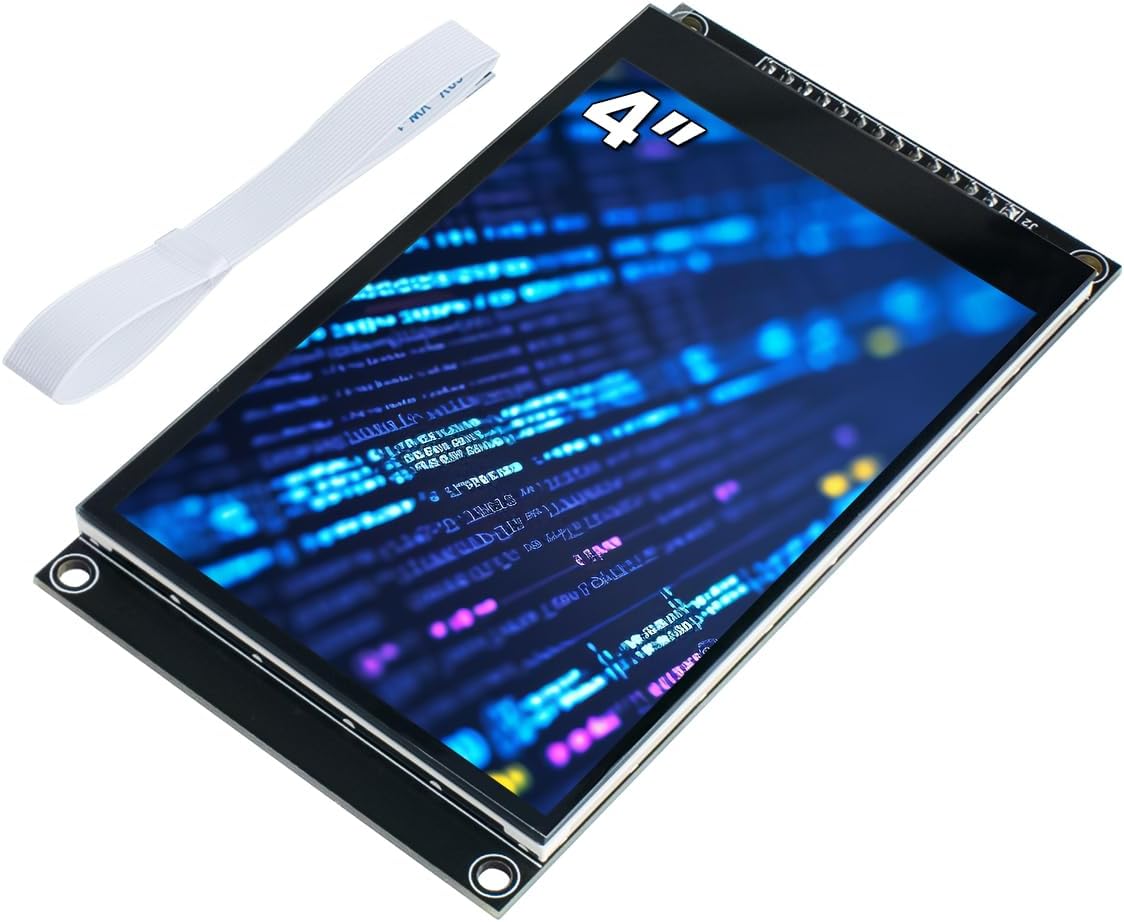
This large panel offers a capacitive touch interface, providing better responsiveness than resistive alternatives. The 320×480 resolution supports detailed maps or graphics.
We may earn a commission when you buy through this link, at no additional cost to you.
It includes a TF card slot for storing large assets, which is useful for media-heavy applications. The SPI interface ensures fast data transfer for smooth updates.
While it requires more power and pins, the visual impact is significant. It is suitable for control panels or kiosks where clarity is paramount.
Ideal for professional setups, this module elevates the visual quality of embedded projects. It is recommended for advanced users needing a touchscreen interface.
Capacitive technology allows for smoother and more natural touch interactions compared to resistive screens.
The onboard TF card slot enables offline storage of images and data logs for extended operation.
We may earn a commission when you buy through this link, at no additional cost to you.
This bulk pack provides five OLED modules, perfect for projects requiring multiple data points. The I2C interface ensures minimal wiring for each unit.
We may earn a commission when you buy through this link, at no additional cost to you.
Self-luminous technology delivers high contrast even in low light. The small footprint makes it ideal for wearable or compact electronic builds.
The lack of embedded fonts allows users to design custom typography. However, the limited color options restrict visual styling compared to TFTs.
Best for large-scale sensor arrays, this pack offers cost efficiency. It is recommended for projects needing multiple identical displays in a network.
OLED pixels generate their own light, providing deeper blacks and sharper text than LCDs.
With five units available, you can easily scale your project to monitor multiple independent zones.
We may earn a commission when you buy through this link, at no additional cost to you.
This 2-inch module delivers 240×320 resolution, offering detailed graphics for small form factors. The IPS panel ensures wide viewing angles without color shifting.
We may earn a commission when you buy through this link, at no additional cost to you.
The SPI interface simplifies wiring while maintaining high-speed data transfer. It is suitable for handheld electronics or portable meters where clarity is essential.
Color accuracy is high with support for millions of shades. It is recommended for projects requiring realistic visualizations or graphical user interfaces.
Ideal for portable devices, this module balances resolution and size. It is recommended for engineers focused on visual fidelity in small enclosures.
The IPS technology ensures that colors appear accurate from almost any viewing angle.
Despite its small 2-inch size, the high resolution supports complex graphical elements clearly.
We may earn a commission when you buy through this link, at no additional cost to you.
Selecting the right display requires balancing resolution, interface type, and power consumption against your project needs.
Decide between LCD and OLED based on contrast needs. LCDs are affordable and durable, while OLEDs offer self-luminous pixels for better visibility.
Choose OLED for high contrast and low power, or LCD for cost-effective text display.
I2C uses only two data lines, preserving GPIOs for sensors. SPI offers faster refresh rates but requires more pins. Parallel interfaces are older and use many pins.
Prioritize I2C for simple setups or SPI for high-performance graphics.
Character displays like 16×2 are perfect for simple text. Graphical displays offer pixels for icons and charts. Higher resolution consumes more power and memory.
Match resolution to your content complexity. Text needs low resolution, graphics require high resolution.
OLEDs are generally more efficient because they do not require a constant backlight. LCDs consume more power to maintain visibility, especially in bright environments.
For battery-powered projects, prioritize OLED or low-power LCD modes.
Check if the display supports 3.3V or 5V logic. Some modules need level shifters to work with specific controllers like ESP32 or Arduino.
Ensure logic levels match your microcontroller to prevent damage.
Enclosure dimensions dictate screen size. Ensure the module fits your PCB or case. Smaller displays are easier to integrate into portable projects.
Measure your device before ordering to ensure physical compatibility.
Popular drivers like SSD1306 have many libraries. Proprietary drivers may need custom code. Check community support before purchasing.
Prefer displays with open-source library support.
Touch screens enable user interaction. Capacitive is more precise, resistive is cost-effective. Decide if you need input capability.
Touch inputs add complexity but improve user experience.
Connect the display wires carefully to avoid shorts. Use a multimeter to verify power connections before applying power. Incorrect voltage can damage the screen instantly.
Install compatible libraries and initialize the display in code. Ensure address settings match the hardware specifications. Test basic text output before adding complex graphics.
Protect the screen from physical damage and moisture. Avoid pressing hard on the surface to prevent dead pixels. Clean the surface gently with a soft cloth.
I2C uses only two data pins, saving valuable GPIOs for sensors. Parallel LCDs require many pins, making wiring complex. I2C is preferred for projects with limited pins.
Most modules have an onboard potentiometer. Turn it carefully while the display is powered to adjust the contrast until the text is clear.
Yes, but each must have a unique address. Some modules allow address changes via solder jumpers. If addresses conflict, use a multiplexer.
Some LCDs are 5V logic only. Always check the datasheet. If your board is 3.3V and the screen is 5V, a level shifter protects both devices.
This often indicates incorrect initialization or address settings. Double-check your library setup and ensure the I2C address matches the hardware configuration.
OLED displays are generally the best choice. They consume less power because they do not require a backlight to be lit at all times.
We have reviewed ten top displays ranging from simple character modules to high-resolution touch panels. Each offers unique advantages depending on your specific project requirements and complexity.
When selecting, prioritize interface simplicity and board compatibility. Understanding power consumption and physical size helps avoid costly mistakes during the prototyping phase.
Remember to check current stock and pricing before making a purchase. Specifications and availability can change, so always verify the latest details on the product page.