Beurer Cardio Companion
4.2Editor score
3-lead portable ECG
Real-time results in 30s
Rechargeable battery included
Discover the top heart rate monitor for arrhythmia options that track EKG and heart rhythm for health management without needing a doctor's prescription.
Finding a reliable heart rate monitor for arrhythmia is crucial for individuals managing irregular heartbeats. These devices offer peace of mind by providing real-time data that helps users stay informed about their cardiac health daily.
We compared ten leading models based on accuracy, ease of use, and additional health features. Our selection includes portable EKG devices, chest straps, and continuous monitors designed for various user needs and lifestyles.
Each pick highlights key strengths and potential limitations to help you choose wisely. Prices and availability may change frequently, so check current listings before making a final purchase decision for your specific health requirements.
4.2Editor score

4.4Editor score

3.6Editor score
This side-by-side comparison highlights the core specifications of each device to help you identify the best fit for your monitoring needs.



The KardiaMobile 6L EKG stands out as a top-tier device for monitoring heart rhythm irregularities. With a strong rating of 4.4, it offers medical-grade six-lead EKGs that deliver FDA-cleared determinations in just 30 seconds. This capability provides users with reliable data to share with healthcare providers.
We may earn a commission when you buy through this link, at no additional cost to you.
Its six-lead technology offers six times the data of standard single-lead devices, allowing detection of AFib, Bradycardia, and Tachycardia. Trusted by professionals, it is the world's first FDA-cleared six-lead personal EKG. The device works with most smartphones and tablets via the Kardia app.
While the device is highly accurate, it is not tested for use with pacemakers or ICDs. Additionally, users must download the app to function, which might be a minor hurdle for some. However, these limitations are acceptable given the precision and clinical validation offered.
This device is ideal for individuals seeking professional-grade insights without ongoing subscription costs. If you need detailed heart data to manage arrhythmia effectively, the KardiaMobile 6L EKG is a highly recommended choice for long-term health monitoring.
The six-lead capability allows for a more comprehensive view of heart rhythm compared to standard devices.
Recommended by doctors worldwide, this device has recorded over 350 million EKGs, ensuring reliability.
We may earn a commission when you buy through this link, at no additional cost to you.
This model offers a straightforward approach to heart rhythm monitoring without unnecessary complexity. With a rating of 4.4, users appreciate its simplicity and the ability to get results in 30 seconds without needing a subscription. It is designed for ease of use.
We may earn a commission when you buy through this link, at no additional cost to you.
To use it, you simply place your fingers on the silver sensors near your smartphone. No Bluetooth, Wi-Fi, or cords are required, making it accessible for anyone. The device determines if your heart rhythm is normal quickly, offering peace of mind.
The lack of advanced connectivity might be a downside for those wanting data syncing or detailed app features. However, for basic checks, this simplicity is a significant advantage. It avoids the need for accounts or payment details entirely.
Ideal for users who want a no-fuss tool for occasional heart checks, this device delivers value through simplicity. If your priority is quick, reliable rhythm verification without extra steps, this is a practical choice for daily health awareness.
You can start monitoring immediately without pairing devices or setting up Wi-Fi networks.
There are no recurring fees, making it an affordable entry point for heart health tracking.
We may earn a commission when you buy through this link, at no additional cost to you.
The KardiaMobile 6L Max combines a six-lead EKG with a one-year membership for enhanced health management. Rated 3.9, it focuses on providing detailed insights and direct communication with cardiologists. This model is tailored for those seeking clinical oversight.
We may earn a commission when you buy through this link, at no additional cost to you.
The membership includes four free EKG reviews per year by board-certified cardiologists. Results are delivered within 24 hours, allowing you to detect over 20 arrhythmias with precision. You can tag recordings and set up automatic emails to share data with your doctor.
While the membership adds value, it also adds complexity and cost compared to the standard version. Users need to enter payment details upfront, though the first year is free. This might deter those who prefer entirely self-managed solutions.
Choose this device if you want expert feedback on your heart health alongside your recordings. The ability to schedule telehealth appointments and track trends makes it a powerful tool for proactive heart care and clinical communication.
Get professional opinions on your EKGs directly, helping you understand complex rhythm patterns.
Personalized insights help you identify trends like dizziness or exercise effects on your heart.
We may earn a commission when you buy through this link, at no additional cost to you.
With a strong rating of 4.6, the EMAY 6L Portable ECG Monitor offers reliable six-channel recording without subscription fees. It allows for data storage and display of heart rate for home health care use. Users can connect via USB to PC or Bluetooth to phone.
We may earn a commission when you buy through this link, at no additional cost to you.
The software supports sample mode, case review, and measurement functions. It is powered by a large capability rechargeable lithium battery, ensuring you can use it without constantly searching for a power source. This flexibility supports regular monitoring habits.
It is intended for over-the-counter use and should not replace hospital diagnostic ECG devices. Users with implanted pacemakers should consult a doctor before use. While powerful, it maintains clear boundaries regarding medical limitations.
This device is suitable for individuals who want comprehensive data without recurring costs. Its ability to interface with both PC and mobile devices makes it versatile for home users who need detailed records for their healthcare providers.
Connect via USB for PC analysis or Bluetooth for quick mobile checks on the go.
Avoid monthly fees by using the device with its included software for all your recording needs.
We may earn a commission when you buy through this link, at no additional cost to you.
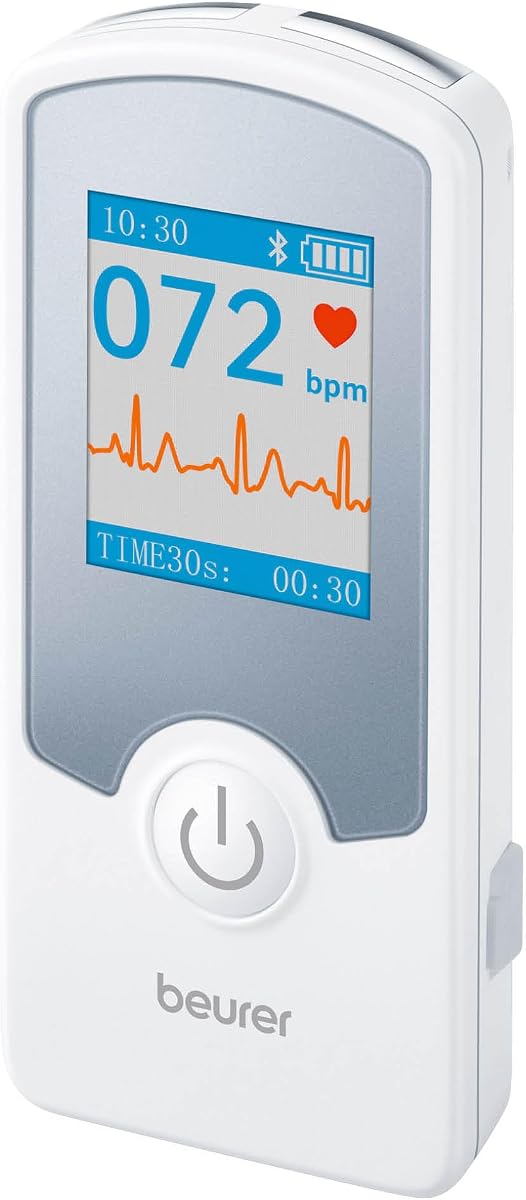
The Beurer Cardio Companion is an excellent choice for those seeking an affordable yet precise EKG monitor. Rated 4.2, it is German-engineered for accuracy and FDA-cleared. It delivers real-time results in under 30 seconds with a bright color display.
We may earn a commission when you buy through this link, at no additional cost to you.
You can measure in multiple ways: hand-to-hand, hand-to-wrist, leg, or chest. The device stores up to 100 readings locally, and the optional app allows unlimited storage via Bluetooth. The rechargeable battery ensures convenience during travel.
It is not suitable for those with pacemakers or metal implants, which is a critical safety note. However, for general heart rhythm checks, the trade-off is acceptable. The device prioritizes privacy and ease of use in a small package.
For budget-conscious buyers needing reliable heart rhythm analysis, this device is a top contender. Its combination of affordability, medical-grade precision, and portable design makes it accessible for daily home health management.
Choose between hand-to-hand or other modes to find the most comfortable position for your needs.
Keep up to 100 readings locally or use the app for unlimited tracking without extra costs.
We may earn a commission when you buy through this link, at no additional cost to you.
Bioheart offers a unique approach by providing uninterrupted, medical-grade insights for 24/7 heart monitoring. With a rating of 3.6, it focuses on capturing every heartbeat anytime and anywhere. The chest strap is made of breathable fabric for daily wear comfort.
We may earn a commission when you buy through this link, at no additional cost to you.
It is clinically accurate and trusted by over 2500 cardiologists. The device syncs via Bluetooth to an app that provides real-time data and summaries. You can share comprehensive PDF reports with physicians to inform care discussions effectively.
A one-month subscription is included, but continued access depends on the service model. While the price is higher than spot-check devices, the continuous data it provides justifies the cost for serious health management. It avoids messy gels or wires.
If you require continuous data to detect intermittent arrhythmias, this wearable is ideal. The AI-driven insights and long battery life ensure you never miss a beat, making it a robust solution for proactive health monitoring.
Designed to meet professional standards, this device offers reliable data for physician review.
Effortlessly share detailed PDF reports with your healthcare provider for informed care.
We may earn a commission when you buy through this link, at no additional cost to you.
The EKG Monitor Device from HaSoCare records professional ECG data to help monitor heart health in real time. Rated 4.0, it features an LCD screen and storage for your readings. You can get medical-grade data in 30 seconds with simple hand placement.
We may earn a commission when you buy through this link, at no additional cost to you.
It supports multiple modes like hand-to-hand, hand-to-chest, and hand-to-leg for higher accuracy. Data can be transferred via Bluetooth to phones or cable to computers. This flexibility helps you share results with family or doctors easily.
While it is lightweight and portable, some users might prefer more manual control over settings. However, the instant results and storage capabilities offer convenience. It is designed for those who need quick checks without complex setups.
This device is a solid choice for users wanting immediate visual feedback. Its balance of portability and functionality makes it useful for on-the-go heart health checks and basic rhythm monitoring needs.
See your results immediately on the LCD screen without needing to check a separate device.
Use Bluetooth or cable to send data to your preferred platform for record-keeping.
We may earn a commission when you buy through this link, at no additional cost to you.
The Garmin HRM 200 transmits accurate real-time heart rate and HRV data to compatible watches. With a rating of 4.3, it is designed for fitness tracking and performance monitoring. The strap is comfortable and machine washable for easy cleaning.
We may earn a commission when you buy through this link, at no additional cost to you.
It offers up to one year of battery life with a user-replaceable battery, reducing maintenance hassle. Built with a 3 ATM water rating, it is durable for various conditions. It connects to cycling computers and fitness apps seamlessly.
It is best for users already within the Garmin ecosystem. If you do not have a compatible watch, the utility might be limited. However, for active individuals, it provides reliable metrics for training zones and recovery insights.
Ideal for athletes tracking heart health during workouts, this monitor balances durability and precision. If you need consistent data for your training regimen, the HRM 200 is a dependable accessory to elevate your performance tracking.
Track your heart rate variability to understand your recovery and training intensity levels.
The washable and water-resistant design ensures it lasts through intense and sweaty activities.
We may earn a commission when you buy through this link, at no additional cost to you.
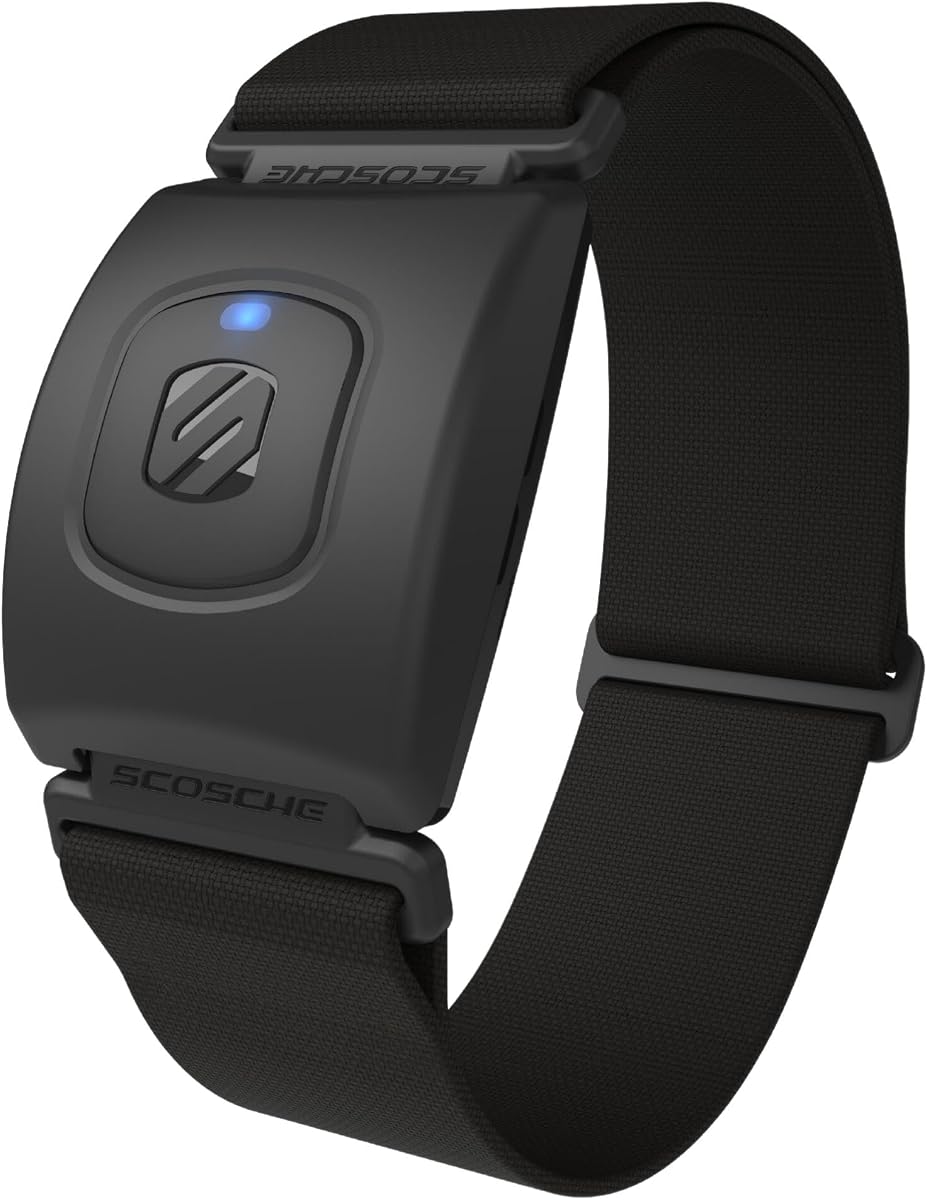
The Scosche Rhythm Armband delivers accurate real-time tracking for running and workouts. Rated 4.1, it uses optical heart rate monitoring with dual band radio ANT+ and Bluetooth Smart. It pairs easily with sports watches and fitness apps.
We may earn a commission when you buy through this link, at no additional cost to you.
It captures precise RR interval data for recovery insights into training and stress. The strap adjusts securely to your forearm and stays put during intense sessions. It has up to 24 hours of battery life and is IP68 waterproof.
While optical monitors can sometimes vary from chest straps, this model is dependable for most users. It serves as a comfortable alternative to restrictive straps. The waterproof build ensures it can handle sweat and rain conditions well.
For fitness enthusiasts who value comfort and data syncing, this armband is a great choice. It supports popular platforms like STRAVA and Peloton, making it easy to integrate your heart rate data into your existing training routines.
Use HRV mode to capture subtle heartbeat variations and understand your recovery needs.
The breathable strap stays in place without chafing during long or intense exercise sessions.
We may earn a commission when you buy through this link, at no additional cost to you.
The Polar Ft1 Heart Rate Monitor offers a straightforward way to track your fitness levels. With a rating of 4.0, it features a large easy-to-read display and coded transmission to avoid cross-talk. It includes a watch and chest strap for immediate use.
We may earn a commission when you buy through this link, at no additional cost to you.
You can manually set target zones to stay safe during exercise. It also displays summaries of your latest workouts. The one-button start makes it easy to use without navigating complex menus. This simplicity is its core strength.
While it lacks smart features found in modern devices, it reliably tracks heart rate for target zone training. If you prefer a classic device focused solely on heart rate accuracy, this is a practical option for fitness management.
This model is ideal for users who want basic and effective heart rate monitoring. The inclusion of a watch and the focus on safety within target zones make it a solid choice for general fitness tracking needs.
Stay within your manual heart rate target zone to avoid overtraining and ensure safe exercise.
Navigate with a single button for quick starts and clear workout summaries.
We may earn a commission when you buy through this link, at no additional cost to you.
Selecting the right heart rate monitor for arrhythmia involves evaluating several key factors that affect accuracy and usability.
Most devices use single-lead or multi-lead EKG technology. Multi-lead devices like the KardiaMobile 6L offer more detailed data. Optical sensors like those in Scosche are great for fitness but may vary in medical accuracy.
Choose a technology that aligns with your need for clinical data versus fitness tracking.
Some devices rely on Bluetooth or USB for data transfer. Others like the KARDIAMOBILE work without connectivity. Ensure the connectivity method matches your smartphone compatibility and data storage preferences.
Verify that the device supports your phone's OS and any apps you plan to use.
Many advanced models require a subscription for full features. The KardiaMobile 6L does not need one, while others like Bioheart include a trial. Consider long-term costs before purchasing.
Look for subscription-free models if you want to avoid recurring fees.
Portable monitors allow you to check your heart rhythm anywhere. Devices like the EMAY 6L are compact enough for travel. Larger chest straps might be less portable but offer continuous data.
Select a size that fits comfortably into your daily routine.
Rechargeable batteries are convenient for frequent use. The Bioheart offers 48 hours of continuous power. Check how long the battery lasts to avoid interruptions during monitoring.
Choose devices with long-lasting batteries for consistent availability.
FDA-cleared devices provide reliable results. Check if the device is recommended by doctors. Clinical validation ensures the data is trustworthy for medical discussions.
Prioritize FDA-cleared models for accurate health insights.
Simple setups are essential for older users. Devices with touch sensors like the KardiaMobile are user-friendly. Avoid models with complex pairing if simplicity is a priority.
Opt for intuitive designs to ensure consistent daily usage.
Sharing results with doctors is crucial. Look for email functions or PDF export options. The KardiaMobile 6L allows sharing results to anyone you choose.
Ensure the device supports easy sharing for medical consultation.
To get accurate results, ensure your skin is dry and clean before placing the device. Moisture can interfere with sensors and cause poor readings. Follow the manual's instructions for proper placement to maximize effectiveness.
Store the device in a cool, dry place when not in use to protect the battery and electronics. Keep it away from direct sunlight or extreme temperatures that could damage components. Regular cleaning helps maintain its hygiene and function.
Update any connected apps regularly to benefit from the latest features and bug fixes. Check for firmware updates as well. This ensures your device operates smoothly and securely over time.
Many EKG devices are not recommended for pacemaker users. Always check the product description for specific warnings. Consult your doctor before using any device if you have an implanted medical device.
Most consumer heart rate monitors do not require a prescription. They are over-the-counter devices designed for personal use. However, some professional-grade options might have different requirements.
Frequency depends on your doctor's advice. Some users check daily while others check when they feel symptoms. Regular monitoring helps detect irregularities early and manage health effectively.
EKG sensors measure electrical activity of the heart. Optical sensors measure blood flow changes. EKGs generally provide more accurate rhythm data for arrhythmia detection.
Some devices like the Garmin HRM are designed for fitness. Others like KardiaMobile are spot checks. Check if the device is water-resistant for use during physical activity.
FDA-cleared devices are designed for accuracy but not diagnosis. They provide data for you to discuss with a doctor. Always seek professional medical advice for interpretation.
Not all devices require an app. Some work standalone with LCD screens. Others need a smartphone connection to display results. Verify app requirements before buying.
The KardiaMobile 6L EKG, Beurer Cardio Companion, and Bioheart 24/7 Monitor stand out as top choices for different needs. Each offers unique strengths in accuracy, ease of use, or continuous monitoring capabilities.
When choosing, prioritize devices with FDA clearance and clear data sharing options. Consider whether you need a continuous strap or a portable spot-check tool based on your lifestyle and symptoms.
Remember to check current prices and availability as they change frequently. Selecting the right monitor will help you manage your heart health with confidence and clarity.