
AURSINC TinyGTC
5.0Editor score
GPS disciplined oscillator included
40ps resolution for precision
Dual channel measurement support
This guide compares the top frequency counter for ham radio tools, analyzing accuracy, portability, and features to help you choose the right RF measurement
Finding the right frequency counter for ham radio is essential for maintaining accurate communications and ensuring your equipment operates within legal limits. These devices allow operators to verify signal frequencies with precision, which is crucial for both hobbyists and professionals working with two-way radios and RF systems.
We have evaluated ten leading frequency counters based on their measurement ranges, accuracy specifications, ease of use, and overall value. Each product was assessed for its ability to handle common ham radio bands like VHF and UHF, as well as any additional features such as CTCSS or DCS decoding that enhance functionality.
Our selection includes options ranging from budget-friendly modules to high-precision units with GPS stabilization. Each pick highlights key strengths and potential limitations so you can make an informed decision. Please note that product availability and pricing may vary over time, so always check current listings before purchasing.
5.0Editor score

4.1Editor score

4.4Editor score
The following table provides a side-by-side comparison of all ten selected frequency counters, highlighting their key specifications and primary use cases to assist in your selection process.


The Mcbazel Surecom SF401 Plus stands out as a top contender for ham radio operators needing reliable frequency verification. With a rating of 4.1 stars, it offers a practical balance of performance and portability. Its ability to measure from 27MHz to 3000MHz covers the vast majority of amateur radio bands including VHF and UHF.
We may earn a commission when you buy through this link, at no additional cost to you.
This device utilizes a Temperature Compensate Xtal Oscillator which ensures consistent accuracy across varying environmental conditions. The included package contains essential accessories like VHF and UHF antennas, making it ready to use right out of the box. The signal strength indicator helps users confirm they are receiving a strong enough transmission for accurate measurement.
While the device is robust, it is designed specifically for continuous wave signals from two-way radios. This means it may not be ideal for measuring complex modulation types or wide bandwidth transmissions. However for for standard ham radio frequency checks, these limitations are acceptable and do not hinder its primary function.
We recommend this frequency counter for hobbyists and technicians who need a portable tool for field work or bench testing. Its ease of use and comprehensive frequency range make it a solid choice for maintaining radio equipment. If you need a dependable way to verify your transmit frequency, this model delivers excellent value.
The 27MHz to 3000MHz range ensures compatibility with HF VHF and UHF amateur bands.
The TCXO technology maintains accuracy between -45C and 65C for reliable outdoor use.
We may earn a commission when you buy through this link, at no additional cost to you.
The Surecom SF401 Plus is another excellent option for verifying radio frequencies with precision. Rated at 4.3 stars, it shares similar capabilities with the Mcbazel variant but often receives slightly higher user feedback. It is specifically engineered to count continuous wave signals from two-way radios effectively.
We may earn a commission when you buy through this link, at no additional cost to you.
Its design prioritizes ease of use with a straightforward four-button control layout. The included frequency ranges are selected to cover most common two-way radio frequencies that operators encounter. A signal strength indicator ensures that measurements are taken only when the input signal is adequate.
As a portable device, it is small enough to fit in a toolkit or bag for on-site testing. The only constraint is its focus on continuous carrier signals which means it might not handle all modulation types well. For standard frequency checks on ham radios, this is a minor trade-off.
This counter is ideal for maintenance personnel or enthusiasts who want a simple tool to validate their radio settings. The combination of accuracy and portability makes it a frequent choice for field operations. It provides a reliable way to ensure your transmissions are within the expected frequency parameters.
The four button interface allows quick selection of frequency ranges without complex menus.
Its small size and lightweight build make it easy to carry during field days.
We may earn a commission when you buy through this link, at no additional cost to you.
The FC-2800M Frequency Counter offers impressive features for its price point making it a strong budget option. With a 4.4 rating, users appreciate its ability to measure frequencies from 2MHz to 2800MHz efficiently. It also includes a built-in DCS and CTCSS decoder which is a significant advantage for decoding signal subcodes.
We may earn a commission when you buy through this link, at no additional cost to you.
This device is compatible with DMR radio systems adding versatility for digital mode operators. The range selection allows users to switch between lower and higher frequency bands easily. The included two-year warranty provides peace of mind regarding potential manufacturing defects or issues.
While it is a budget unit, it maintains high accuracy through a low PPM crystal time base. The interface is designed for simplicity with four buttons for easy control. Some users may find the build quality less robust than premium models but it holds up well for typical use.
We recommend this counter for budget conscious ham radio operators who need reliable frequency verification. The inclusion of decoders and a warranty makes it a standout in the lower price category. If you need a functional tool without breaking the bank this is a solid purchase.
Built-in CTCSS and DCS decoders help identify specific signal types without extra gear.
The two year warranty ensures support for your investment against defects or issues.
We may earn a commission when you buy through this link, at no additional cost to you.
The TinySA Spectrum Analyzer is a powerful tool that goes beyond simple frequency counting to offer full spectrum analysis. Rated 4.4 stars, it covers 100kHz to 960MHz allowing detailed look at signal distribution and noise. It also includes a built-in signal generator for calibration and testing purposes.
We may earn a commission when you buy through this link, at no additional cost to you.
Users can view up to 290 scan points on its color touchscreen which provides visual feedback on RF signals. The device supports USB PC control for expanded analysis and remote adjustments during troubleshooting. This makes it useful for both bench work and field testing of ham radio stations.
While it is not a dedicated frequency counter for all bands, its resolution bandwidth options allow flexible RF testing. The compact body and rechargeable battery support extended use without needing constant power. The included accessory kit ensures you have the cables needed to start immediately.
This analyzer is best suited for operators who need to visualize signals rather than just read frequencies. It is excellent for identifying interference and tuning antennas. If you need a multi-functional RF tool for your station this analyzer offers advanced capabilities at a portable size.
The touchscreen allows you to see signal peaks and noise floors visually.
Integrated generator helps in calibration and testing without extra equipment.
We may earn a commission when you buy through this link, at no additional cost to you.
This Portable UHF VHF Frequency Counter is designed for quick and simple measurements in the common ham bands. It operates on 9V battery power and includes the necessary antenna for measurements within 1 meter range. The one button control system makes it incredibly easy to use for basic checks.
We may earn a commission when you buy through this link, at no additional cost to you.
The measurement range is limited to VHF 136-174MHz and UHF 400-470MHz which covers many standard walkie-talkie frequencies. This specificity means it is very optimized for these bands without unnecessary complexity. Its mini size of 9 by 5.5 by 2 cm makes it easy to carry anywhere.
While it lacks the wide range of other counters, it is perfect for verifying local repeater frequencies or handheld radios. The CTCSS and DCS decoder functionality adds value by identifying tone squelch settings. It is a straightforward tool that gets the job done without fiddly settings.
We recommend this counter for operators who primarily work in VHF and UHF bands. Its simplicity and portability make it a great backup tool for field days. If you need a no fuss device for quick frequency validation in these bands it is a practical choice.
A single button press powers the device on and off or advances the measurement.
Optimized for common VHF and UHF amateur bands ensuring high relevance.
We may earn a commission when you buy through this link, at no additional cost to you.
The Anysecu SF-103 is an upgrade version of the popular SF401 model designed for two-way radio maintenance. It measures frequencies from 2MHz to 2.8GHz offering broad coverage for ham radio bands. The included signal strength indicator helps users ensure they are getting a good reading on the carrier signal.
We may earn a commission when you buy through this link, at no additional cost to you.
As an upgrade model it retains the portability and ease of use of its predecessor. The device is particularly noted for its utility among maintenance personnel and wireless enthusiasts. It covers most of the frequencies you will encounter when testing radios including DMR signal types.
The design allows you to choose easy ranges to match your specific radio frequencies. Its small size means you can carry it to any location without bulk. While it shares similarities with the SF401 the refinements aim to improve overall reliability and user experience.
This counter is a reliable choice for technicians who need to verify frequencies regularly. The broad range and signal strength tool make it versatile for various tasks. If you are looking for an updated version of a classic counter this model provides solid performance.
Ideal for maintenance personnel needing quick frequency verification in the field.
Improvements over the SF401 model ensure better performance and reliability.
We may earn a commission when you buy through this link, at no additional cost to you.
The Mcbazel Surecom SF-103 combines high accuracy with portability for handheld use. It operates across a wide range from 2MHz to 2.8GHz covering most ham radio bands effectively. The TCXO ensures that accuracy remains stable between -45C and 65C which is critical for reliable measurements.
We may earn a commission when you buy through this link, at no additional cost to you.
This unit includes a battery level warning to prevent unexpected shutdowns during use. The four button control makes it simple to operate even in field conditions. It is designed for counting continuous wave signals which is standard for most radio equipment.
Users should note that the maximum direct input signal is 5V so care must be taken not to connect directly to high power outputs. This limitation protects the device from damage but requires proper attenuation if testing high power transmitters. For standard checks it is highly effective.
We recommend this counter for operators who prioritize accuracy and temperature stability. The battery warning feature adds practical convenience for field work. If you need a precise and portable tool for frequency checks this model is a strong candidate.
The TCXO maintains precision even in extreme temperature ranges outdoors.
Built-in warning ensures you are aware of power status before testing.
We may earn a commission when you buy through this link, at no additional cost to you.
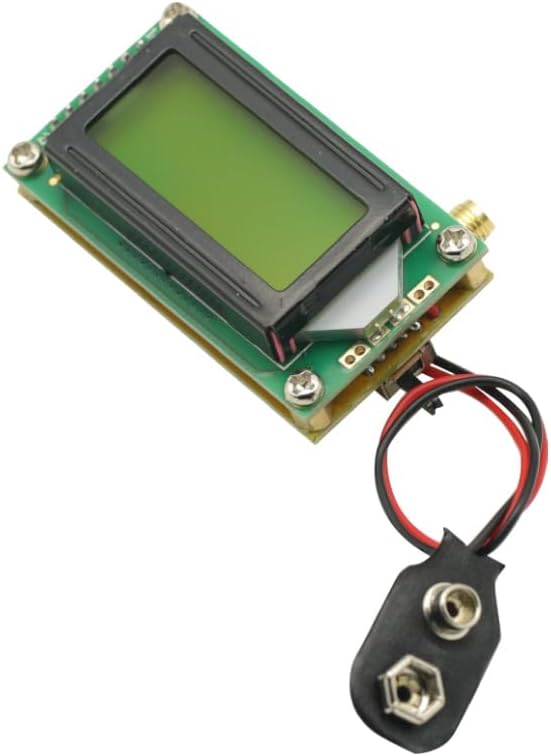
The Acxico RF Meter Module is a compact solution for hobbyists working on DIY ham radio projects. It measures frequencies from 1MHz to 500MHz which covers HF and VHF ranges. The digital 0802 LCD provides a clear readout of the measured frequency values.
We may earn a commission when you buy through this link, at no additional cost to you.
Constructed with PCB and FR4 materials it offers a sturdy platform for integration into custom projects. The module is designed for simple testing applications where high precision is not critical. It serves well for basic frequency verification in homebrew equipment.
However the rating of 3.1 suggests that users may find the accuracy or build quality limited compared to dedicated handheld units. The accuracy can only be adjusted to the second digit of the decimal point which limits resolution. For serious ham radio use it might not be sufficient.
This module is best for electronics enthusiasts who want a low cost component for testing. It is useful for educational purposes or simple signal checks. If you are building your own test gear this offers a basic solution for frequency measurement.
The module form factor allows easy integration into custom test setups.
Digital LCD shows readings clearly but with limited decimal precision.
We may earn a commission when you buy through this link, at no additional cost to you.
This 1MHz 500MHz Frequency Counter Meter Board is a simple module for basic frequency checking. It includes an LCD display and operates with low power consumption which is efficient for extended use. The range covers 1MHz to 500MHz making it suitable for lower frequency bands.
We may earn a commission when you buy through this link, at no additional cost to you.
As a new kit version it is ready to use for simple testing needs without extensive setup. The low power draw means it can run on smaller batteries for longer periods. It is designed for straightforward counting without complex features or decoders.
The performance is basic which is reflected in the moderate rating. It lacks the range and accuracy of more specialized units. For ham radio it is limited to HF and lower VHF bands which may not cover all needs.
We recommend this for beginners or those needing a very basic tool for specific low frequency work. It is a practical option for limited budgets where advanced features are not required. If you just need to confirm lower frequencies this board serves its purpose.
Consumes minimal power making it suitable for battery operated kits.
A straightforward board for simple frequency counting tasks.
We may earn a commission when you buy through this link, at no additional cost to you.
The AURSINC TinyGTC is a high precision dual-channel frequency counter designed for professional applications. It features a built-in GPS-disciplined oscillator that ensures long-term stability and accuracy. The 40ps resolution allows for extremely precise measurements of frequency and phase intervals.
We may earn a commission when you buy through this link, at no additional cost to you.
Its range extends up to 7GHz on Channel A and 350MHz on Channel B supporting a vast array of RF tasks. The touchscreen interface and jog wheel provide intuitive control for complex settings. It also supports USB data logging and SCPI remote control for integration with analysis software.
While this unit is more expensive than others it offers capabilities that are unmatched in this comparison. It is ideal for serious ham radio calibration SDR tuning and RF testing projects. The included GPS antenna and accessories ensure you can use it out of the box.
We recommend this counter for professionals and advanced hobbyists who need the highest level of accuracy. The GPSDO and dual channel support make it a powerful tool for critical measurements. If you require a reference-grade instrument for your station this is the top choice.
The built-in GPSDO locks to satellite time for long-term frequency stability.
Two independent counters allow simultaneous measurements of different signals.
We may earn a commission when you buy through this link, at no additional cost to you.
Selecting the right frequency counter requires understanding your specific needs regarding frequency range, accuracy, and additional features like signal decoders or spectrum analysis.
The frequency range determines which bands you can measure. Ensure the counter covers your intended HF VHF and UHF bands. Most ham radio counters cover at least 2MHz to 2800MHz to be useful for general work.
Always verify the minimum and maximum frequency limits before purchasing to avoid gaps in your testing capabilities.
Accuracy is critical for ensuring your radio transmits on the correct frequency. Look for units with temperature compensated crystal oscillators TCXO to maintain stability across environmental conditions. Higher precision units may use GPS disciplined oscillators for ultimate stability.
For most hobbyists a few ppm accuracy is sufficient but for precise calibration you may need better stability.
Many modern radios use CTCSS and DCS codes for privacy or channel access. A frequency counter with built-in decoders can identify these codes directly saving time and equipment. This feature is particularly useful for repeater and private line verification.
Check if the model includes these decoders if you work with digital or tone-based systems frequently.
Portability is key for field testing. Handheld models with compact designs fit easily in toolkits. Consider battery life and power options as field use often relies on portable power sources. A lightweight unit reduces fatigue during extended testing sessions.
Choose a design that balances size with robust enough to survive outdoor conditions.
The interface should be intuitive. Devices with few buttons and clear displays allow for quick measurements. Avoid overly complex menus unless you need advanced features. A simple user experience reduces the chance of error during critical tests.
Prioritize units with straightforward controls if speed and simplicity are your main requirements.
Your budget will dictate the level of technology you can afford. Basic modules are cheaper but may lack range and accuracy. Advanced units with GPSDO cost more but provide professional-grade performance. Also consider the warranty terms to protect your investment.
Ensure the price aligns with your needs and that there is adequate support available.
Frequency counters have maximum input voltage limits. Exceeding these can damage the device. Ensure you use appropriate attenuation for high power signals. Most portable units are designed for low level signals so direct antenna connection is not recommended.
Always check the input specifications to prevent accidental damage to the equipment.
Display clarity matters for readability in various lighting conditions. Touchscreens offer modern interface options but may be less robust. LCDs are simple and easy to read. Choose a display that you can comfortably read during your typical testing environments.
A clear display ensures you do not misread the frequency values under stress.
Begin by turning on the frequency counter and allowing it to warm up for a few minutes if recommended. This ensures the internal oscillator stabilizes for accurate readings. Select the appropriate frequency range based on the radio you are testing to optimize accuracy.
Connect the antenna or probe to the input port carefully avoiding direct connection to high power outputs. Keep the device within a safe distance from the transmitter to prevent damage. Observe the display for the frequency value and any signal strength indicators provided.
Store the device in a protective case when not in use to prevent physical damage. Keep it in a dry environment to avoid moisture damage to the electronics. Regularly check the battery levels to ensure readiness for future field testing needs.
Most ham radio frequency counters cover a range from about 2MHz to 3000MHz to include HF VHF and UHF bands. Some specialized units may extend higher for microwave work but these standard ranges are sufficient for the vast majority of operators.
Temperature compensation ensures that the internal crystal oscillator remains accurate even when ambient temperatures fluctuate. Without this feature readings may drift in outdoor conditions which could lead to incorrect frequency verification during field operations.
Direct connection to high power transmitters can damage the counter. It is safer to measure the signal via a sample or attenuator that reduces the power level. Most counters are designed for low power signals only.
A frequency counter gives you a single precise value for the frequency of a signal. A spectrum analyzer shows the distribution of signal strength across a range of frequencies. Both are useful but serve different analytical purposes in RF testing.
Yes most frequency counters benefit from periodic calibration to maintain accuracy. Higher end units may have self-calibration features or reference inputs. Regular calibration ensures that your measurements remain reliable over the years.
Choose a range that is closest to the expected frequency of your radio without going below the minimum. Most units allow you to select specific bands such as VHF or UHF to optimize measurement accuracy for that particular segment.
Choosing the right frequency counter for ham radio depends on your specific needs and budget. The Mcbazel Surecom SF401 Plus offers a reliable balance of performance and portability for general use. Advanced users may prefer the AURSINC TinyGTC for its precision and GPS stability.
Prioritize accuracy and temperature stability if you require precise measurements for equipment calibration. For casual checks a simple portable counter with a wide range will suffice. Always consider the additional features like decoders if they align with your operational needs.
Remember that product availability and pricing may change over time. We encourage you to verify current listings and read latest reviews before purchasing. By selecting the right tool you ensure your ham radio communications remain accurate and efficient.