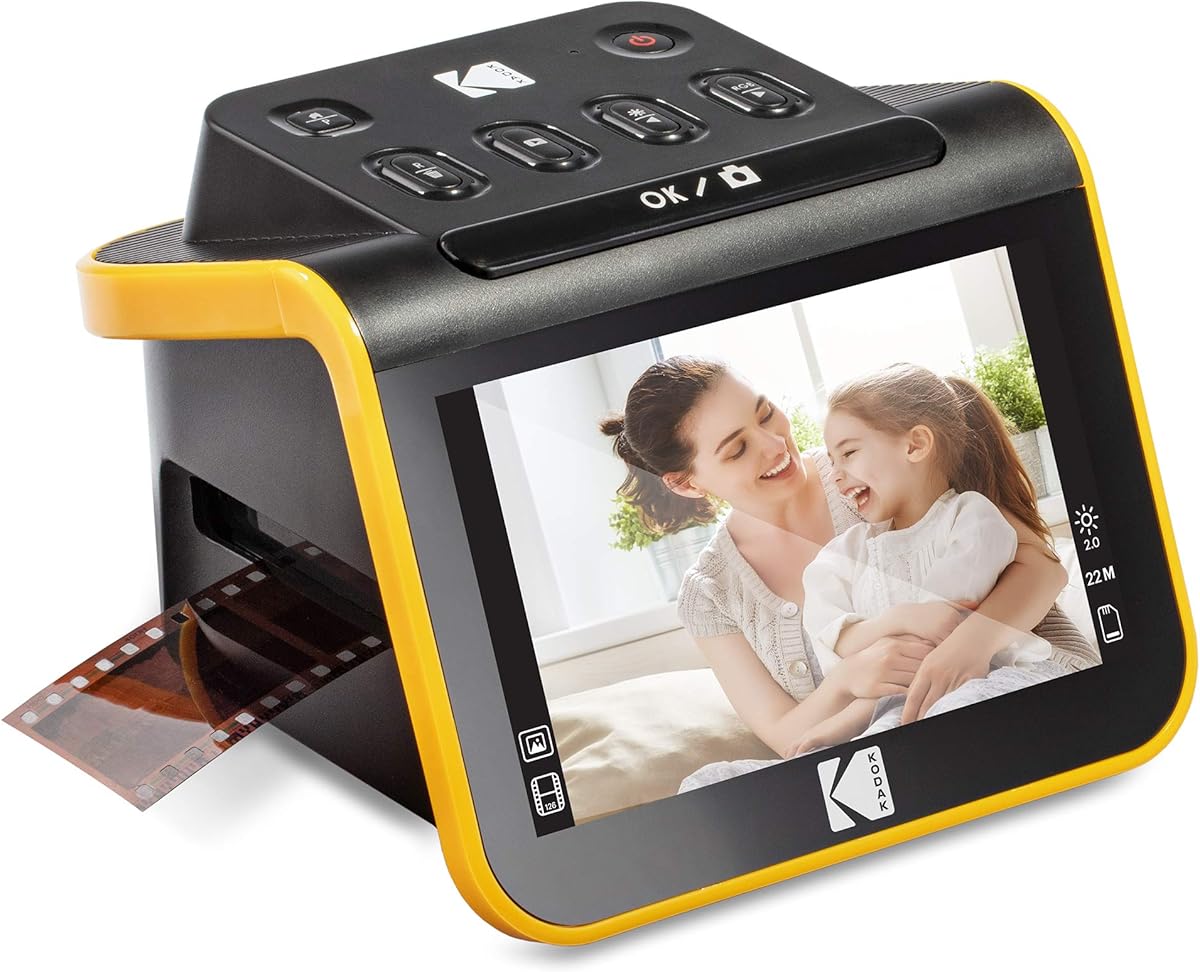
KODAK Slide N Scan Film & Slide Scanner
4.3Editor score
22MP resolution
5 inch LCD screen
SD card support
Multiple film formats
Digitizing old film and slides preserves memories for future generations. A quality flatbed scanner ensures high resolution and color accuracy. Selecting the right device depends on your specific needs and budget constraints.
We evaluated ten leading scanners based on resolution, ease of use, and software features. Our comparison covers options ranging from affordable home units to professional-grade equipment. Each entry highlights key strengths and potential limitations for buyers.
Every pick includes detailed specifications and user feedback to guide your decision. Prices and availability change frequently so verify current details before purchasing. Use this guide to find the perfect scanner for your collection.
4.3Editor score

4.0Editor score

4.4Editor score
As an Amazon Associate we earn from qualifying purchases.
The following table provides a side-by-side comparison of all ten products. It highlights essential specifications to help you distinguish between models quickly. Use this overview to narrow down your choices based on core capabilities.


This scanner offers an accessible entry point for digitizing old film and slides. It scores well for ease of use and includes a built-in screen for quick previews. Ideal for casual users wanting to preserve memories without complex setups.
We may earn a commission when you buy through this link, at no additional cost to you.
The 22MP resolution captures sufficient detail for standard prints. The 5 inch LCD allows immediate review of scans. Adapters support 135, 110, and 126mm formats plus 50mm slides for versatility.
Resolution is lower than professional models and software lacks advanced editing tools. These trade-offs are acceptable given the price. The direct SD card save option simplifies workflow for non-technical users.
Best for families archiving home movies and photos on a budget. Choose this if you prioritize convenience over maximum image fidelity. It delivers solid results for everyday sharing and printing needs.
The 5 inch LCD screen lets you see scans immediately without a computer. This speeds up the workflow for quick sharing or simple edits on the fly.
Includes adapters for 135, 110, and 126mm film types along with 50mm slide holders. This flexibility handles diverse legacy formats found in old albums.
We may earn a commission when you buy through this link, at no additional cost to you.
This model delivers extraordinary scans with 6400 dpi resolution and excellent tonal range. It stands out for capturing fine shadow detail and smooth gradations. A strong choice for serious hobbyists needing high fidelity.
We may earn a commission when you buy through this link, at no additional cost to you.
The dual lens system optimizes results for different media types. Its 4.0 Dmax ensures smooth transitions in dark areas. Grayscale depth supports detailed black and white conversions effectively.
It comes at a premium price and requires significant desk space. These are minor drawbacks for the image quality it provides. The technology bridges consumer and professional needs well.
Ideal for photographers and archivists requiring precise color reproduction. Choose this for large collections needing archival quality. It balances performance and usability for dedicated users.
The exclusive dual lens system selects the optimal lens for each scan. This ensures sharpness and accurate detail across different film and photo formats.
With 4.0 Dmax the scanner captures subtle shadow details without losing information. This is crucial for preserving the richness of original film negatives.
We may earn a commission when you buy through this link, at no additional cost to you.
This scanner provides unparalleled scans with 6400 dpi and advanced Digital ICE. It targets professionals needing top-tier color and detail accuracy. The investment is justified by its superior output quality and reliability.
We may earn a commission when you buy through this link, at no additional cost to you.
The dual lens system ensures optimum results for various media. Its tonal range delivers smooth gradations and fine shadow detail. Pro quality color reproduction meets demanding creative standards consistently.
The high cost and potential complexity may deter casual users. These are acceptable for those requiring archival grade output. It remains a reference standard for professional scanning tasks.
Best for commercial photographers and restoration experts. Choose this for critical projects where every pixel matters. It sets the benchmark for high end flatbed performance.
The V850 Pro delivers pro quality color and detail unmatched by consumer models. This makes it essential for gallery prints and commercial archives.
Advanced Digital ICE removes dust and scratches without affecting fine details. This saves significant time in post-processing for clean digital copies.
We may earn a commission when you buy through this link, at no additional cost to you.
This scanner creates sharp vivid reproductions at 6400 dpi. It includes a built-in transparency unit for slides and negatives. A balanced option offering robust restoration features for home users.
We may earn a commission when you buy through this link, at no additional cost to you.
Digital ICE removes dust and scratches automatically. ReadyScan LED technology ensures fast scanning without warmup time. The included OCR converts scanned documents into editable text effectively.
Some users report driver compatibility challenges on newer systems. The plastic build feels less premium than competitors. These issues are manageable given its feature set and performance.
Suitable for households with mixed media to digitize. Choose this for its comprehensive software suite and high resolution. It simplifies preservation with one-touch photo restoration tools.
Easy Photo Fix allows one touch restoration of faded images. This simplifies the process of bringing old photos back to life quickly.
ABBYY FineReader Sprint Plus OCR converts scanned text into editable files. This adds utility beyond photos making it versatile for documents.
We may earn a commission when you buy through this link, at no additional cost to you.
The V600 converts 35mm and medium-format film into high resolution files. It features a built-in transparency unit and DIGITAL ICE. A reliable workhorse for dedicated photo preservation projects.
We may earn a commission when you buy through this link, at no additional cost to you.
Maximum resolution allows enlargements up to 17 x 22 inches. Four customizable buttons speed up common tasks like email attachments. ReadyScan LED enables fast operation with lower power consumption.
Scanning speed can be slow compared to newer USB standards. The software bundle adds value but may need updates. These limitations are minor for most home archival needs.
Perfect for collectors of medium-format film and negatives. Choose this for its balance of features and ease of use. It handles diverse formats with minimal setup requirements.
Four buttons on the scanner make scanning and copying quick. This reduces reliance on the computer for routine tasks.
ReadyScan LED technology consumes less power and requires no warmup. This makes it eco-friendly and ready to use instantly.
We may earn a commission when you buy through this link, at no additional cost to you.
This scanner reproduces photographs with professional quality and precision. The 6400 dpi resolution delivers incredible detail for large prints. It can handle slides, negatives, and medium format film effectively.
We may earn a commission when you buy through this link, at no additional cost to you.
The innovative dual lens system automatically selects lenses for desired resolution. A 4.0 Dmax ensures exceptional image quality with deep shadows. This makes it suitable for high-end home editing.
Its cost and size make it less ideal for small spaces. These factors are acceptable for users prioritizing quality over space. It remains a strong contender for serious collectors.
Recommended for those needing professional results at home. Choose this for its robust lens technology and image fidelity. It bridges the gap between consumer and pro gear well.
The dual lens system automatically selects the right lens for the scan. This optimizes resolution without manual configuration each time.
With 4.0 Dmax the scanner captures deep shadows without clipping. This preserves the full tonal range of original film.
We may earn a commission when you buy through this link, at no additional cost to you.
This model offers 4800 x 9600 dpi optical resolution. It includes a transparency adapter with four film holders. A top choice for professionals needing high bit depth and connectivity.
We may earn a commission when you buy through this link, at no additional cost to you.
48-bit color depth and 16-bit grayscale ensure rich tonal data. The included SilverFast Ai 6.0 software enhances editing options. Firewire and USB connectivity support versatile workflows.
The Firewire interface is less common on modern computers. It is an older model with higher costs for availability. These are acceptable for legacy system compatibility needs.
Ideal for studios requiring robust color management. Choose this for its high bit depth and professional software. It supports demanding workflows better than consumer models.
Includes LaserSoft SilverFast Ai for advanced editing and controls. This elevates its value beyond basic scanning capabilities.
48-bit color depth preserves subtle color variations effectively. This is vital for high-quality color correction and printing.
We may earn a commission when you buy through this link, at no additional cost to you.
This scanner accommodates reflective media up to 12.2 x 17.2 inches. It provides extraordinary image quality with 2400 dpi resolution. Ideal for scanning large documents and artwork alongside film.
We may earn a commission when you buy through this link, at no additional cost to you.
Micro Step Drive technology ensures smooth and precise scanning. The Color II imaging system delivers vibrant and bold scans. One-touch color restoration simplifies fixing faded photos easily.
Lower DPI compared to dedicated film scanners may limit enlargements. Software can be complex for casual users to master. These trade-offs are worth it for large format versatility.
Best for designers and artists needing wide-format input. Choose this for its ability to handle diverse large media types. It balances art scanning with slide and negative support.
Accommodates media up to 12.2 x 17.2 inches for wide documents. This versatility extends beyond film to posters and art.
One-touch color restoration restores faded photos and negatives quickly. Automatic dust removal further simplifies the digitization workflow.
We may earn a commission when you buy through this link, at no additional cost to you.
This variant offers 6400 dpi optical resolution and 48-bit color. It includes USB connectivity and meets Energy Star standards. A solid option for basic film and document scanning tasks.
We may earn a commission when you buy through this link, at no additional cost to you.
48-bit color ensures rich tonal data for digital files. The flatbed design supports various media types easily. Compliance with standards indicates energy efficiency and reliability.
User ratings vary compared to other models in the series. Documentation may be limited for specific variants. These factors should be checked before purchasing.
Suitable for home users needing standard resolution scanning. Choose this if you require high bit depth and efficiency. It performs well for general photo digitization needs.
Meets Energy Star standards for reduced power consumption. This ensures it operates efficiently over long scanning sessions.
48-bit color captures a wide range of tones effectively. This is useful for color correction and detailed edits.
We may earn a commission when you buy through this link, at no additional cost to you.
This scanner features an A3 sized surface for large originals. It provides 2400 dpi optical resolution and 48-bit color. Designed for graphic arts requiring precise color and connectivity.
We may earn a commission when you buy through this link, at no additional cost to you.
Networking support allows sharing among multiple workstations easily. The 3.8 Dmax optical density ensures good shadow detail. Zoom functionality offers flexibility for different output sizes.
Older technology may lack modern interface options. User feedback suggests mixed reliability outcomes over time. Pros should weigh compatibility and support carefully.
Best for workgroups needing shared wide-format input. Choose this for its networking and color depth features. It supports creative workflows requiring large media digitization.
Optional networking allows multiple users to access the scanner. This enhances productivity in shared office environments.
Scans originals up to 12.2 x 17.2 inches effectively. This supports posters and large documents beyond standard sizes.
We may earn a commission when you buy through this link, at no additional cost to you.
Selecting the right scanner involves understanding several technical factors. This guide outlines key aspects to consider for your specific needs.
Optical resolution determines the level of detail captured from film. Higher dpi values allow for larger enlargements without loss of quality. Look for at least 2400 dpi for standard prints.
Choose higher dpi for archival purposes or large prints. Ensure the optical resolution matches your intended output size.
A built-in transparency unit is essential for scanning slides and negatives. It illuminates translucent media evenly for accurate color capture. Verify it supports your specific film formats.
Without this feature you cannot scan film effectively. Prioritize models with a dedicated TU for best results.
Color depth refers to the number of colors the scanner can capture. 48-bit color provides richer tones and better editing flexibility. It prevents banding in gradients.
Higher bit depth ensures smooth transitions in shadows. Look for 48-bit color for professional-grade output.
Digital ICE removes dust and scratches automatically during scanning. This saves significant time on post-processing and restoration. It uses infrared light to detect defects.
Prioritize scanners with ICE for old or damaged film. It streamlines workflow significantly for large collections.
Included software handles image enhancement and OCR for documents. Robust packages simplify restoration and editing tasks. Check for compatibility with your operating system.
Good software reduces the need for third-party tools. Ensure it includes basic photo fix features.
Modern scanners use USB 3.0 or Wi-Fi for faster transfers. Legacy models may still rely on Firewire or older standards. Ensure it matches your computer ports.
Faster connectivity reduces wait times for large files. Verify cable compatibility before purchasing to avoid adapters.
Most flatbeds support standard photos and documents up to 8.5×11 inches. Some allow medium-format film or A3 scanning. Check the physical dimensions for your needs.
Larger scanning areas offer more versatility. Ensure the bed size accommodates your film holders.
User-friendly interfaces with preset modes save time. Dedicated buttons for common tasks like email or PDF help. Consider the physical design for your workspace.
Simpler workflows encourage consistent digitization habits. Look for intuitive controls and quick setup.
Prepare your film by dusting it gently with a soft brush. Place slides in the appropriate holder to ensure flat contact with the glass. Check alignment guides before closing the lid.
Select the correct film type in the software for best results. Run a test scan to check exposure and focus settings. Adjust brightness if shadows appear too dark.
Clean the glass regularly with a microfiber cloth. Store the scanner in a dry area to prevent mold. Cover it when not in use to avoid dust.
For standard viewing and prints, 2400 dpi is usually sufficient. However, for archival quality or large enlargements, 3200 to 6400 dpi is recommended. Always choose the highest optical resolution your model offers.
Most dedicated film scanners support color negatives. Ensure the software has a color negative preset. If not, you may need to use third-party tools to invert the image.
Many flatbeds include holders for 120 format film. Check the product specifications for medium-format support. Specialized holders are often required for accurate alignment.
Use Digital ICE technology if your scanner supports it. This automatically detects and removes dust and scratches. For severe damage, additional restoration software may be needed.
Scanning negatives provides more data and flexibility in editing. Slides are ready to view but offer less dynamic range. For best results, scan negatives and apply color correction later.
TIFF is ideal for archival quality without loss. JPEG is suitable for sharing and web use. Save master copies as TIFF and create JPEG derivatives for daily use.
We highlighted ten top models ranging from budget to professional. The KODAK offers affordability while Epson dominates high fidelity. Each option serves distinct user requirements effectively.
Prioritize resolution and software features based on your collection. If you need color accuracy, invest in models with Digital ICE. For casual use, focus on ease of operation.
Prices change frequently so verify current availability. Always check user reviews before purchasing. This guide helps you find the right scanner for your needs.