
ESP32-S3-Nano Microcontroller
5.0Editor score
Affordable pricing with high specs
8MB PSRAM and 16MB Flash
Arduino IoT Cloud compatible
Discover the best Arduino Nano ESP32 boards for 2026. This guide compares top models for IoT, wireless connectivity, and embedded development projects.
The Arduino Nano ESP32 represents a significant leap in embedded development, combining powerful dual-core processing with robust wireless capabilities. These compact boards are ideal for makers and engineers seeking efficient IoT solutions without sacrificing performance or flexibility in their projects.
We evaluated ten leading models based on processing power, connectivity options, ease of use, and community support. Our comparison highlights key differences in memory, power management, and peripheral interfaces to help you find the perfect fit for your specific application needs.
Each pick showcases unique strengths, from budget-friendly options to feature-rich boards with advanced security and display capabilities. Please note that product availability and pricing may fluctuate over time, so verify current details before making your final purchase decision.
5.0Editor score

4.6Editor score

4.7Editor score
This side-by-side comparison outlines the critical specifications of each board to simplify your selection process for wireless embedded development.


The Arduino Nano ESP32 with Headers stands out as the premier choice for developers seeking an official, reliable platform. With a 4.6 rating, it delivers the robust ESP32-S3 performance needed for complex IoT tasks.
We may earn a commission when you buy through this link, at no additional cost to you.
Its dual-core processor handles real-time data processing and machine learning at the edge effectively. The inclusion of USB-C ensures stable power delivery and faster programming cycles compared to older micro-USB standards.
While it carries a slightly higher price point, the reliability and official support justify the investment for professional and educational use. The MicroPython compatibility also lowers the barrier to entry for those new to embedded systems.
This board is ideal for anyone prioritizing stability and performance in their wireless projects. We recommend it as the top pick for general-purpose development where official documentation matters.
The built-in Wi-Fi and Bluetooth 5.0 enable seamless integration with smart home ecosystems and cloud platforms.
HID support allows you to create custom keyboards or mice, expanding the board's utility beyond standard sensors.
We may earn a commission when you buy through this link, at no additional cost to you.
This board offers a perfect balance of features and affordability, earning a perfect 5.0 rating from users. It packs significant memory and processing power into an accessible package for hobbyists.
We may earn a commission when you buy through this link, at no additional cost to you.
The 8MB PSRAM and 16MB Flash allow for storing larger datasets and firmware images without external memory. This makes it suitable for projects requiring extensive data logging or complex logic.
While it lacks official Arduino branding, the performance is comparable to more expensive options. The ability to switch between Arduino and MicroPython seamlessly adds to its versatility.
If you need a cost-effective solution for mass production or student projects, this is an excellent choice. It delivers high performance without breaking the bank.
Native support for Arduino IoT Cloud lets you monitor projects remotely via an app without extra coding.
Large RAM and Flash ensure you can run sophisticated algorithms without worrying about resource constraints.
We may earn a commission when you buy through this link, at no additional cost to you.
The UNO R4 WiFi bridges the gap between classic UNO usability and modern wireless power. Its dual-core setup combines Renesas reliability with ESP32 connectivity for versatile applications.
We may earn a commission when you buy through this link, at no additional cost to you.
Features like the integrated LED matrix and CAN bus support make it stand out for visual feedback and automotive robotics. The 12-bit DAC adds audio capabilities rarely seen on microcontrollers.
Although it is larger and more expensive, these features provide immense value for complex projects. It is particularly strong for applications needing both analog precision and digital communication.
We recommend this for makers looking to push boundaries with audio, animation, or industrial protocols. It is a premium option worth considering for advanced prototyping.
The 12×8 LED matrix allows instant data visualization without external screens or wiring.
CAN bus support makes this board suitable for automotive or heavy machinery control systems.
We may earn a commission when you buy through this link, at no additional cost to you.
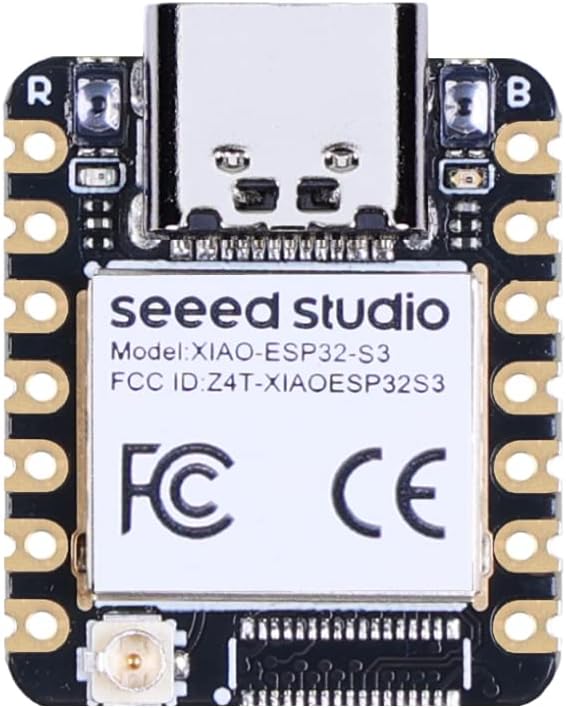
This board redefines compactness with a thumb-sized design that fits easily into wearable or portable projects. It maintains high performance despite its small footprint.
We may earn a commission when you buy through this link, at no additional cost to you.
The built-in battery charging makes it ideal for mobile devices where power is critical. Deep sleep modes further extend battery life for long-term monitoring tasks.
Due to its size, pin count is lower, requiring careful pin management in complex wiring. However, the versatility compensates for this limitation in space-constrained scenarios.
It is perfect for wearables and portable sensors where portability is key. If space is your primary constraint, this board is a top contender.
Integrated lithium charge management simplifies battery-powered projects without external circuitry.
The small form factor allows embedding into tight spaces or custom enclosures easily.
We may earn a commission when you buy through this link, at no additional cost to you.
This board brings serious power with a RISC-V core and dedicated hardware for image processing. It is designed for high-demand applications involving vision or video.
We may earn a commission when you buy through this link, at no additional cost to you.
With 32MB PSRAM and MIPI interfaces, it can handle high-resolution displays and camera feeds efficiently. It excels in tasks where raw computational speed is necessary.
Programming this board may require more specialized knowledge than standard ESP32 models. However, the performance gains are substantial for professional or advanced hobbyist use.
Choose this if your project involves computer vision or intensive data processing. It is a powerhouse for those who need maximum capability.
Dedicated accelerators for image codecs allow real-time visual data processing on the device.
MIPI-DSI connections enable high-speed communication with modern display panels.
We may earn a commission when you buy through this link, at no additional cost to you.
Buying these in a pack offers great value for projects needing multiple nodes or redundancy. The boards are compact and efficient for large-scale sensor deployments.
We may earn a commission when you buy through this link, at no additional cost to you.
The castellated edges allow direct soldering onto carrier boards, simplifying manufacturing processes. This makes them ideal for prototyping custom PCBs.
Without an onboard USB port, you need a separate adapter for programming. This adds complexity but reduces the physical footprint significantly.
Consider this for distributed sensor networks where cost and size matter. The savings from buying in bulk can be significant for larger projects.
Castellated pads let you integrate the module directly into your own custom circuit designs.
A three-pack ensures you have spares or multiple units for multi-node systems.
We may earn a commission when you buy through this link, at no additional cost to you.
This kit is designed for beginners needing all the tools to start learning IoT. It includes the board plus dozens of modules to explore various applications.
We may earn a commission when you buy through this link, at no additional cost to you.
The step-by-step tutorials help users understand coding and wiring without getting overwhelmed. It covers everything from simple LEDs to weather stations.
While the Bluetooth version is older than newer boards, it is sufficient for learning purposes. The value comes from the included components and educational resources.
If you are new to electronics, this is a fantastic starting point. It provides a safe environment to learn without buying parts individually.
Detailed code examples and circuit diagrams make it easy to follow along with lessons.
A wide selection of sensors and displays ensures you can build diverse projects.
We may earn a commission when you buy through this link, at no additional cost to you.
This board focuses heavily on security, making it suitable for sensitive data applications. It uses a trusted secure element for hardware-level encryption.
We may earn a commission when you buy through this link, at no additional cost to you.
While it lacks the raw speed of the ESP32-S3, its SAMD21 core is efficient for standard IoT tasks. The Nano form factor remains easy to wire and integrate.
For projects prioritizing security over raw processing power, this is a reliable choice. It ensures data remains encrypted during transmission.
Recommend this for secure smart home systems or industrial monitoring. It strikes a balance between security and ease of use.
Built-in Secure Element protects keys and ensures authentic connections to the cloud.
Full compatibility with Arduino libraries ensures stable and well-supported code.
We may earn a commission when you buy through this link, at no additional cost to you.
A classic in the ESP32 family, this board is known for its robust wireless range and proven performance. It is widely used in various projects.
We may earn a commission when you buy through this link, at no additional cost to you.
The ability to switch between AP and STA modes offers flexibility in network setup. It supports many existing libraries and community examples.
While it uses older USB connectors, it is still effective for most tasks. The physical size is larger than modern Nano equivalents.
Choose this if you are comfortable with older form factors. It remains a solid option for general connectivity needs.
Support for multiple network modes allows flexible setup of local networks.
Extensive community libraries make finding code and help very easy.
We may earn a commission when you buy through this link, at no additional cost to you.
This pack offers a modern USB-C interface at a budget-friendly price. It includes OTA support for convenient firmware updates over Wi-Fi.
We may earn a commission when you buy through this link, at no additional cost to you.
With three boards, you can set up multiple devices or keep spares. The power-saving modes are effective for battery projects.
Bluetooth is version 4.2, which is standard but not the latest. This is acceptable for most sensor applications.
If you need multiple units with modern USB-C, this is a smart buy. It balances convenience with cost effectively.
OTA support allows you to update firmware remotely without physical access.
Modern USB-C connectors ensure durability and ease of connection.
We may earn a commission when you buy through this link, at no additional cost to you.
Choosing the right board depends on your specific needs for power, size, and connectivity.
Look for boards with dual-core processors running at 240MHz for smooth multitasking and complex logic.
Higher clock speeds help with real-time processing and faster project execution.
Ensure the board supports both Wi-Fi and Bluetooth for versatile communication options.
Check for version numbers like Bluetooth 5.0 for better range and stability.
Large Flash and PSRAM are essential for storing code and handling data logging.
At least 16MB Flash and 2MB PSRAM recommended for advanced projects.
Battery-powered projects require deep sleep modes to conserve energy over long periods.
Low current draw in sleep states extends device life significantly.
USB-C ports provide stable power and fast data transfer compared to micro-USB.
Native Python support can simplify development for beginners and rapid prototyping.
Nano sizes are better for compact enclosures while larger boards offer more pins.
Consider if you need to solder the board directly to a PCB.
Official boards have better documentation and library compatibility from the community.
Check if the specific board has active forums and example code.
For sensitive data, look for secure elements that handle encryption at the hardware level.
Hardware encryption ensures data remains protected during transmission.
Connect the board to your computer using a high-quality USB-C cable to ensure stable power delivery.
Install the necessary drivers and IDE before attempting to upload any code for the first time.
Store the boards in a dry place away from static electricity to prevent damage to the sensitive chips.
Many of these boards support MicroPython, which allows for easier coding using Python syntax. Check the specific product details for compatibility.
For beginners, the starter kits with tutorials or the official Nano ESP32 provide the best balance of support and usability.
Some boards like the XIAO have built-in battery charge management, while others require external regulators for battery projects.
Use Over-the-Air (OTA) features available on most modern ESP32 boards to update code over Wi-Fi.
The S3 version offers better AI performance, more memory, and newer Bluetooth standards compared to older variants.
No, these boards come with built-in Wi-Fi and Bluetooth capabilities, so no extra modules are needed.
Yes, most of these boards are fully compatible with the Arduino IDE for simplified programming and library use.
No, they are not waterproof. You will need an external enclosure if using them outdoors or near water.
Our top picks highlight the versatility of the Arduino Nano ESP32 ecosystem for various applications.
Prioritize memory and connectivity features based on your project's complexity to ensure long-term reliability.
Always check current availability and compatibility before purchasing to match your specific project requirements.