
Radial Mix 2:1
4.8Editor score
Two channel passive
Mono summing output
Compact footprint
Discover the top analog summing mixers for studio and live sound. This guide compares features, audio quality, and connectivity to help you choose the right
Analog summing mixers provide a warm, natural sound that digital plugins often struggle to replicate. These devices combine multiple audio signals into a cohesive mix, adding depth and character to your recordings.
We evaluated ten top-rated mixers based on channel count, audio quality, connectivity options, and user feedback. Our analysis covers everything from compact passive units to large-format professional consoles.
Each selection highlights specific strengths for different workflows and budgets. Prices may vary, so check current listings before purchasing to ensure you get the best value for your investment.
4.8Editor score
4.5Editor score

5.0Editor score
This side-by-side comparison highlights the key specifications and capabilities of each mixer to help you decide which fits your studio or live setup.




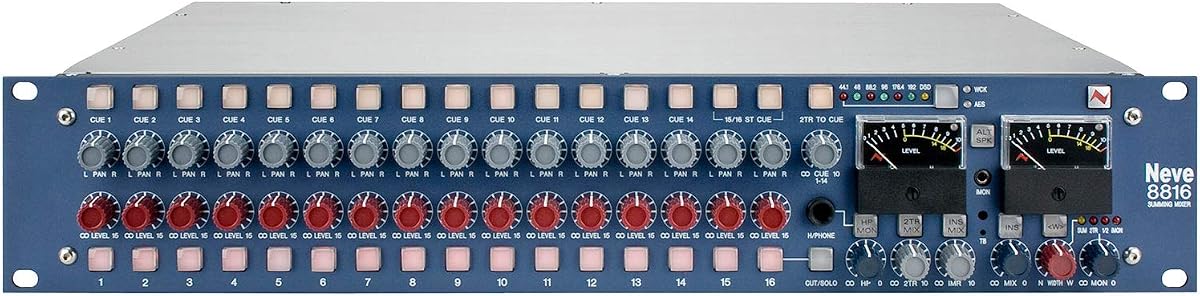
The Neve 8816 stands as a premier analog summing mixer for professional studios seeking authentic tone. Its 16-channel design offers extensive routing options while maintaining the warmth Neve is known for.
We may earn a commission when you buy through this link, at no additional cost to you.
Transformer-balanced circuitry ensures minimal noise and maximum headroom. The monitoring section includes dual headphone outputs and alternate speaker connections for versatile mixing environments.
While expensive, the investment pays off in sound quality. The lack of digital features keeps the signal path pure, which purists appreciate for critical listening and final mixing.
This unit is ideal for high-end studios needing a dedicated summing stage. It bridges the gap between digital convenience and analog fidelity with unmatched precision.
The balanced transformers add subtle harmonic richness that colors the mix naturally without distortion.
Dual headphone and alternate speaker outputs allow for seamless collaboration and multiple monitoring setups.
We may earn a commission when you buy through this link, at no additional cost to you.
The Radial Mix 2:1 offers an economical entry into analog summing for basic applications. As a passive mixer, it requires no external power and introduces minimal noise into your signal chain.
We may earn a commission when you buy through this link, at no additional cost to you.
Its two-input mono summing capability is perfect for combining stereo tracks or routing two sources to a single output. The simple layout reduces setup time and complexity.
While limited in channel count, it delivers clean performance without adding color. The passive design ensures durability and makes it ideal for travel or compact home studios.
This mixer suits podcasters or musicians who need quick, reliable summing of two signals. It is a cost-effective tool for specific routing tasks where flexibility is less critical.
No power supply means fewer failure points and easier integration into any studio setup.
The small size makes it easy to stash in a bag or fit into tight rack spaces.
We may earn a commission when you buy through this link, at no additional cost to you.
The Rupert Neve Designs 5059 Satellite brings premium analog summing to compact spaces. This Shelford Edition delivers the legendary tone Neve is famous for in a smaller package.
We may earn a commission when you buy through this link, at no additional cost to you.
Its 16 channels provide ample headroom for complex projects. The satellite design allows it to integrate seamlessly with existing studio gear without taking up excessive space.
The price is steep, but the audio quality justifies it for serious producers. It adds depth and width to mixes that digital plugins struggle to achieve authentically.
Choose this if you seek top-tier sound and have the budget. It serves as a central hub for hybrid setups needing genuine analog character.
Designed to complement larger consoles, it offers flexibility for smaller studios needing professional tone.
The Shelford Edition carries the legacy of classic Neve designs with modern reliability and clarity.
We may earn a commission when you buy through this link, at no additional cost to you.
The Headliner R4 is a 4-channel analog rotary mixer designed for DJs and performers seeking tactile control. Its built-in filter with resonance and frequency shaping adds creative possibilities.
We may earn a commission when you buy through this link, at no additional cost to you.
Four stereo channels with gain control and 3-band EQs allow precise sound shaping. The aluminum construction and wood side panels give it a classic look that suits any setup.
While tailored for DJ use, it can handle general audio routing. The cue section offers split monitoring and volume control for flexible on-stage workflows.
Ideal for DJs wanting analog warmth with filter effects. It bridges the gap between traditional DJ mixers and versatile analog signal processing.
Frequency and resonance adjustments let you sculpt the sound dynamically during performances.
The headphone cue section ensures accurate monitoring and easy track prep during live sets.
We may earn a commission when you buy through this link, at no additional cost to you.
The Mackie Onyx Series 16-channel mixer combines analog warmth with digital connectivity. It supports 96kHz/24-bit recording directly to Mac or PC, making it ideal for hybrid studios.
We may earn a commission when you buy through this link, at no additional cost to you.
Onyx mic preamps deliver up to 60dB gain and low noise. The onboard effects engine includes customizable reverbs and delays to enhance tracks without external gear.
Bluetooth streaming lets you route mobile audio into a channel strip for quick mixes. The balance of analog and digital features suits modern production needs well.
Buy this if you need both live mixing and recording capabilities. It provides a versatile workflow for musicians who want to record high-quality tracks easily.
Record individual channels via USB while monitoring the analog mix for optimal signal quality.
User-customizable effects reduce the need for additional plugins during the mixing process.
We may earn a commission when you buy through this link, at no additional cost to you.
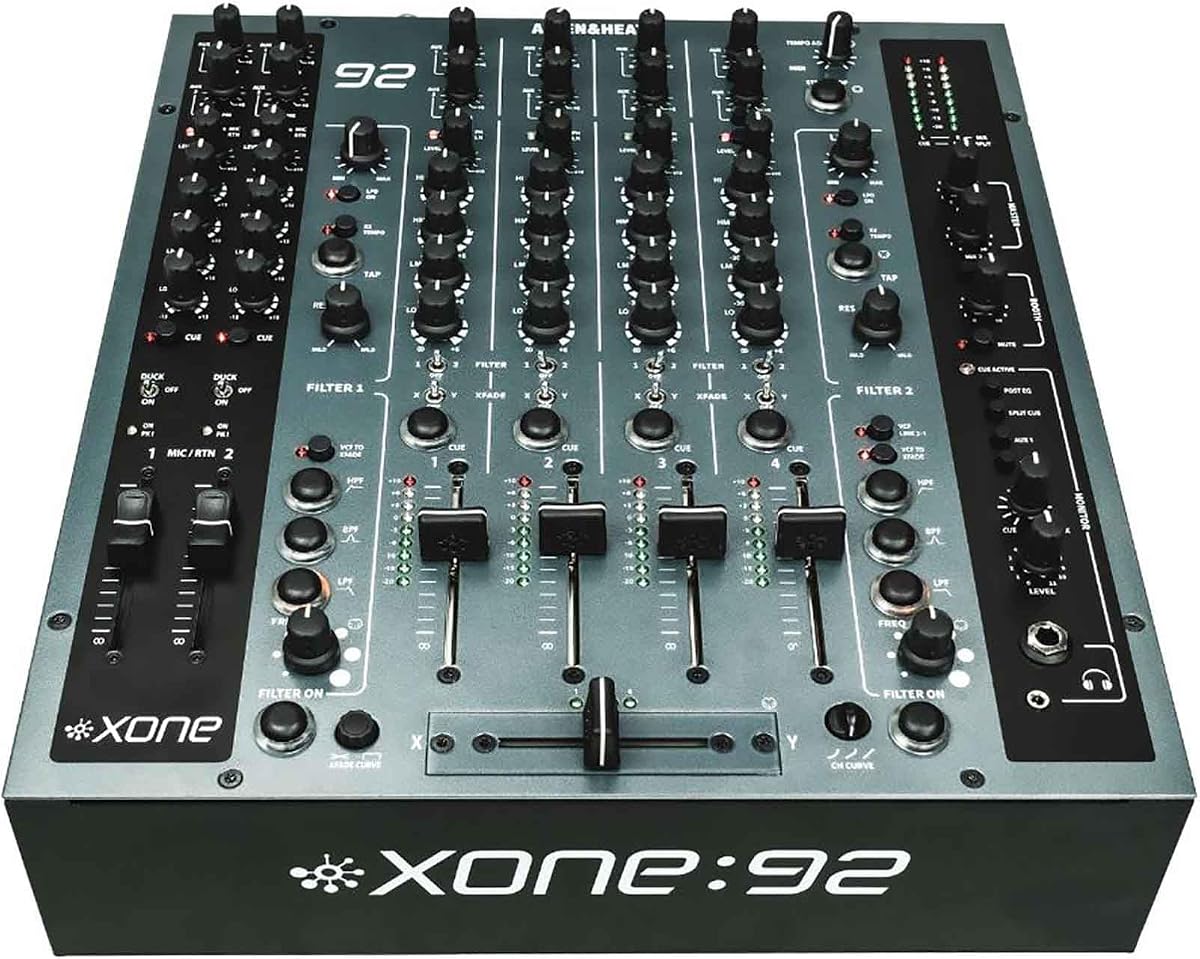
The Allen & Heath Xone:92 Mk2 sets a high standard for professional analog DJ mixing. Its 4-channel layout supports complex setups with dual multimode filters for precise tone shaping.
We may earn a commission when you buy through this link, at no additional cost to you.
Two stereo aux outputs and send/return connections allow external FX integration. The microphone inputs provide dedicated channels for seamless vocal overlays during performances.
While pricier than standard mixers, the build quality and sound clarity justify the cost. It offers deep control over frequencies for artists who prioritize sonic fidelity.
This mixer is perfect for professional DJs requiring advanced filtering. It delivers an analog signal path that enhances the dynamic range and texture of tracks.
Switching filters give you unique sonic possibilities that standard EQs cannot provide.
Send and return loops allow you to integrate outboard effects for broader sound sculpting.
We may earn a commission when you buy through this link, at no additional cost to you.
The Allen & Heath Xone:43 delivers high-performance analog mixing in a compact 4+1 layout. Its Xone Voltage Controlled Filter system provides precise resonance and frequency control.
We may earn a commission when you buy through this link, at no additional cost to you.
Send and Return connections feature individual dry/wet controls, allowing flexible external FX integration. The dedicated booth and record outputs ensure clear signal routing for various setups.
This mixer excels in portability and ease of use. It is ideal for DJs who want professional-grade controls without the bulk of larger mixers.
Invest in this if you value a streamlined analog workflow. Its Innofader compatibility and robust construction make it a reliable choice for touring or home practice.
The VCF system offers smooth transitions and precise cuts that define professional DJ mixing.
Per channel levels let you blend FX naturally without overwhelming the original signal.
We may earn a commission when you buy through this link, at no additional cost to you.
The Mackie 1202VLZ4 is a 12-channel analog mixer known for exceptional sound quality. Its Onyx mic preamps offer ultra-wide gain range and incredibly low noise performance.
We may earn a commission when you buy through this link, at no additional cost to you.
With a dynamic range of 128.5dB, it handles both quiet and loud signals without distortion. The three-band EQ and 75Hz low-cut filter provide precise tone shaping on each channel.
This mixer is ideal for live sound and broadcast applications. The complete routing options include aux sends and stereo returns for flexible setups.
Choose this for its unbeatable performance-to-price ratio. It serves well as a reliable hub for small studios and portable setups needing clean audio.
Onyx technology ensures clear audio capture even at high gain settings.
Extended frequency response handles complex mixes with clarity and depth.
We may earn a commission when you buy through this link, at no additional cost to you.
The Solid State Logic BiG SiX is a powerful hybrid mixing console and USB interface. It brings console-grade SuperAnalogue mic pres to desktop studios with 16-channel recording.
We may earn a commission when you buy through this link, at no additional cost to you.
A stereo master bus compressor and dynamics processing add polish to your mixes. The comprehensive monitoring section supports multiple speaker setups and talkback functions.
With 24-bit/96kHz converters, it ensures high-fidelity audio capture. Its design bridges the gap between analog warmth and digital workflow seamlessly.
This unit is perfect for professionals needing a unified control surface. It offers the best of both worlds for serious music production and live streaming.
Master bus compression glues the mix together with professional-grade dynamics processing.
The listen mic compressor and talkback input make studio communication simple and effective.
We may earn a commission when you buy through this link, at no additional cost to you.
The Yamaha MG10 is a 10-channel standalone mixer designed for simple and effective routing. It features studio-grade discrete class-A D-PRE preamps for rich bass and smooth highs.
We may earn a commission when you buy through this link, at no additional cost to you.
Each channel includes a 1-knob compressor for easy dynamics control. The 3-band EQ and high-pass filters help eliminate unwanted noise and refine your sound quickly.
Built with a rugged metal chassis, it withstands the demands of live environments. The 48V phantom power allows you to use condenser microphones seamlessly.
This mixer is ideal for beginners or small venues needing reliable audio. It delivers clean results without unnecessary complexity or software dependencies.
The inverted Darlington circuit ensures natural sound reproduction across the frequency spectrum.
Simplified compression makes dynamics control accessible even for novice users.
We may earn a commission when you buy through this link, at no additional cost to you.
Selecting the right analog summing mixer depends on your budget, studio space, and specific audio needs. This guide outlines the critical factors to consider.
Determine how many inputs you need now and in the future. A 16-channel mixer offers more flexibility but requires more space and wiring than a 2-channel unit.
Choose a channel count that matches your typical mix size to avoid underutilization or running out of inputs.
Active mixers require power but offer more control over gain and EQ. Passive mixers are simpler, require no power, and introduce fewer noise artifacts into the signal.
Passive units suit simple summing while active units provide better integration with complex setups.
Look for mixers with high-quality preamps that provide plenty of gain without introducing hiss. The noise floor should be low enough to maintain clarity during quiet passages.
Low noise preamps ensure your signal stays clean from input to output.
Check for XLR, TRS, and RCA inputs and outputs to match your gear. Ensure there are enough aux sends and returns for external effects processors.
Versatile connectivity ensures the mixer integrates seamlessly with your existing studio ecosystem.
Robust metal enclosures and high-quality potentiometers extend the life of your mixer. For live use, consider shock-resistant chassis and reliable knobs.
Durability is crucial for equipment that will see frequent transport or daily use.
Multiple headphone outputs allow for collaboration during mixing. Dedicated monitor sections provide better control over cue mixes and alternate speaker setups.
A good monitoring section enhances communication and efficiency in the studio.
Many modern mixers include USB interfaces for digital recording. Evaluate whether you need direct computer integration or prefer a purely analog workflow.
Hybrid features streamline workflows for those working with DAWs but add complexity.
Prices range from affordable passive units to expensive high-end consoles. Balance your budget with the features you need now rather than future possibilities you may not use.
Invest in quality that matches your current needs while allowing room for growth.
Connect your sources to the mixer inputs using appropriate cables. Ensure gain levels are set correctly to avoid clipping while maintaining a healthy signal-to-noise ratio.
Route outputs to your speakers or audio interface. Adjust EQ and auxiliary sends to shape your mix before it reaches the master bus.
Keep the mixer in a dry, cool environment to prevent component degradation. Regularly dust the knobs and faders to ensure smooth operation over time.
Analog summing mixers combine multiple signals using analog circuitry to create a warm, cohesive sound. This process adds subtle harmonics that enhance depth and width often missing in digital mixes.
While plugins can emulate analog warmth, dedicated mixers provide genuine circuitry interaction. They are ideal for hybrid setups seeking authentic character and improved signal flow.
Active mixers require power and offer gain control, while passive mixers do not need power and rely on simple attenuation. Active units are more versatile, whereas passive units are simpler.
Connect your audio interfaces or DAW outputs to the mixer inputs using balanced cables. Ensure levels are matched so the mixer receives a clean signal for summing.
Some DJ mixers have high-quality signal paths but limited EQ and routing. They can work for simple summing but dedicated studio mixers offer better features.
Most do not require a computer, though hybrid models include USB interfaces. Purely analog mixers function independently, simplifying the signal chain.
Adjust input gain so signals peak just below clipping on meters. Proper gain staging ensures maximum headroom and minimizes noise during mixing.
Keep the mixer covered when not in use to prevent dust buildup. Occasionally clean faders and knobs with compressed air to ensure smooth movement.
This guide covers a wide range of options from budget-friendly units to premium consoles. Whether you choose the Neve 8816 for its tone or the Mackie 1202VLZ4 for value, there is a fit for every workflow.
Prioritize features that match your daily needs. Consider channel count, sound quality, and connectivity to ensure long-term satisfaction.
Prices and availability fluctuate, so always verify current listings before buying. The right mixer can elevate your audio production to new heights.