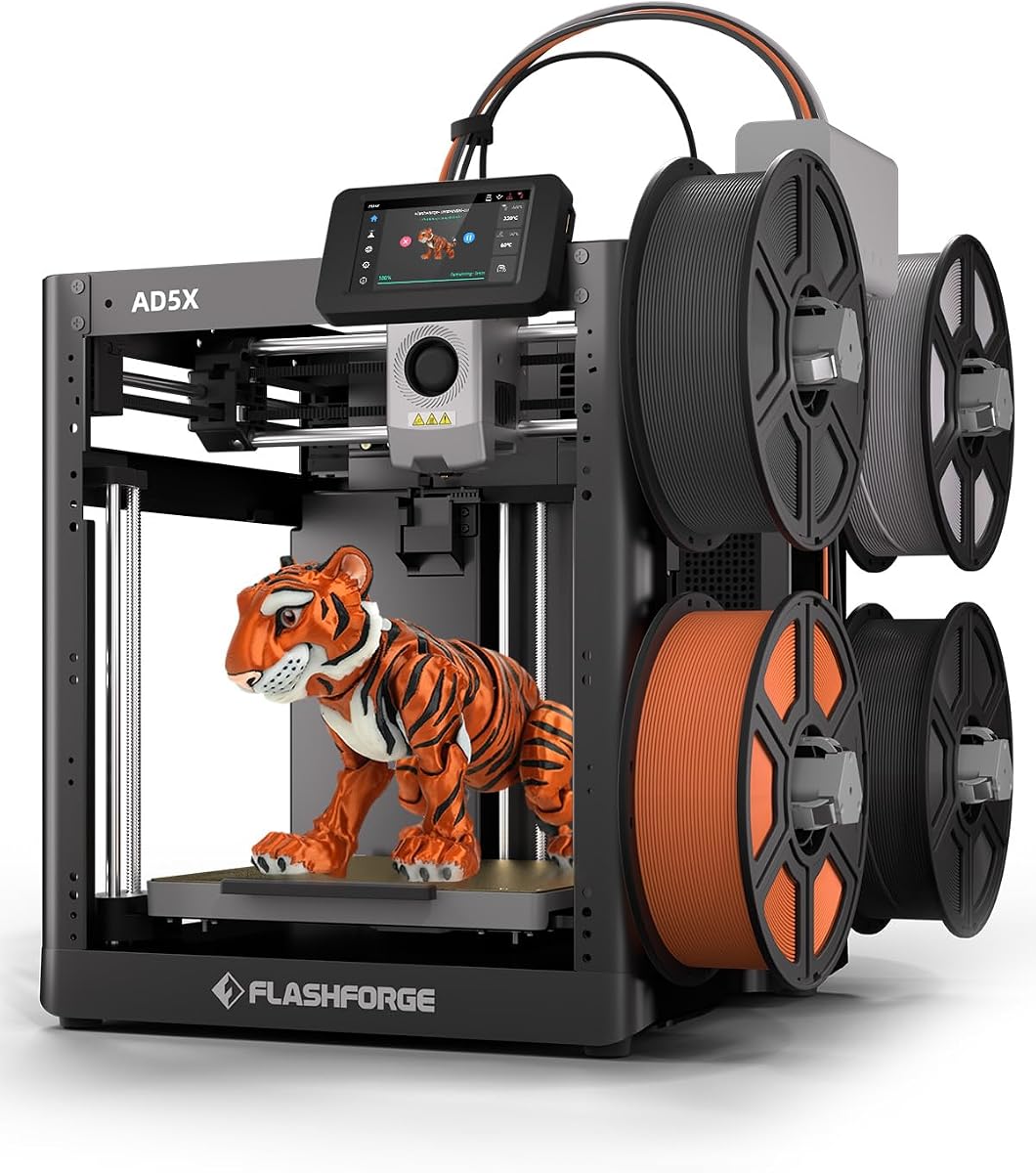
FLASHFORGE AD5X Multi-Color 3D Printer
3.9Editor score
600mm/s CoreXY speed
Multi-color printing support
1-Click auto leveling
This guide compares the top 3D Printer for Fast Printing Speed models available in October 2026. We evaluate speed, quality, and features to help you choose.
Finding a 3D Printer for Fast Printing Speed can transform your workflow significantly. High-speed machines reduce wait times and allow for rapid prototyping. This guide explores the latest models designed for efficiency and quality.
We analyzed ten top-rated printers based on speed capabilities, build volume, and user feedback. Our comparison focuses on CoreXY structures, acceleration rates, and reliability. Each model offers unique advantages for different user needs and budgets.
Each pick highlights key strengths and potential trade-offs for buyers. We included detailed specs, pros, cons, and buying advice. Prices and availability change frequently, so verify details before purchasing your next machine.
3.9Editor score

4.5Editor score

4.5Editor score
This table compares all ten selected 3D Printer for Fast Printing Speed models. Review each spec to find the right balance of speed, features, and compatibility for your projects.



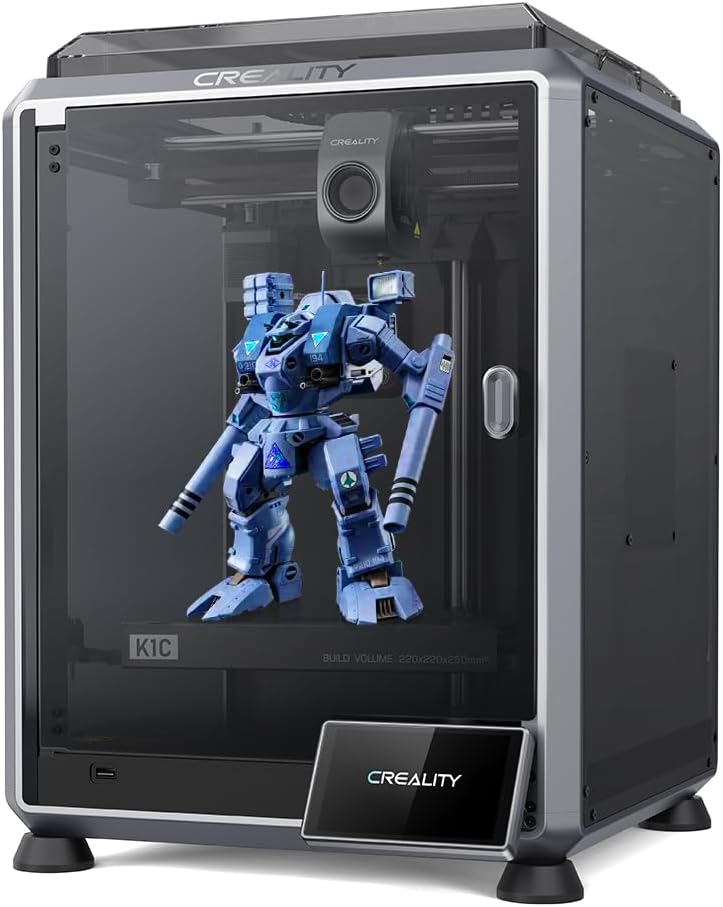
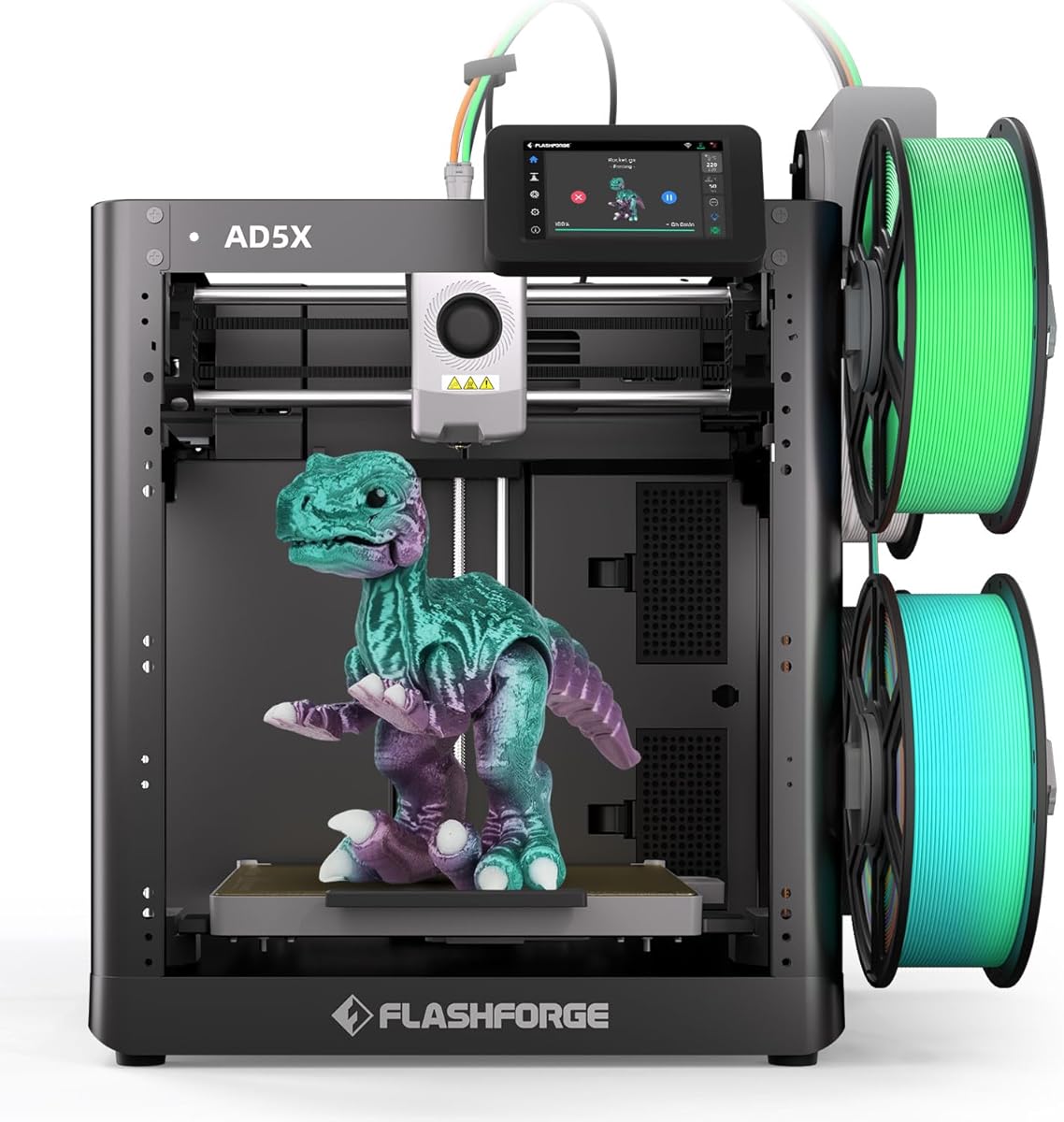
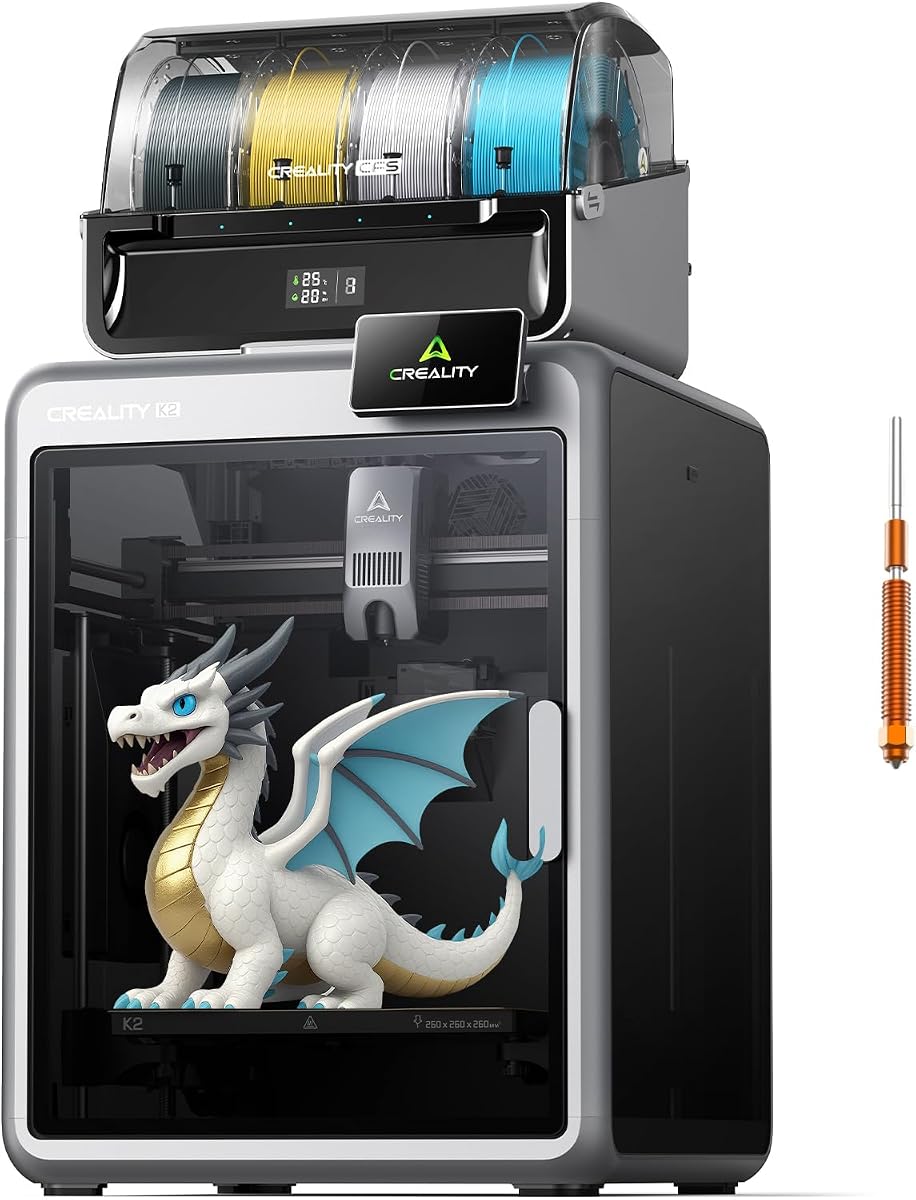
The FLASHFORGE AD5X offers fast CoreXY motion at 600mm/s with auto leveling. It includes a direct drive extruder for reliable filament handling and supports multi-color printing options effectively.
We may earn a commission when you buy through this link, at no additional cost to you.
Its 300°C direct drive extruder enables printing with diverse materials. The vibration compensation system helps maintain layer quality even at high speeds. The 1-click auto leveling simplifies setup significantly for users.
While the build volume is modest at 220mm per axis, it suits most hobbyist needs. The multi-color capability adds creative flexibility without complex external systems. Some users may find the rating lower than premium competitors.
Buy this if you need speed on a budget with multi-color options. Its auto leveling and CoreXY structure deliver good value. Verify current specs before purchasing to ensure it fits your workflow needs.
CoreXY structure allows consistent high speed without sacrificing accuracy or layer alignment.
1-click auto leveling calibrates the bed automatically for consistent first layer adhesion.
We may earn a commission when you buy through this link, at no additional cost to you.
The Bambu Lab P2S Combo features 600mm/s speed with a PMSM servo extruder for accuracy. It includes the AMS 2 Pro for seamless multi-color printing and supports adaptive airflow management for different materials.
We may earn a commission when you buy through this link, at no additional cost to you.
Servo extruder technology ensures precise flow control and reduces clogging risks. The adaptive airflow balances cooling and heat retention for consistent results. Setup takes just 15 minutes, making it ready for use quickly.
While expensive, the included AMS 2 Pro saves cost compared to buying separately. The servo extruder maintains corner quality even at high speeds. Beginners may appreciate the 15-minute setup ease.
Choose this for professional quality multi-color results at high speed. Its servo technology and adaptive airflow support advanced projects. Consider the combo requirement and budget before purchasing today.
PMSM servo extruder maintains consistent flow for sharp corners and accurate details.
Adaptive airflow adjusts cooling and heat retention for different filament types.
We may earn a commission when you buy through this link, at no additional cost to you.
The Bambu Lab P1S reaches 500mm/s with 20000mm/s² acceleration and an enclosed body. It supports up to 16 colors with AMS and features auto bed leveling. Setup takes just 15 minutes.
We may earn a commission when you buy through this link, at no additional cost to you.
The enclosed design improves performance with advanced filaments like ABS. Auto bed leveling ensures consistent adhesion without manual adjustments. Users appreciate the quick setup and high reliability ratings.
While the AMS is sold separately, the base unit is solid. The acceleration allows rapid transitions without sacrificing quality. Some may find the price higher than basic open models.
Buy this for reliable speed and enclosed chamber stability. It suits both beginners and pros. Confirm current pricing and accessories before finalizing your purchase decision.
Enclosed design improves print quality for advanced filaments and environmental stability.
User-friendly design allows setup in just 15 minutes for immediate use.
We may earn a commission when you buy through this link, at no additional cost to you.
The Anycubic Kobra X prints at 600mm/s with native 4-color output and LeviQ 3.0 leveling. It includes AI monitoring and remote control via the Anycubic App. Setup takes 15 minutes post-unboxing.
We may earn a commission when you buy through this link, at no additional cost to you.
LeviQ 3.0 uses 49-point calibration to ensure bed flatness. Vibration compensation maintains layer smoothness during high-speed prints. The large model library offers 100000 designs for inspiration.
While expansion requires ACE 2 Pro, native output reduces purging significantly. Filament isn't included, so budget separately. AI monitoring helps detect failures early for cost savings.
Choose this for fast multi-color with solid leveling. It suits makers and home users. Check current bundle offers and filament availability before purchasing.
LeviQ 3.0 ensures precise bed flatness for reliable first layers.
AI monitoring detects spaghetti failures and alerts users remotely.
We may earn a commission when you buy through this link, at no additional cost to you.
The Snapmaker U1 uses a CoreXY system for 500mm/s and changes tools in 5 seconds. It supports true multi-material printing with four toolheads. Auto calibration and AI monitoring ensure quality.
We may earn a commission when you buy through this link, at no additional cost to you.
Tool swapping reduces filament waste by 5X compared to purging. Four independent toolheads enable mixed rigid and flexible materials. Smart calibration keeps prints dimensionally accurate.
The price is high but justified by multi-material capabilities. Beginners may find the software advanced but the library helps. One-year warranty adds peace of mind for heavy use.
Buy this for professional multi-material prototyping. It minimizes waste and maximizes speed. Verify toolhead availability and compatibility before committing to purchase.
SnapSwap system changes toolheads in five seconds without manual intervention.
Four toolheads support rigid and flexible materials in a single print.
We may earn a commission when you buy through this link, at no additional cost to you.
The Creality K2 Combo reaches 600mm/s with step-servo motors and AI camera monitoring. It features 95% pre-assembly for quick setup and supports multi-color with CFS units.
We may earn a commission when you buy through this link, at no additional cost to you.
Step-servo motors adjust torque dynamically for consistent extrusion. Quiet mode ensures low noise during operation. The AI camera tracks progress and detects failures in real-time.
Multi-color requires CFS, which is available separately. Pre-assembly saves time but check calibration before use. The camera adds transparency for remote monitoring.
Choose this for quiet speed and smart features. It suits offices and shared spaces. Verify CFS pricing and compatibility before purchasing to meet your needs.
Step-servo motors adjust torque dynamically for consistent extrusion and accuracy.
AI camera monitors prints in real-time and detects failures.
We may earn a commission when you buy through this link, at no additional cost to you.
The Bambu Lab A1 reaches 10000mm/s² acceleration with active flow compensation. Auto calibration handles all setup tasks. It offers quiet operation and supports multi-color with AMS lite.
We may earn a commission when you buy through this link, at no additional cost to you.
Auto calibration covers Z-offset, leveling, and more for convenience. Flow compensation ensures smooth prints by adjusting rate dynamically. Quiet motor canceling helps in shared spaces.
AMS lite is sold separately for multi-color. Lightweight frame suits hobbyists but may feel less rigid. The quick swap nozzle simplifies maintenance for beginners.
Buy this for fast speed and ease of use. It suits beginners and kids. Check current AMS pricing before committing to a full multi-color setup.
Full auto calibration handles Z-offset, leveling, and flow for effortless setup.
Active motor noise canceling keeps printing quiet for shared spaces.
We may earn a commission when you buy through this link, at no additional cost to you.
The Creality K1C prints at 600mm/s and supports carbon fiber filaments. It includes AI camera monitoring and auto calibration features. The direct extruder reduces clogs significantly.
We may earn a commission when you buy through this link, at no additional cost to you.
Clog-free direct extruder with steel-stipped nozzle handles tough materials. AI camera detects spaghetti and foreign matter for alerts. Upgraded cooling enhances layer adhesion.
Build size is 8.66×8.66×9.84 inches. Auto calibration reduces setup time for users. High-temperature printing up to 300°C adds material versatility.
Choose this for carbon fiber and durability. It suits makers needing robust prints. Verify filament compatibility and availability before purchasing.
Direct extruder and steel nozzle support abrasive carbon fiber filaments.
Upgraded fan design minimizes stringing and refines layer texture.
We may earn a commission when you buy through this link, at no additional cost to you.
The FLASHFORGE AD5X Multi-Material reaches 600mm/s with IFS filament system. It supports 4-color printing and includes auto calibration and backup features. Modular design saves space.
We may earn a commission when you buy through this link, at no additional cost to you.
IFS allows multiple colors and materials simultaneously without purging. CoreXY structure reduces vibration for precise alignment. Spools are arranged side by side for compact layout.
Modular design offers flexible placement for limited spaces. Auto leveling ensures consistent bed distance for first layer quality. Some users need time to learn the IFS features.
Buy this for fast multi-color in a compact setup. It suits home offices. Check current IFS compatibility and filament options before purchasing.
IFS supports multi-color and multi-material printing with filament backup.
Lightweight modular design allows flexible placement and space savings.
We may earn a commission when you buy through this link, at no additional cost to you.
The Creality K2 (A) Combo reaches 600mm/s with CFS multi-color support. It features smart filament handling with auto relay and includes an air purifier. Steel rail and dual Z-axis ensure stability.
We may earn a commission when you buy through this link, at no additional cost to you.
CFS reads RFID info and keeps filament dry. Air purifier filters VOCs for safer printing. 20000mm/s² acceleration maintains accuracy even at high speeds.
Expandable up to four CFS for 16 colors. Air purifier adds safety for enclosed environments. Pre-assembled design reduces setup time for users.
Choose this for high-speed multi-color with safety. It suits pros and home makers. Check current CFS bundle deals before purchasing to maximize value.
CFS enables auto filament relay and moisture-proof storage.
Built-in air purifier filters VOCs for safer printing environments.
We may earn a commission when you buy through this link, at no additional cost to you.
Selecting a fast 3D Printer involves matching speed to your needs. This guide covers key factors to ensure you buy the right machine.
High-speed printers use CoreXY and accelerations of 20000mm/s² or more. These features reduce print times drastically compared to older models. Look for accelerations above 10000mm/s² for efficiency.
Prioritize models with high acceleration and CoreXY structure for speed.
Build volume determines the max size of prints. Common sizes range from 220mm to 260mm. Larger volumes may slow speed, so choose based on typical project sizes.
Select a volume that matches your common project dimensions.
Multi-color systems like AMS, CFS, or IFS add flexibility but require budget. Some models support 4-colors natively. Others need additional hardware. Consider if you need multi-color before buying.
Choose native output or compatible systems for multi-color printing.
Auto leveling simplifies setup and ensures consistent first layers. High-speed printers rely on reliable calibration. Features like 1-click leveling save time for frequent users.
Ensure the printer includes auto leveling for reliable first layers.
Check compatibility with common materials like PLA, PETG, and ABS. Some models support carbon fiber. Temperature and extruder type affect material versatility. Review specs for your needs.
Verify material compatibility with your typical filament types.
Quiet printers are essential for home use. Features like step-servo motors and silent mode reduce noise. Look for balanced fans and vibration-free designs.
Choose models with quiet mode for shared spaces.
AI monitoring and remote control help track progress. Apps that allow live video reduce failures. Ensure compatibility with your preferred slicer software.
Look for AI monitoring and app control for easier tracking.
Prices vary widely. Higher cost often means better build quality. Warranty terms vary by brand. Consider long-term service needs when buying.
Compare price and warranty before purchasing any model.
Use high-speed settings but avoid over-pushing. Keep firmware updated for latest features. Regularly check belts for tension to maintain speed accuracy.
Clean the bed and nozzle after every few prints. Lubricate moving parts to reduce wear. Replace worn components like nozzles when needed.
Store filament dry to prevent issues. Keep a log of settings and material performance. Follow manufacturer maintenance schedules for best longevity.
A fast 3D printer typically reaches 500mm/s or higher. Accelerations of 20000mm/s² ensure rapid transitions. CoreXY structures support speed without vibration.
High speed can reduce quality without good calibration. Vibration compensation and auto leveling help maintain accuracy. Choose models with balancing features.
Multi-color adds time for tool changes. Some models reduce purging. Native output systems save time versus external setups.
Auto leveling ensures consistent first layers. It saves time and reduces failures. High-speed printers depend on reliable calibration for speed.
Most support PLA and PETG. Some support ABS or carbon fiber. Check temp and extruder compatibility for specific materials.
Many have silent modes. Step-servo motors and balanced fans reduce noise. Choose quiet features for shared spaces.
CoreXY uses fixed motors for faster speed. Cartesian moves the motors. CoreXY is preferred for high-speed printing.
Most include slicer software. Some work with third-party apps. Check compatibility with your workflow before purchasing.
We covered ten fast 3D printers with speed features. Each offers distinct advantages in speed, design, or ease. Our picks balance performance and affordability effectively.
Prioritize features that match your projects. Automation, multi-color, and volume matter. Don't overlook noise and maintenance needs.
Prices and availability vary. Verify current listings before purchasing. Confirm that your needs align with model capabilities.