
SHILLEHTEK Universal Power Supply Module
4.6Editor score
Universal MB102 Compatibility
Select 3.3V or 5V
USB or DC Input Support
Compact Solderless Design
This comprehensive guide compares the top ten 12V Breadboard Power Supply units available this month based on performance reliability voltage stability and
Finding the right power source for your electronics projects is critical for success and safety. A good 12V Breadboard Power Supply provides stable voltage rails without overheating or introducing noise into sensitive circuits. This ensures your microcontrollers and sensors operate reliably during prototyping sessions.
We evaluated ten top rated models based on input versatility output current capacity and ease of use. Each product was reviewed for compatibility with standard breadboards and included protection features. Our analysis highlights the strengths and weaknesses of every unit to help you make an informed choice.
Each pick below details specific features ratings and ideal use cases for hobbyists and professionals. You will find options ranging from simple modules to advanced kits with adjustable outputs. Please note that availability and terms may change so verify details before purchasing your next power source.
4.6Editor score

4.5Editor score

4.5Editor score
The following table offers a side-by-side overview of all ten products we reviewed. It highlights key specifications input ranges and output capabilities so you can quickly identify the best fit for your specific prototyping needs.




This module stands out as the top pick due to its versatility and robust design. It supports both classic DC inputs and modern Type-C USB connections which makes it ideal for portable projects. The independent control over left and right rails allows for powering mixed voltage components simultaneously without extra wiring.
We may earn a commission when you buy through this link, at no additional cost to you.
The standout feature is the higher current capacity compared to standard modules. The 5V rail delivers up to 2A which is sufficient for running multiple sensors or small motors directly. Onboard protection circuits ensure that accidental shorts do not damage your expensive microcontrollers or power supply.
One trade-off is that it is slightly larger than the most compact options. This might limit space on very small breadboards but is usually manageable. Additionally the USB-C input requires a cable that supports data or power depending on the adapter used.
If you need a reliable power source that fits both old and new setups this is the best choice. The inclusion of a second unit in the package adds significant value for classrooms or workshops. It is highly recommended for serious hobbyists and educators.
Using Type-C USB or standard DC allows you to use phone chargers or power banks easily. This flexibility removes the need for specialized power bricks for every project.
Turn off one side while keeping the other active to save power or isolate circuits. This is useful when testing different voltages on the same board.
We may earn a commission when you buy through this link, at no additional cost to you.
This pack offers an excellent entry point for groups needing multiple power modules. It fits standard MB102 breadboards and provides both 3.3V and 5V outputs. The inclusion of 9V connectors makes it easy to use batteries for field testing without extra adapters.
We may earn a commission when you buy through this link, at no additional cost to you.
The main strength lies in the quantity and convenience. Getting five modules at a low cost allows for distribution across multiple workstations or projects. It works well for simple circuits where current draw remains under 700mA.
It lacks the advanced protection features found in higher priced units. If you connect many components the limited current could lead to voltage drops. It is also basic in terms of physical build quality compared to top tier options.
This product is ideal for students or beginners who need basic power distribution. The 9V battery compatibility is a nice touch for mobile setups. Consider it for bulk needs where cost efficiency matters most.
Having multiple modules means you can spare one for repairs or share with friends. It ensures you always have a backup ready for urgent prototyping tasks.
The 9V connectors allow quick battery swaps for untethered experiments. This is useful for testing devices that need to run on portable power.
We may earn a commission when you buy through this link, at no additional cost to you.
This kit is designed as a complete start up solution for new electronics enthusiasts. It bundles the power module with a breadboard jumpers and a dedicated 12V adapter. Everything you need to begin prototyping is in one box.
We may earn a commission when you buy through this link, at no additional cost to you.
The primary advantage is convenience. You do not need to source individual components which simplifies the setup process. The power module itself is standard and provides stable 3.3V and 5V rails for common microcontrollers like Arduino.
Some users report that the included breadboard may have intermittent contact issues over time. The jumper wires are functional but not premium grade. These are acceptable trade-offs given the price point and all-inclusive nature.
If you are new to electronics or buying for a class this kit saves time. It provides a solid foundation for learning circuit basics without hunting for parts. It is a practical choice for quick deployment in educational settings.
The bundle includes jumpers and a power adapter which reduces assembly time. This helps beginners focus on learning circuits rather than shopping for parts.
The module provides standard 3.3V and 5V rails needed for most microcontrollers. This ensures compatibility with popular platforms like Arduino and Raspberry Pi Pico.
We may earn a commission when you buy through this link, at no additional cost to you.
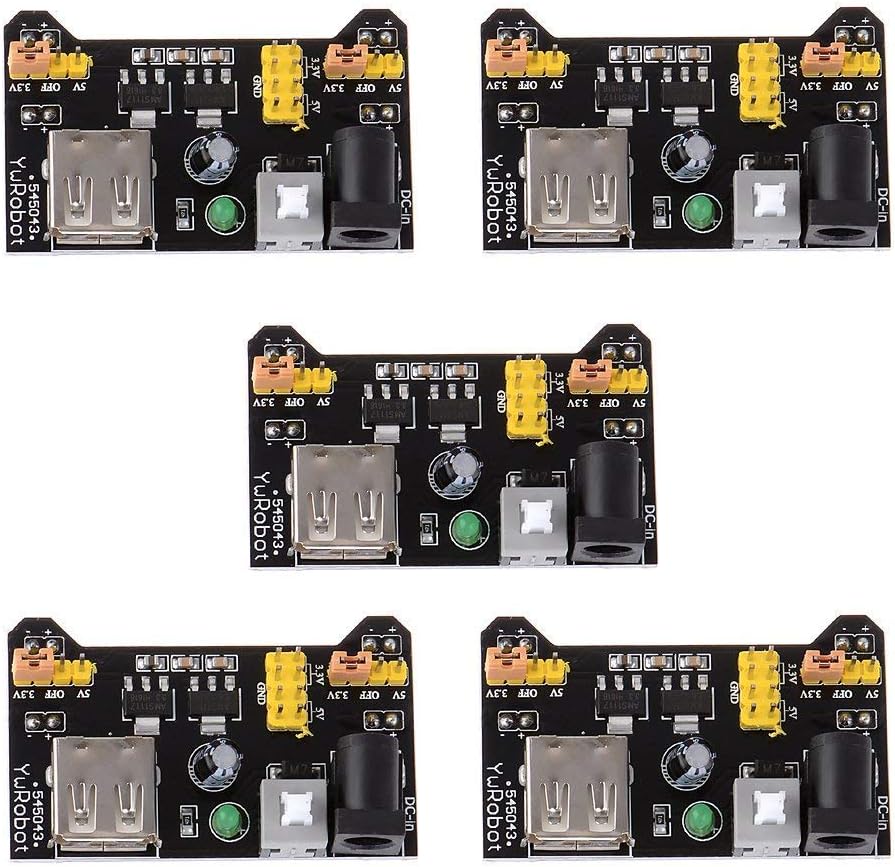
HiLetgo is a known name in maker components and this module reflects that reputation. It delivers stable power at 3.3V and 5V with a straightforward design. The package includes five units which is great for stocking up a workshop.
We may earn a commission when you buy through this link, at no additional cost to you.
Its strength lies in consistency and ease of use. You simply plug it into the breadboard rails and select the voltage with a jumper. It works well for low power applications and common hobbyist projects.
It does not offer high current output or extra protection features like short circuit cutoff. For complex circuits requiring more power you might need an external source. It is best suited for logic level components.
For those seeking a no fuss power source this module fits the bill. The five pack ensures you have spares for new builds. It is a dependable workhorse for general electronics prototyping tasks.
HiLetgo products are widely used and trusted in the maker community. This reduces the risk of receiving defective units or inconsistent performance.
The module focuses on core tasks without extra bells and whistles. This simplicity often leads to fewer points of failure during extended use.
We may earn a commission when you buy through this link, at no additional cost to you.
This unit offers impressive value with a high customer rating despite its low cost. It fits standard breadboards perfectly and provides clean power for low voltage chips. The ability to use USB power makes it great for portable setups.
We may earn a commission when you buy through this link, at no additional cost to you.
It excels in simplicity and broad compatibility. Most projects requiring 3.3V or 5V can use this without modifications. The price point makes it accessible for students or hobbyists on a tight budget.
The main limitation is that it is sold individually. If you need multiple units you will pay more than with a multi pack. Also it lacks extra features like independent rail control.
Buy this if you need a single reliable power source for a specific project. It is one of the best budget options currently available. Ensure you have a suitable input adapter before starting work.
For a single unit this module is one of the most affordable on the market. It delivers essential functions without unnecessary added costs for extra features.
Using a standard USB cable to power this module adds flexibility. It can run from a computer or power bank for on the go testing.
We may earn a commission when you buy through this link, at no additional cost to you.
This set provides a practical solution for classrooms or makerspaces needing multiple units. Each module plugs directly into breadboard rails for immediate power. The 9V connectors allow quick battery testing without complex wiring.
We may earn a commission when you buy through this link, at no additional cost to you.
The main benefit is the combination of bulk supply and battery compatibility. You can power projects temporarily without access to wall outlets. The LED indicator gives a clear visual status of power availability.
It operates at fixed voltages so you cannot adjust output beyond selection. Current is limited to around 700mA which is fine for logic but not heavy loads. It is designed for learning and basic prototyping tasks.
If you need multiple units for a group this is a solid choice. The inclusion of connectors adds usability for field tests. It is a reliable standard option for general electronics needs.
An onboard LED shows when power is active at a glance. This helps quickly identify if the module is connected correctly without extra testing.
Supports 3.3V and 5V which covers most digital logic requirements. This keeps the design simple and ensures compatibility with common chips.
We may earn a commission when you buy through this link, at no additional cost to you.
This kit appeals to makers who want more control over their power supply. It requires soldering to build but provides flexible output options. The digital display helps you set precise voltages for sensitive components.
We may earn a commission when you buy through this link, at no additional cost to you.
The ability to get 12V directly from the module is a unique feature. Many standard boards stop at 5V so this helps run motors or other higher voltage devices. The display adds confidence during testing.
Assembling it takes time and skill which might deter beginners. It is not a simple drop in module like others. If you lack soldering experience you may need help or practice first.
Choose this if you need 12V or adjustable voltage for specific circuits. It is a great project in itself for learning power electronics. It suits experienced users who value customization.
You can set the output to specific voltages using a potentiometer. This flexibility is rare in standard breadboard power modules.
The digital display shows the exact voltage being provided. This removes guesswork when tuning circuits for optimal performance.
We may earn a commission when you buy through this link, at no additional cost to you.
SunFounder designed this module with modern high current devices in mind. It offers 1.5A on the 5V rail which supports more powerful components. The extra USB output is handy for connecting peripherals like displays.
We may earn a commission when you buy through this link, at no additional cost to you.
Independent channels let you power different parts of a circuit separately. This helps isolate noise and simplify debugging. It fits standard breadboards and works well with boards like Raspberry Pi Pico.
It is a bit costlier than entry level options but justifies the price. The lack of an included breadboard means you must buy one separately if needed. It focuses on performance and utility.
If you need more than 700mA for your 5V devices this is ideal. The extra USB port adds convenience for IoT projects. It is a strong contender for advanced prototyping tasks.
The 5V rail supports up to 1.5A which handles more devices at once. This prevents voltage drops when running high draw components.
A dedicated USB output allows connecting peripherals without extra adapters. This saves pin space on the breadboard for signal wires.
We may earn a commission when you buy through this link, at no additional cost to you.
This module offers exceptional versatility with a wide input range and multiple outputs. You can get 3.3V 5V 12V and adjustable voltage all on one board. It is efficient and works well for varied power needs.
We may earn a commission when you buy through this link, at no additional cost to you.
The flexibility to accept high input voltage makes it robust for different supplies. The adjustable output allows fine tuning for specific components. It is a high rated product for technical users.
It does not plug directly into breadboard power rails so you must wire it. This adds complexity compared to integrated modules. It is better suited for bench use or custom enclosures.
If you need a flexible power source for many types of projects this is strong. It is highly rated for efficiency and range. Consider it for work that involves higher voltages.
Accepts 5V to 40V input which accommodates many adapter types. This reduces the need for different power supplies for different projects.
Includes fixed and adjustable outputs for maximum flexibility. You can cover most common voltage needs from one device.
We may earn a commission when you buy through this link, at no additional cost to you.
This adapter is a premium bench power supply that can work with breadboards via clips. It offers adjustable voltage from 3V to 24V and high current for demanding tasks. The display shows exact output which helps precision.
We may earn a commission when you buy through this link, at no additional cost to you.
Its main advantage is the high power capacity and protection features. You can run motors or multiple strips without worrying about overloads. It is built for long term use and safety.
It is not a simple breadboard module so you must connect manually. This might feel less convenient for quick tests compared to integrated options. It is a tool for serious work rather than casual hobby.
For professional use or complex circuits this supply is unmatched. It replaces the need for multiple fixed adapters. It is a wise investment for advanced electronics work.
The LCD display allows you to see exact voltage in real time. This ensures your circuits receive precisely what they need.
Built in protections prevent overheating and short circuits. This keeps your expensive components safe during long tests.
We may earn a commission when you buy through this link, at no additional cost to you.
Selecting the right power supply depends on your specific project needs and budget. Consider these factors to ensure stability and safety in your prototyping environment.
Check if the module accepts your available power source. Many models support DC inputs from 6V to 12V or USB which adds flexibility for different setups.
Ensure your adapter matches the input range to avoid damage or poor regulation.
Determine the total current your components will draw. Standard modules offer around 700mA while some provide up to 2A or more for heavier loads.
If you plan to run motors or multiple sensors choose a higher current model to prevent voltage drops.
Most boards offer fixed 3.3V and 5V which covers most microcontrollers. Advanced options allow adjustable outputs or higher voltages like 12V directly.
Consider if you need adjustable voltage for testing different logic levels or specific sensors.
Look for short circuit and over current protection features. These prevent damage to your components if a wiring error occurs.
Modules without protection require careful wiring to avoid burning out sensitive parts.
Verify that the module fits standard solderless breadboards like MB102. Some units are sized specifically to sit flush without blocking pins.
A good fit saves space and keeps your workspace organized for complex circuits.
If you move projects often consider USB powered or battery compatible models. This allows testing without access to a wall outlet.
Battery connectors can be a valuable addition for field testing or demos.
Some products come in multi packs which offer better value for groups. This is useful for classrooms or workshops needing multiple units.
Single units may cost less upfront but lack the convenience of having spares ready.
Most modules are plug and play but some kits require soldering. Decide if you want a ready to use unit or a build project.
Soldering kits provide customization but take time and skill to assemble properly.
First insert the module into the power rails on your breadboard. Ensure the polarity matches the markings on the board to avoid reverse connections. Secure it firmly so it does not loosen during wiring changes.
Next select the desired output voltage using the jumper or switch. Turn on the input source and check the LED indicator for power status. Use a multimeter if you need to verify voltage accuracy.
Regularly inspect the module for heat or damage after long use. Keep it away from moisture and dust to maintain performance over time. Unplug it when not in use to conserve energy and ensure safety.
Many of the reviewed modules support USB input making this possible. Ensure your power bank can provide stable voltage within the required range for your module. This is a convenient way to power projects on the go.
These are standard logic voltages for different microcontrollers. Most modern boards like ESP32 require 3.3V while older Arduinos often use 5V. Choose the output that matches your main component voltage.
If you have multiple modules you can often power them from a single adapter with splitters. Just ensure the total current draw does not exceed the adapter capacity. This saves space on your workbench.
Some heat is normal due to voltage regulation but excessive warmth is not. If it gets too hot check if you are exceeding the current limit. Ensure proper ventilation to help cooling during operation.
Most are safe for educational use but adult supervision is recommended. They operate at low voltages but accidental shorts can cause heat. Teach proper wiring to prevent mistakes during experiments.
If the module supports USB input you can power it from a computer port. This is useful for testing circuits without extra adapters. Ensure the USB port supplies enough current for your needs.
Voltage may drop causing instability or the module may shut down. High current draw without protection can damage components over time. Monitor your load to stay within safe limits for best results.
Most breadboard power modules are designed to plug in without soldering. This allows quick setup and easy changes. Some advanced kits require soldering but standard units do not.
We have covered ten top models ranging from simple units to advanced kits. The 2-Pack Breadboard Power Supply Module leads in versatility while the SHILLEHTEK offers great budget value.
Prioritize current capacity and safety features based on your most demanding projects. A reliable power source protects your work and ensures consistent results for testing.
Verify the latest pricing and availability before making your final decision. Products change over time so checking current listings ensures you get the best deal available.