
TP-Link 10GB PCIe Network Card (TX401)
4.2Editor score
10GBase-T Technology
Backwards Compatible
Includes CAT6A Cable
Compare top 10GbE Network Card models for speed compatibility and value. This guide evaluates features performance and support to help you choose the right
High-speed networking is essential for modern workstations and servers. A reliable 10GbE Network Card ensures fast data transfers and low latency. It connects your system to high-performance switches and storage arrays efficiently.
We analyzed ten top-rated PCIe adapters based on chipset quality and compatibility. Our review covers copper and fiber options for diverse needs. Each product offers unique benefits for home labs and enterprise environments.
Every pick includes key specs and real-world performance insights. Prices fluctuate frequently so verify current costs before buying. This guide helps you upgrade your network infrastructure with confidence and clarity.
4.2Editor score

4.3Editor score

4.6Editor score
This table compares all ten selected adapters side by side. Review key specs like controller type and interface speed to find the perfect match for your system.




The TP-Link TX401 is a standout affordable 10GbE Network Card for home users. It delivers full 10Gbps speeds over standard copper cables. This adapter is perfect for upgrading PCs or workstations without breaking the bank.
We may earn a commission when you buy through this link, at no additional cost to you.
Its Realtek chipset ensures reliable performance for general use. It supports Windows 10 and Linux natively. The included CAT6A cable helps users get started immediately without extra purchases.
While it lacks advanced server features like virtualization support, it excels in basic networking tasks. Users might miss dual ports or fiber options. However, these trade-offs are acceptable for the low cost.
Buyers seeking a simple 10GbE Network Card should consider this model first. It offers great value and ease of installation. The two-year warranty provides peace of mind for home office setups.
This card provides an accessible entry point into 10Gbps networking at a fraction of enterprise costs.
Most users find drivers install automatically on Windows systems for immediate network functionality.
We may earn a commission when you buy through this link, at no additional cost to you.
The Synology E10G30-T2 is purpose-built for Synology NAS systems. It offers two 10GbE ports for high-speed storage connectivity. This adapter ensures seamless integration with DSM software for optimal performance.
We may earn a commission when you buy through this link, at no additional cost to you.
Its dual-port design allows for link aggregation or separation of traffic. The five-year warranty highlights Synology's confidence in this hardware. It supports automatic negotiation between speeds for flexibility.
However, this card is less versatile for general PC use due to DSM requirements. Users with non-Synology systems should look elsewhere. The premium price is justified by enterprise-grade reliability.
Synology owners needing storage upgrades will find this ideal. It delivers high bandwidth for media editing and backups. The robust warranty makes it a long-term investment for storage needs.
DSM detects this adapter instantly without manual driver configuration for immediate use.
Dual ports enable load balancing or failover configurations for critical data access.
We may earn a commission when you buy through this link, at no additional cost to you.
The 10Gtek 10Gb PCI-E NIC is built around the reliable Intel 82599EN controller. It features a single SFP+ port for flexible fiber or DAC connections. This design suits data centers and home labs needing optical links.
We may earn a commission when you buy through this link, at no additional cost to you.
It supports Windows Server and Linux with solid driver stability. The PCIe X8 lane ensures high throughput without bottlenecks. This card also works well in virtualized environments like VMware.
Users must source their own SFP modules or DAC cables separately. It does not support lower copper speeds like 2.5G. This limitation means extra cost but offers high performance.
This adapter is perfect for users needing fiber connectivity at a low cost. It balances price and reliability well. Ideal for NAS or server setups requiring robust networking.
Supports various optics including SR, LR, and DAC cables for flexible deployment.
Works smoothly with ESXi and KVM for virtual machine networking.
We may earn a commission when you buy through this link, at no additional cost to you.
The VunLink 10GbE card features the latest Realtek RTL8127 chipset. It supports PCIe 4.0 x1 for maximum efficiency in modern PCs. Its multi-gig capability ensures compatibility with varied network switches.
We may earn a commission when you buy through this link, at no additional cost to you.
This adapter delivers full 10Gbps performance with low latency. It works on Windows 10, 11, and Linux with appropriate drivers. The power-efficient design helps keep case temperatures down.
Users may need to install drivers manually on some Linux distros. Without case airflow, the card can run warm. These issues are manageable for most users seeking speed.
Anyone upgrading to a modern PC should consider this model. It offers future-proof speeds and efficiency. A great choice for gaming rigs and high-performance workstations.
Uses PCIe 4.0 for bandwidth headroom beyond standard 10GbE needs.
Handles 10G, 5G, and 2.5G links automatically for flexible setups.
We may earn a commission when you buy through this link, at no additional cost to you.
The Vogzone X550-T2 offers exceptional performance with the Intel X550AT2 controller. It features dual RJ45 ports for flexible copper networking. Users can update firmware via OS without needing USB tools.
We may earn a commission when you buy through this link, at no additional cost to you.
This adapter supports all major OS platforms including Windows and Linux. Its advanced features like QoS and SR-IOV improve server capabilities. The dual ports enable redundancy or higher throughput.
Manual configuration might be needed for 2.5G or 5G speeds. The price is higher than budget cards but justified by reliability. It is a robust choice for serious networking tasks.
Users wanting a complete 10GbE Network Card should pick this one. It handles heavy data loads well. Ideal for NAS, servers, and professional workstations.
Includes advanced tools like QoS and offloading for optimized traffic handling.
Dual ports allow redundant links or link aggregation for higher stability.
We may earn a commission when you buy through this link, at no additional cost to you.
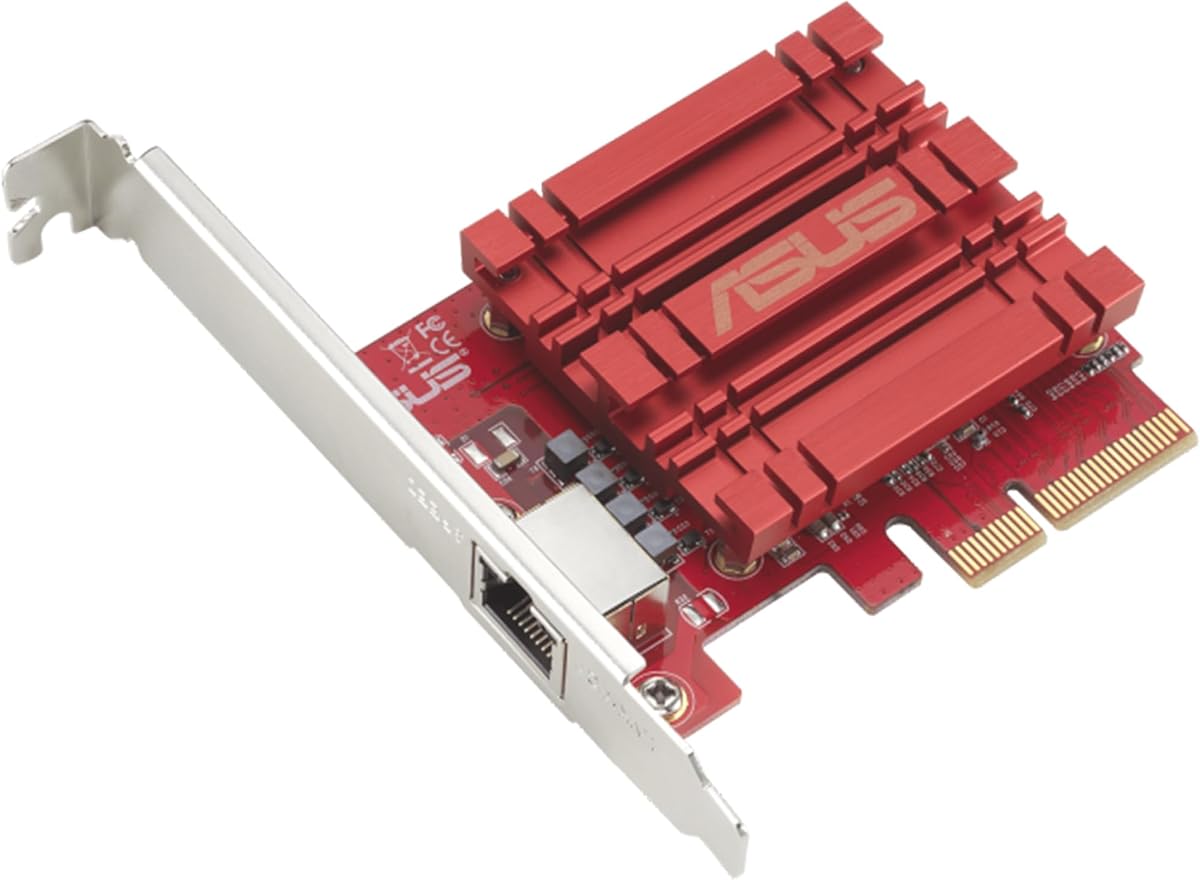
The Asus NADACA0140 brings reliable 10Gbps speeds to standard desktops. It uses an RJ45 port to simplify upgrades for general users. Asus reputation ensures stable drivers and solid performance.
We may earn a commission when you buy through this link, at no additional cost to you.
This adapter supports both Windows and Linux well. It auto-negotiates speeds with existing switches for seamless integration. Users appreciate the straightforward installation process.
While it offers only one port, that suits most single-user PCs. Some Linux users may need to check specific kernel versions. However, it remains a solid choice for everyday use.
Buyers looking for a trusted brand 10GbE Network Card should choose this. It is easy to use and reliable. Perfect for home PCs needing a fast upgrade.
Transforms standard PCIe slots into high-speed 10Gbps connections effortlessly.
Works across Windows versions and Linux kernels without major issues.
We may earn a commission when you buy through this link, at no additional cost to you.
The Synology E10G30-T1 provides a dedicated single-port 10GbE upgrade for NAS. It is fully validated to work seamlessly with Synology DSM. Users benefit from a perfect five-star user rating.
We may earn a commission when you buy through this link, at no additional cost to you.
This adapter delivers consistent high speeds for storage access. The five-year warranty shows long-term support commitment. It supports auto-negotiation for flexible connection speeds.
It is not useful outside Synology systems. Single ports limit throughput compared to dual-port options. Yet for NAS users it remains a top choice.
Synology users wanting a simple speed boost should pick this. It ensures reliability and support. Ideal for media editing or large backup tasks.
Designed specifically to integrate with Synology's operating system seamlessly.
Five-year protection offers significant peace of mind for network hardware.
We may earn a commission when you buy through this link, at no additional cost to you.
This 10Gb PCIe NIC uses the genuine Intel 82599EN controller. It supports third-party optics without vendor lock-in. The design allows easy installation across many operating systems.
We may earn a commission when you buy through this link, at no additional cost to you.
Users appreciate the plug-and-play experience without complex setup. It supports various optics including SR and LR. The card runs warm due to passive cooling needs airflow.
Heat management is the only real drawback. Users may need fans in low-airflow cases. Despite this it remains a high-value option.
Anyone needing fiber connectivity should consider this adapter. It balances cost and performance well. Great for servers and home labs.
Accepts any SFP+ modules without rejection by the hardware.
Runs natively on Proxmox and TrueNAS without additional drivers.
We may earn a commission when you buy through this link, at no additional cost to you.
The TRENDnet TEG-10GECTX stands out for NDAA and TAA compliance. This makes it suitable for government and enterprise contracts. It supports 2.5G BASE-T for flexible cabling options.
We may earn a commission when you buy through this link, at no additional cost to you.
This adapter delivers consistent 10Gbps speeds reliably. It includes standard and low-profile brackets for versatile installation. Technical support is responsive for any issues.
It uses PCIe Gen 2.0 which is slightly older but sufficient. Users seeking compliance should prioritize this model. Performance is solid for typical use cases.
Buyers needing compliant hardware will find this ideal. It ensures regulatory requirements are met. Perfect for public sector or strict enterprise environments.
Meets NDAA and TAA requirements for public sector installations.
Supports 2.5G and 5G speeds over existing Cat5e cables.
We may earn a commission when you buy through this link, at no additional cost to you.
The 10Gtek X550-T1 offers a single-port solution with an Intel X550-AT2 controller. It provides full multi-gig speeds via a standard RJ45 port. This model simplifies networking for single-link users.
We may earn a commission when you buy through this link, at no additional cost to you.
Users benefit from solid Linux and FreeBSD support. The multi-gig capability allows flexible 5G and 2.5G connections. It includes brackets for easy case installation.
Firmware updates are not supported which limits future adjustments. Manual config might be needed for lower speeds. However, for copper users this offers reliable performance.
Buyers needing a simple Intel copper adapter should consider this. It delivers robust speeds at a fair price. Ideal for workstations requiring straightforward upgrades.
Uses the trusted X550 chipset for stable performance and broad support.
Supports automatic negotiation between 10G, 5G, and 2.5G speeds.
We may earn a commission when you buy through this link, at no additional cost to you.
Choosing the right 10GbE Network Card requires understanding key technical factors. This section helps you select based on your system needs and budget.
The controller determines performance and compatibility. Intel controllers like X550 are best for servers and virtualization. Realtek options suit budget PC builds.
Choose Intel for reliability and Realtek for cost savings.
Select copper RJ45 for standard cables or SFP+ for fiber. RJ45 is easier to manage but costs more for high speeds. SFP+ requires optics but offers longer distances.
Match the port to your existing network cables.
Ensure your motherboard has a compatible slot. PCIe 3.0 x1 works for 10Gbps. PCIe 4.0 offers more bandwidth but is rare. Avoid using slow 2.0 slots for speed.
Check your motherboard specs before buying.
Verify drivers exist for your OS. Windows usually works out of the box. Linux support varies by chipset. Some models require manual installation.
Test drivers on your specific distro first.
If using VMware or KVM look for SR-IOV support. This feature improves VM networking performance significantly. Not all adapters support this capability.
Prioritize virtualization support for VMs.
Long warranties indicate manufacturer confidence. Look for two to five years of coverage. Reliable tech support helps resolve driver issues quickly.
Choose brands with strong support policies.
Prices range widely from $30 to $250. Higher costs often mean better chips or more ports. Balance features against your actual speed needs.
Avoid overspending if basic 10G speeds suffice.
Install the card in a PCIe slot after turning off the PC. Secure it firmly and connect Ethernet cables properly. Restart the system to detect the hardware.
Install drivers from the manufacturer website if needed. Ensure your OS recognizes the new adapter. Test speeds using a network analyzer tool.
Keep the card cool by maintaining case airflow. Clean dust regularly to prevent overheating. Update drivers periodically for best performance.
Yes, use Cat6A or Cat7 cables for full 10Gbps speeds. Standard Cat5e works for lower multi-gig speeds up to 2.5G. Poor cabling limits your adapter performance.
Windows often detects it automatically without drivers. Linux may require manual driver installation depending on the chipset. Check compatibility before buying.
Only SFP+ models support fiber optics. RJ45 adapters work with copper cables only. Choose the right type for your switch connections.
Yes for large file transfers or media editing. It helps NAS backups and local cloud storage. Gamers may not need it unless streaming internally.
Use vendor tools like Intel NVM updates or web UIs. Some cards allow updates directly from the OS. Others require bootable media for changes.
Yes, your switch or router must support 10Gbps speeds. Without a compatible device the adapter defaults to 1G. Check your network gear first.
We compared ten top models including budget and premium options. The TP-Link TX401 is great for cost savings while Vogzone offers high-end features.
Prioritize controller type and OS support for long-term reliability. Ensure your system has the right slots and cables before buying.
Check current prices before purchase as they change frequently. Select the card that fits your network environment perfectly today.