
Zopsc 2 Pack DO Dissolved Oxygen Tester for Smartphones
4.0Editor score
Wireless mobile connectivity
Weather sealed floating design
Extended battery performance
This guide compares the top 10 dissolved oxygen sensors for water quality monitoring in aquaculture, labs, and IoT projects with detailed specs and reviews.
Selecting the right dissolved oxygen sensor is critical for maintaining healthy water environments in aquaculture and laboratories. Accurate measurements ensure optimal conditions for aquatic life and scientific processes requiring precise data integrity.
We evaluated ten top-rated models based on accuracy, ease of use, durability, and compatibility with various systems. Our analysis covers galvanic, polarographic, and optical technologies to help you find the best fit for your needs.
Each product highlight showcases key features and real-world applications to guide your purchasing decision. Please note that prices and availability may change frequently, so verify current details before ordering your equipment today.
4.0Editor score

4.8Editor score

4.5Editor score
The following table provides a side-by-side comparison of all ten selected dissolved oxygen sensors. Review the specifications to identify the model that best aligns with your specific water quality monitoring requirements and budget constraints.
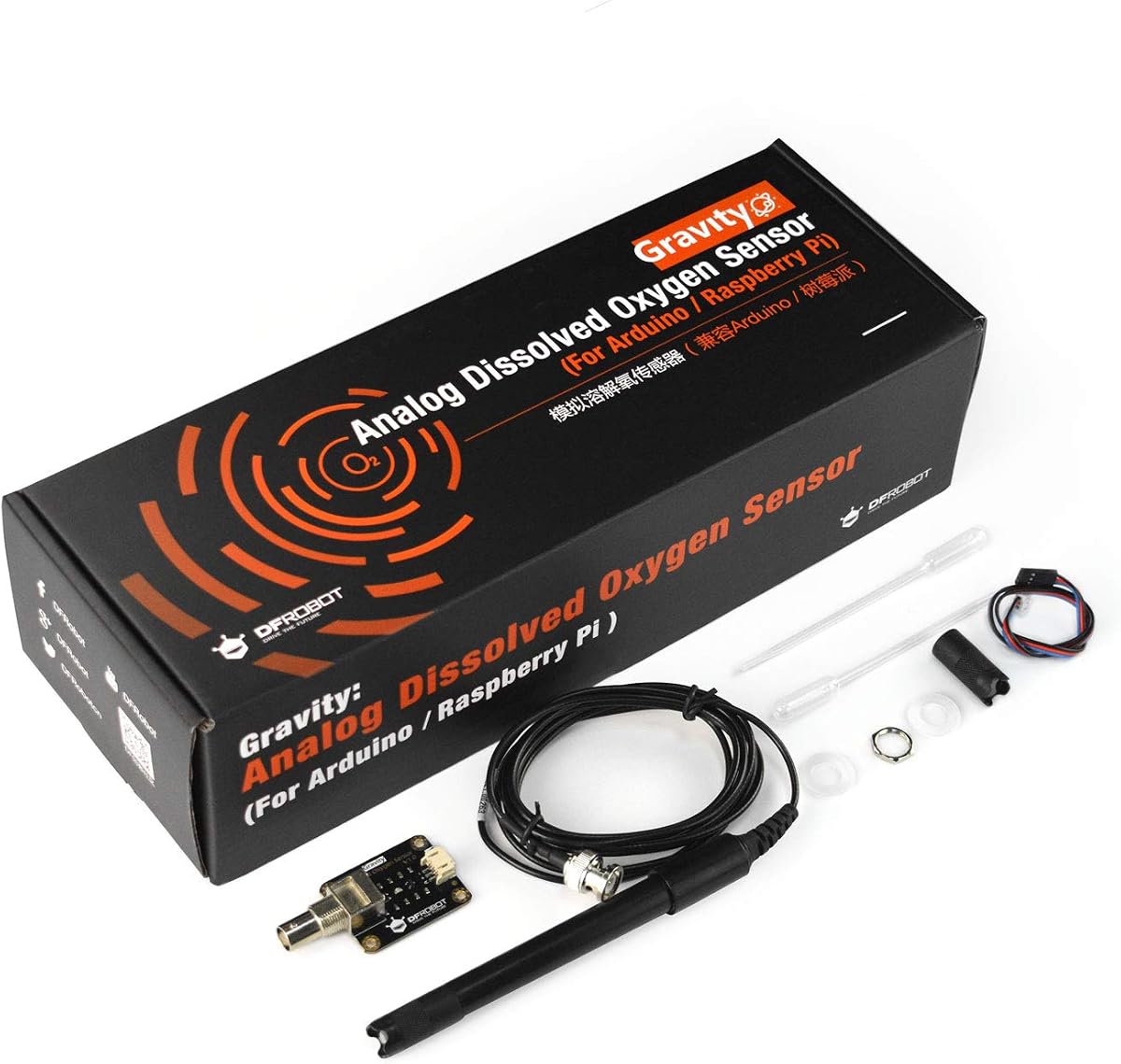



The Gravity Analog Dissolved Oxygen Sensor Kit stands out as an exceptional choice for hobbyists and professionals integrating water quality monitoring into IoT projects. With a strong rating of 4.4 stars, it delivers reliable performance through its galvanic probe technology that eliminates the need for pre-heating or polarization time.
We may earn a commission when you buy through this link, at no additional cost to you.
Its standout quality lies in the integrated hardware filtering that ensures smooth analog voltage output without complex software processing. The device supports a wide voltage range and standard Gravity 3-pin interface, making it perfectly compatible with Arduino ESP32 and Raspberry Pi systems for seamless deployment.
However, users must be aware that the required filling solution is not included due to shipping limitations. While this adds a minor step to setup, the overall ease of calibration and detailed documentation make this trade-off acceptable for most technical users seeking precision and flexibility.
This kit is best suited for aquaculture enthusiasts and researchers who need consistent data logging without heavy maintenance. If you value quick setup and long-term cost efficiency, this sensor offers a robust foundation for your water monitoring infrastructure.
The galvanic probe design allows for immediate measurement availability, which is crucial for intermittent power supplies and dynamic testing environments.
Replaceable caps and solutions ensure you do not discard the entire probe when consumables run out, significantly lowering long-term operational costs.
We may earn a commission when you buy through this link, at no additional cost to you.
The LDO Dissolved Oxygen Sensor 9020000SLU is designed for users requiring dependable water analysis in industrial and laboratory settings. Its construction emphasizes durability and reliability, ensuring that the sensor can withstand rigorous conditions while delivering accurate measurements consistently.
We may earn a commission when you buy through this link, at no additional cost to you.
Key strengths include its user-friendly design which simplifies setup and reduces maintenance costs over time. The sensor is engineered to provide quick and stable performance, making it suitable for applications where efficiency and continuous monitoring are paramount for operational success.
While the product description lacks detailed technical specifications regarding range or response time, its general reputation for stability makes it a strong candidate for professional environments. The investment in durability often justifies the higher cost for facilities where sensor failure could lead to significant disruptions or safety risks.
This sensor is recommended for industrial plants and environmental monitoring stations that prioritize long-term reliability over low initial cost. If your workflow demands a robust tool that minimizes downtime and maintenance, this model offers a secure and efficient solution for your needs.
Consistent results ensure that your water quality decisions are based on reliable data, which is critical for regulatory compliance and process control.
Suitable for industrial laboratory and environmental applications, this sensor adapts well to various testing scenarios and operational requirements.
We may earn a commission when you buy through this link, at no additional cost to you.
The YSI-605203 Pro Series Polarographic Dissolved Oxygen Sensor is a specialized tool designed for laboratory environments where precision and consistency are non-negotiable. With a rating of 4.6 stars, it represents a high standard of quality typical of the YSI brand in scientific instrumentation.
We may earn a commission when you buy through this link, at no additional cost to you.
Its key strength lies in its polarographic technology which provides accurate measurements essential for sensitive chemical and biological analysis. The compact design and lightweight packaging make it easy to transport and store within a lab setting without taking up valuable workspace.
While the product details focus heavily on dimensions and weight, users should verify compatibility with their existing YSI meters to ensure optimal performance. This sensor is best for labs that already have a YSI infrastructure, avoiding the need for additional converter hardware or adapters.
This sensor is ideal for researchers and lab technicians who require a reliable and precise dissolved oxygen measurement device. If your work depends on accurate data integrity in controlled environments, this model offers the stability and brand trust necessary for professional scientific applications.
Polarographic sensors are known for their accuracy in measuring dissolved oxygen levels, which is critical for experiments requiring exact concentration values.
Designed as a dedicated lab supply, it fits seamlessly into existing laboratory workflows and meets rigorous standards for scientific testing protocols.
We may earn a commission when you buy through this link, at no additional cost to you.
The Dissolved Oxygen Meter Tester offers a comprehensive solution for aquarium owners and fish tank enthusiasts who need a reliable tool for routine water quality checks. It stands out with a large LCD display that shows dissolved oxygen, temperature, and barometric pressure clearly for quick readings.
We may earn a commission when you buy through this link, at no additional cost to you.
Key strengths include its auto temperature compensation and extensive memory capacity of 99 data points, which allows users to track changes over time effectively. The durable design and included cable ensure that you can reach deep into tanks or ponds without risking damage to the unit.
However, the resolution may be lower than professional laboratory equipment, making it less suitable for highly sensitive research applications. The trade-off is a more affordable and user-friendly device that covers all the essential functions needed for general aquaculture and environmental monitoring tasks.
This kit is perfect for hobbyists and small-scale farmers who want a complete package ready to use out of the box. If you need a versatile tool that combines multiple parameters like salinity and pressure alongside oxygen, this model delivers excellent value and performance.
Measuring DO, temperature, salinity, and barometric pressure provides a holistic view of water quality that supports better decision making.
Storing up to 99 data points allows for easy trend analysis and record keeping without the need for external logging devices.
We may earn a commission when you buy through this link, at no additional cost to you.
The YSI-605202 Pro Series Galvanic Dissolved Oxygen Sensor earns its high rating of 4.8 stars through a design that prioritizes ease of use and maintenance efficiency. Its galvanic probe technology ensures stable readings while the user-replaceable sensor allows for quick swaps without extensive technical knowledge.
We may earn a commission when you buy through this link, at no additional cost to you.
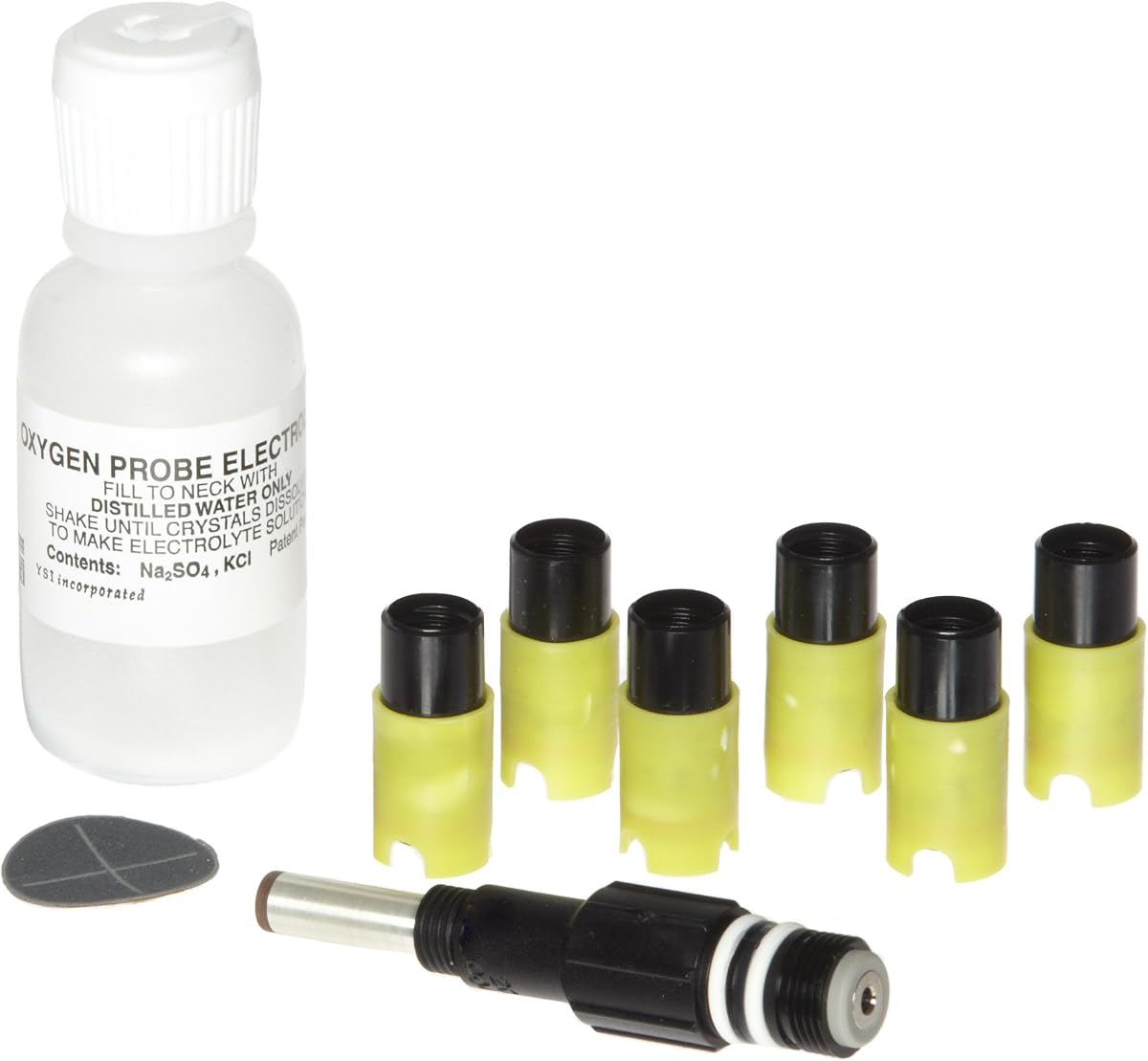
The standout feature is the convenient screw-on cap membranes that simplify the maintenance process significantly. Since the kit comes with six membrane caps and a bottle of solution, you can maintain the sensor for an extended period without needing to purchase additional parts immediately.
While this sensor requires a compatible YSI meter, the investment is justified by the reliability and ease of operation. The lack of need for tools makes it accessible for field technicians and lab staff who need to perform frequent checks without downtime.
This sensor is best for professionals who value time efficiency and consistent performance in their water analysis workflows. If you are looking for a robust solution that minimizes maintenance complexity and maximizes uptime, this model is a top choice in its category.
The screw-on design allows for membrane changes that are simple and easy, reducing the risk of errors during the replacement process.
Replacing the sensor when needed rather than the entire unit ensures your investment lasts longer and operates more cost-effectively.
We may earn a commission when you buy through this link, at no additional cost to you.
The Zopsc 2 Pack DO Dissolved Oxygen Tester for Smartphones offers an innovative approach to water quality monitoring by integrating directly with mobile devices. With a rating of 4.0 stars, it provides a convenient way to track metrics using an app interface that supports multiple languages for diverse users.
We may earn a commission when you buy through this link, at no additional cost to you.
Its standout qualities include a fully sealed ABS housing that floats on the surface and protects internal circuits from accidental submersion. The wireless connectivity allows for real-time data transmission within a 10 meter range, making on-site testing efficient without cumbersome cables or wires.
While the app dependency means you need a smartphone to view readings, the flexibility and ease of sharing data via email add significant value for reporting. The long battery life ensures that you can monitor for extended periods without needing frequent recharging or battery swaps in the field.
This tester is perfect for hobbyists and educators who want a modern and accessible tool for water analysis. If you prefer digital interfaces and easy data sharing over traditional handheld meters, this product delivers excellent value and functionality for your needs.
Monitoring and analyzing water quality metrics through a companion app simplifies the testing process and allows for better record keeping.
The weather shielded floating design ensures reliable performance in wet environments, protecting the device during accidental drops or splashes.
We may earn a commission when you buy through this link, at no additional cost to you.
The YSI DO200 Kit EcoSense DO 200 Dissolved Oxygen Meter Kit is a robust choice for professionals who need a portable and accurate tool for fieldwork. With a strong rating of 4.5 stars, it provides reliable measurements through its high-resolution display and advanced sensor technology.
We may earn a commission when you buy through this link, at no additional cost to you.
Its key strengths include automatic temperature compensation and a dissolved oxygen accuracy of 2 percent full scale, which ensures trustworthy data across varying environmental conditions. The ease of replacing membrane caps without tools adds to the practicality of using this kit in remote or demanding locations.
While the kit requires manual input for salinity and barometric pressure compensation, this feature allows for precise adjustments tailored to specific water bodies. The investment is justified by the durability and accuracy that meet professional standards for environmental and industrial testing applications.
This kit is ideal for water quality specialists and researchers who need a portable solution that does not compromise on precision. If you require a reliable device for consistent monitoring in the field, this model offers the features and performance needed for high-quality results.
An accuracy of 2 percent full scale ensures that your readings are within an acceptable margin of error for most professional testing standards.
Designed as a portable meter, it is easy to carry and use in various settings without needing bulky equipment or setups.
We may earn a commission when you buy through this link, at no additional cost to you.
The YSI 6900 ProDSS ODO Optical Dissolved Oxygen Sensor is a specialized component designed for advanced monitoring systems requiring optical technology. While the rating is listed as N/A in some listings, its integration with ProDSS systems highlights its role in professional multi-parameter water quality monitoring.
We may earn a commission when you buy through this link, at no additional cost to you.
Key strengths include its optical technology which typically offers longer sensor life and less drift compared to electrochemical options. This makes it suitable for long-term deployments in industrial or environmental settings where consistent performance without frequent calibration is critical.
The requirement for specific ProDSS hardware limits its standalone use but ensures seamless integration when part of a larger ecosystem. The durability and precision provided by this sensor justify the higher cost for facilities that rely on accurate data for regulatory compliance or process control.
This sensor is best for industrial facilities and research labs that already use YSI ProDSS systems. If you need a reliable and precise optical solution that reduces maintenance frequency, this sensor provides the advanced capabilities required for high-level water quality assessment.
Optical sensors generally require less maintenance and provide stable readings over time, making them ideal for continuous monitoring applications.
Compatible with ProDSS systems, this sensor allows for easy data logging and connectivity with other environmental monitoring parameters.
We may earn a commission when you buy through this link, at no additional cost to you.
The DAN&DRE Portable Dissolved Oxygen Meter is designed to simplify the testing process with automatic calibration features that save time for users. With a focus on ease of use, it offers a reliable way to monitor water quality in aquaculture, aquariums, and household pet fish care environments.
We may earn a commission when you buy through this link, at no additional cost to you.
Its standout quality lies in the convenient 0% and 100% automatic calibration buttons that ensure quick and accurate setup. The intelligent temperature compensation function recognizes solution temperature to convert dissolved oxygen values accurately, eliminating the need for manual adjustments or guesswork.
While the resolution may not match that of high-end laboratory equipment, the modular design with replaceable electrodes extends the life of the device cost-effectively. The fast response time allows for real-time data to monitor conditions effectively, helping you make informed decisions for tank or pond management.
This meter is perfect for aquarium owners and small farm operators who need a straightforward tool for routine checks. If you prioritize ease of calibration and quick performance without needing complex setups, this model offers a practical solution for maintaining water quality.
The 2-point auto calibration buttons simplify setup, ensuring that your readings are accurate without requiring technical expertise.
The modular design allows for easy electrode replacement, ensuring your device remains functional for years without needing a full replacement.
We may earn a commission when you buy through this link, at no additional cost to you.
The Dissolved Oxygen Meter with ATC is a comprehensive starter kit designed for users who want all the necessary components included in one package. It features a wide measurement range and automatic temperature compensation to ensure consistent results across various water conditions and environments.
We may earn a commission when you buy through this link, at no additional cost to you.
Key strengths include its ease of use with automatic shutdown to preserve battery life and a large LCD screen for clear readings. The inclusion of electrode filling fluid and anaerobic water calibration powder makes it ready to use right out of the box without extra purchases.
While it may lack some advanced features found in premium models, its focus on core functionality makes it an excellent choice for beginners or general-purpose testing. The durable construction and included accessories ensure that you can perform reliable checks for aquariums and small ponds without hassle.
This kit is ideal for hobbyists and students who need an affordable and complete solution for dissolved oxygen testing. If you want a reliable device that covers all basics and comes with necessary consumables, this meter offers great value and simplicity for daily water quality management.
Including electrolyte and calibration powder ensures you can start testing immediately without needing to source additional supplies separately.
Automatic shutdown helps preserve battery life, ensuring the device is ready for use whenever you need to test water conditions.
We may earn a commission when you buy through this link, at no additional cost to you.
Selecting the right dissolved oxygen sensor involves understanding your specific needs and the technology that best supports them. This guide outlines key factors to consider for making an informed decision.
There are three main types of dissolved oxygen sensors: galvanic, polarographic, and optical. Galvanic and polarographic sensors require electrolyte solutions and membrane caps, while optical sensors use fluorescence and do not consume oxygen. Optical sensors generally offer lower maintenance and longer life.
Choose the technology that aligns with your maintenance tolerance and operational environment for best results.
Different sensors cover different measurement ranges, from 0 to 20 mg/L to higher ranges depending on the model. Resolution determines the smallest change in oxygen levels the device can detect, with higher resolution suitable for precise laboratory work.
Ensure the range and resolution match your specific water quality needs to avoid inaccurate or unusable data.
Calibration is essential for maintaining accuracy over time. Some meters offer automatic two-point calibration, while others require manual adjustments using specific solutions or powders. Look for features that simplify this process to reduce user error and downtime.
Prioritize models with user-friendly calibration options if you plan to perform frequent testing in various locations.
Dissolved oxygen levels change with temperature, so automatic temperature compensation (ATC) is a vital feature for accurate readings. Ensure the sensor has a built-in temperature probe or supports external sensors for consistent results across seasons.
Select a sensor with reliable ATC to ensure your readings remain valid regardless of ambient water temperature.
Modern sensors may offer Bluetooth, Wi-Fi, or USB connectivity for data logging and sharing. Consider whether you need to record measurements for trend analysis or just view them in real time on a display screen.
Choose a device with the necessary connectivity features to support your reporting and analysis requirements efficiently.
For field use, the sensor should be durable and resistant to water, shock, and temperature extremes. Check for IP ratings and rugged housing designs that can withstand drops and submersion without compromising internal components.
Invest in a robust unit that can handle your specific working conditions to prevent frequent repairs or replacements.
Some sensors require frequent membrane and electrolyte changes, while others need less frequent upkeep. Consider the long-term cost of consumables and the complexity of maintenance tasks when choosing a model for continuous use.
Evaluate maintenance needs against your schedule to ensure the sensor fits your operational workflow without disruption.
Prices vary widely from affordable hobbyist kits to expensive professional systems. While budget is important, consider the overall value including accuracy, lifespan, and included accessories to determine the best investment for your situation.
Balance cost with performance needs to avoid overspending or underinvesting in critical monitoring equipment.
Always calibrate your sensor before first use and regularly thereafter according to the manufacturer's instructions. Use fresh calibration solutions and avoid contamination to ensure accurate readings.
Store the sensor properly when not in use to prevent membrane drying and damage. For galvanic and polarographic sensors, keep the tip in a storage solution or keep the cap on to maintain moisture levels.
Replace membrane caps and electrolytes as needed or when accuracy drops. For optical sensors, keep the probe lens clean and free from scratches to ensure consistent light transmission during measurement.
Calibration ensures that the sensor readings are accurate and reliable over time. Without calibration, drift in the sensor's response can lead to incorrect measurements, which may affect water quality management decisions and environmental assessments.
Membrane caps should be replaced when they become damaged, dirty, or after a certain number of uses specified by the manufacturer. Regular replacement ensures that the electrolyte remains stable and the measurement remains accurate for your testing needs.
No, optical dissolved oxygen sensors do not require electrolytes or membrane caps in the same way as galvanic or polarographic sensors. They use fluorescence technology to measure oxygen levels, which typically reduces maintenance and extends sensor life.
Automatic temperature compensation (ATC) adjusts dissolved oxygen readings based on the water temperature, since oxygen solubility changes with temperature. This feature ensures that the displayed value reflects the actual dissolved oxygen concentration at that temperature.
Yes, many sensors can measure dissolved oxygen in saltwater, but you may need to input salinity values or use a sensor designed for high salinity environments. This ensures the device compensates for the lower oxygen solubility in saltwater.
Sensor lifespan varies depending on the technology and usage conditions. Optical sensors can last several years with minimal maintenance, while galvanic and polarographic sensors typically need more frequent part replacements but can also last long with proper care.
Choosing the right dissolved oxygen sensor depends on your specific application, from hobbyist aquaculture to professional laboratory research. Our top picks offer a range of options tailored to different needs and budgets.
Prioritize factors such as ease of use, accuracy, and maintenance requirements to find a sensor that fits seamlessly into your workflow. Consider future-proofing with connectivity features if data tracking is important for your projects.
Always check current prices and availability before purchasing to ensure you get the best value. With the right sensor, maintaining optimal water quality becomes a straightforward and effective process for your environment.