
Interstate Batteries Marine/RV Battery 12V 100Ah
4.1Editor score
925CCA High Cranking
3X Longer Life
Pure Lead AGM
This guide compares the top battery for trolling motor options including lithium and AGM types to help you choose the right power source for your boat.
Choosing the right battery for trolling motor applications is essential for a successful day on the water. Whether you are fishing for bass or cruising in a kayak, reliable power ensures your electronics stay running and your motor performs smoothly throughout the trip.
We evaluated ten top-rated products based on capacity, durability, smart features, and real-world performance. Our analysis covers deep cycle AGM batteries and advanced lithium iron phosphate options to provide a comprehensive overview for every budget and boat setup.
Each pick highlights key strengths and ideal use cases so you can find the perfect match for your vessel. Please note that prices and availability may change frequently, so check current listings before making your final purchase decision for the season.
4.1Editor score

4.2Editor score

4.4Editor score
This side-by-side comparison highlights the key specifications and unique attributes of each selected battery to help you make an informed decision quickly.




This LiFePO4 marine battery stands out as a top choice for tech-savvy boaters. With a 4.2 rating, it offers smart Bluetooth monitoring to track voltage and temperature in real time from your seat.
We may earn a commission when you buy through this link, at no additional cost to you.
The 1280Wh capacity provides ample energy for trolling motors and fish finders. Its built-in BMS ensures safety with protections against overcharge and low temperatures. The weight savings compared to AGM make installation easier on smaller vessels.
While the initial investment is higher, the 4000+ deep cycles offer better long-term value. The only trade-off is needing a compatible lithium charger for optimal performance rather than standard lead-acid chargers.
Buyers looking for modern connectivity and durability will find this model perfect for extended trips. Its balance of power and smart features makes it a reliable companion on the water.
The app allows you to check status remotely, ensuring you never run out of power unexpectedly during a trip.
Built with high-energy cells and a robust BMS, it resists environmental stress and maintains performance in cold weather.
We may earn a commission when you buy through this link, at no additional cost to you.
GOKWH offers a solid lithium entry point for those needing a standard size drop-in replacement. This Group 24 battery brings smart app features to a compact package rated at 4.1 stars.
We may earn a commission when you buy through this link, at no additional cost to you.
It includes low-temperature protection to prevent damage in freezing conditions. The expandable system allows you to add more units for larger setups. The ABS casing resists corrosion and physical damage on deck.
It lacks some premium connectivity features found in pricier models but delivers reliable power. The main limitation is that it requires careful charger selection to avoid voiding warranties or damaging cells.
Ideal for RV or marine users upgrading from lead acid without changing their current battery compartment size. It balances performance with a reasonable price point for everyday use.
Fits standard Group 24 spaces easily, making it a simple upgrade for older boats with limited storage.
The BMS includes multiple layers of safety to prevent over-discharge and short circuits during operation.
We may earn a commission when you buy through this link, at no additional cost to you.
Interstate delivers a pure lead AGM battery designed for both starting and deep cycle use. With a 4.1 rating, it offers massive power for accessories and trolling motors without digital complexity.
We may earn a commission when you buy through this link, at no additional cost to you.
The thick plate design allows for continuous discharge and recharge cycles. It provides high cranking amps which helps starting engines alongside powering accessories. The service life is significantly longer than flooded batteries.
It does not have the longevity of lithium options but remains cost-effective for occasional users. Maintenance-free operation simplifies care during the boating season. However, its weight can be a challenge for lightweight craft.
Perfect for those who prefer simplicity and proven technology over smart features. It ensures your boat runs reliably without worrying about charging protocols or app connections.
Designed to handle starting loads as well as deep cycle needs, saving space on your deck.
Built to withstand vibration and harsh marine environments with a rugged internal structure.
We may earn a commission when you buy through this link, at no additional cost to you.
This 320Ah battery delivers exceptional capacity for long days on the water. Rated at 4.4, it is ideal for those who need to run high-demand electronics for hours without recharging.
We may earn a commission when you buy through this link, at no additional cost to you.
The app monitors voltage and temperature continuously. It supports expansion to 24V or 48V systems for larger setups. The reinforced casing handles outdoor exposure well during storage and transport.
The weight is significant compared to smaller units but still lighter than equivalent lead acid. Ensure your charging infrastructure can handle the large capacity to avoid long wait times between trips.
Highly recommended for serious anglers or liveaboards needing sustained power. Its reliability and high capacity make it a premium choice for demanding marine environments.
The 320Ah capacity ensures your trolling motor runs longer without frequent stops to recharge the bank.
You can connect multiple units to build a powerful home backup or marine power station as needed.
We may earn a commission when you buy through this link, at no additional cost to you.
This 320Ah unit balances RV and marine capabilities. With 8000 deep cycles, it promises a decade of service. A 200A BMS offers high current protection during heavy loads.
We may earn a commission when you buy through this link, at no additional cost to you.
Charging options include solar panels for off-grid efficiency. The Bluetooth app helps track usage during trips. It delivers stable power for inverters and continuous trolling motor use.
Performance is excellent in mild conditions but requires care in extreme cold. The sheer capacity is great but demands a high-output charging source to maximize its potential effectively.
Buyers needing multi-purpose power for boat and trailer will appreciate this model. It bridges the gap between marine reliability and RV energy storage needs seamlessly.
Designed to charge efficiently with solar input, reducing dependence on shore power when away.
Handles high-demand loads like inverters, enabling you to run AC devices safely while boating.
We may earn a commission when you buy through this link, at no additional cost to you.
This two-pack bundle provides a cost-effective way to set up dual batteries. It allows separating start and house systems on small boats. Each unit includes app monitoring for status checks.
We may earn a commission when you buy through this link, at no additional cost to you.
The BMS offers protection against overcharge and low temps. It replaces heavy lead acid options easily. However, lower user feedback suggests potential quality variance between units.
Setup requires careful wiring to avoid mismatched voltages. If units differ slightly in charge state, issues can arise over time. Ensure balanced charging for optimal longevity and safety.
Best for those needing extra capacity on a budget. It offers practical redundancy and power for small to medium marine setups with proper installation.
Allows you to separate starting power from trolling motor load for better reliability on the water.
Purchasing two together often saves money compared to buying individual units separately.
We may earn a commission when you buy through this link, at no additional cost to you.
This box organizes connections and protects your setup with smart features. It supports 12V or 24V systems easily. High-quality ports and plugs ensure stable power delivery to your motor.
We may earn a commission when you buy through this link, at no additional cost to you.
The voltmeter lets you check status instantly. Safety features cut power during overloads to protect devices. It simplifies wiring by offering centralized access to all terminals.
Keep in mind the battery must be bought separately which adds to the total cost. It is an accessory, not a power source itself. However, it improves efficiency and convenience significantly.
Ideal for DIY setups needing organized power management. It helps prevent accidental disconnection and damage from voltage spikes effectively.
Gathers all power outputs into one secure box, reducing clutter on your boat deck.
Built-in overload switches safeguard sensitive electronics from power surges during use.
We may earn a commission when you buy through this link, at no additional cost to you.
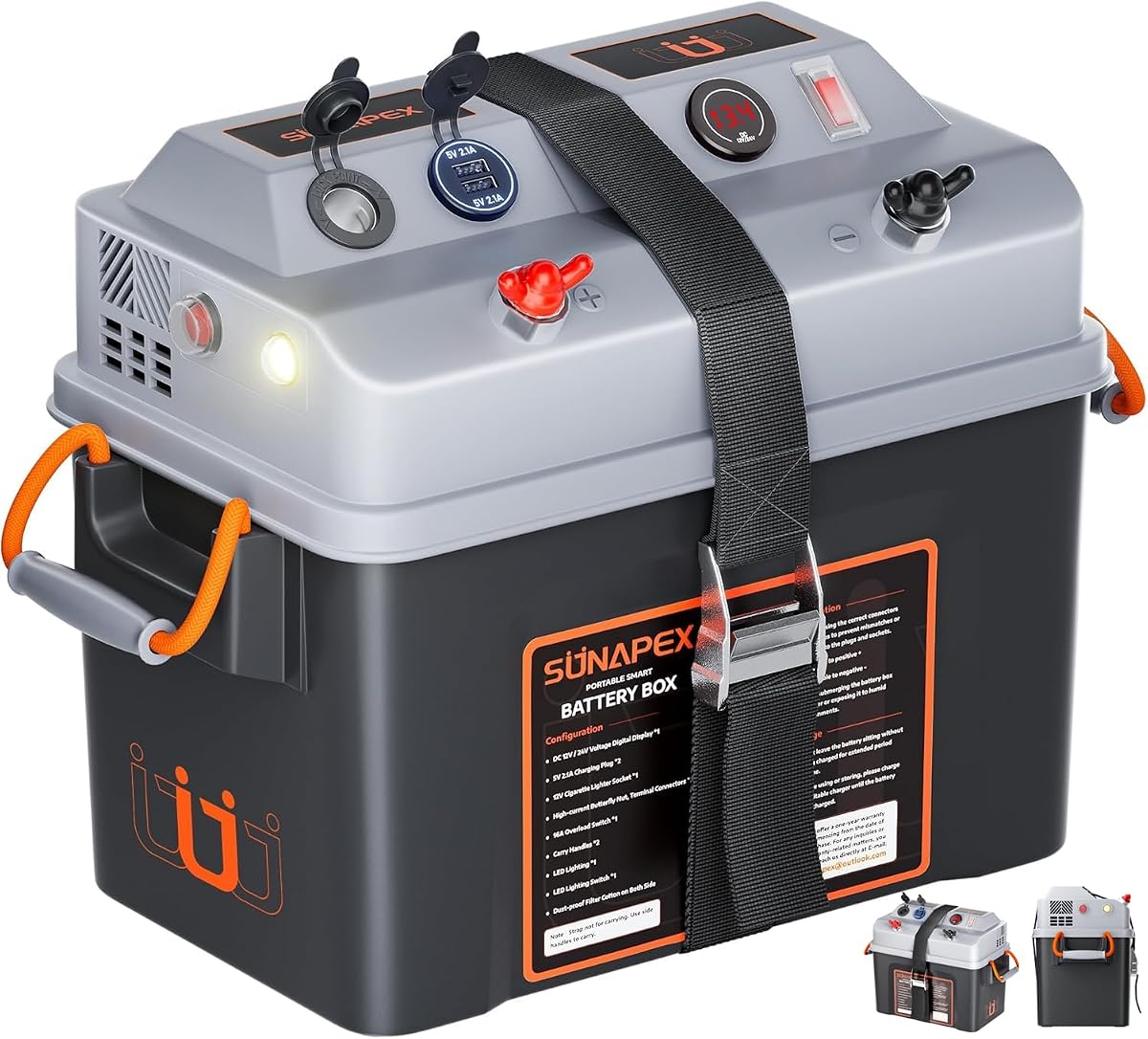
This standard box offers reliable power management for boats. It includes essential ports and a built-in light for night visibility. Handles make moving the unit easy during maintenance.
We may earn a commission when you buy through this link, at no additional cost to you.
The overload switch protects against surges and shorts. It fits standard Group 24 or 31 batteries securely. The voltmeter gives clear real-time readings for monitoring.
While it lacks the advanced QC3.0 of the PRO model, it covers basics well. It remains an affordable solution for protecting expensive motor connections from damage.
Buyers wanting a secure home for batteries without extra complexity will find it useful. It keeps wiring tidy and protected during daily use on the water.
Side handles allow safe lifting and transport without risking damage to the terminals.
16A overload switches provide essential safety for connected marine electronics.
We may earn a commission when you buy through this link, at no additional cost to you.
Optima uses SpiralCell technology for robust performance. With a 4.3 rating, it withstands heavy vibration better than standard batteries. It offers both starting and deep cycle power seamlessly.
We may earn a commission when you buy through this link, at no additional cost to you.
The sealed AGM design means no maintenance. It charges faster than conventional options. Reliable power delivery makes it a favorite for demanding marine applications.
It may not last as long as lithium but handles rough conditions well. The cost is higher than standard AGM but justified by the durability. Ensure proper mounting to maximize lifespan.
Ideal for high-vibration environments or rugged offshore trips. Its reliability and quick recharge make it a dependable choice for power systems.
The SpiralCell construction prevents damage from constant shaking on rough water.
Recharges quickly between uses, ensuring you are ready for the next trip fast.
We may earn a commission when you buy through this link, at no additional cost to you.
This modern box supports 30W USB-C charging. Rated at 4.6, it is great for charging electronics. The Anderson connector ensures a secure 50A link to your motor.
We may earn a commission when you buy through this link, at no additional cost to you.
It includes adhesives to keep the battery from shifting. The LCD provides clear status data. Built-in safety helps prevent electrical issues while in use.
The design is portable with a carrying strap. It keeps terminals secure and dry. While the battery is not included, it offers excellent organization for any setup.
Perfect for tech users needing fast charging options. It combines safety and convenience for reliable power distribution on smaller boats.
USB-C PD support allows fast charging for modern laptops and phones while boating.
Adhesive pads and secure terminals prevent movement during high-speed runs.
We may earn a commission when you buy through this link, at no additional cost to you.
Selecting the right battery requires considering capacity, chemistry, and safety features.
Lithium Iron Phosphate (LiFePO4) offers longer life and lighter weight than AGM. AGM is cheaper but heavier and has shorter cycles.
Choose lithium for long-term value and weight savings or AGM for budget and simplicity.
Amp hours determine runtime. A 100Ah battery lasts half as long as a 200Ah under similar load.
Select a capacity that matches your typical trip duration to avoid running out on the water.
Lithium batteries are often one-third the weight of lead acid. This is critical for stability on kayaks or canoes.
Check your vessel's weight limit to ensure safe handling and transport.
Cycle life indicates how many times a battery can discharge and recharge. Lithium offers thousands of cycles versus hundreds for AGM.
Higher cycle life means fewer replacements over the years for frequent users.
A built-in BMS protects against overcharge, short circuits, and extreme temperatures. It ensures safe operation.
Always verify the BMS quality to prevent damage from electrical faults.
Lithium batteries need specific chargers. Using a standard lead-acid charger can damage the cells permanently.
Ensure you have a compatible charging system before purchasing lithium options.
Group sizes like 24 or 31 must fit your tray. Measure your current space to avoid installation issues.
Standard sizes make replacements easier for most small boats.
Bluetooth and apps allow remote monitoring of voltage and health. This helps prevent unexpected power loss.
Consider connectivity if you want to track performance in real-time during trips.
Always connect batteries with proper terminal orientation to prevent shorts. Use marine-grade wiring to ensure safe transmission of power across the vessel.
Charge batteries using a compatible charger. Never leave them connected to a charger indefinitely to avoid damage from overcharging.
Store batteries in a cool, dry place during off-seasons. Check water levels if using flooded types and ensure terminals stay clean and tight.
Lithium Iron Phosphate (LiFePO4) batteries generally last longer than AGM batteries. They provide more cycles and maintain performance over many years of regular use.
No, you should not use a standard charger for lithium. You need a charger designed specifically for LiFePO4 chemistry to prevent damage to the cells and ensure safety.
Ah stands for Amp-hours and indicates how much energy the battery holds. A higher Ah rating means the battery can run your motor longer before needing a recharge.
AGM batteries typically last 3 to 5 years while lithium can last up to 10 years with proper care. Regular maintenance extends the lifespan of any battery type.
Yes, modern lithium marine batteries have built-in safety features. The BMS protects against overcharging and short circuits making them safe for use on boats.
Group sizes refer to standard physical dimensions. A 24 battery is smaller than a 31. Make sure the size fits your specific battery tray or compartment.
The best choice depends on your budget and how you use your boat. Lithium options offer advanced features and longevity while AGM provides reliable power at lower initial cost.
Prioritize capacity and weight based on your vessel size. Ensure your charger matches your battery type for safety and performance.
Prices fluctuate frequently so check current listings before buying. Selecting the right model now ensures a better experience on the water.