
Proster LCR Meter
4.5Editor score
Rotatable LCD screen
Complete test kit
Data hold function
This guide compares the top Lcr Meter models for 2026 to help you choose the right tool for precise component testing and electronics repair projects.
Finding the right Lcr Meter is essential for anyone working with electronics. These devices measure inductance, capacitance, and resistance with high accuracy. Whether you are repairing circuits or designing new ones, a reliable meter ensures your components meet specifications.
We evaluated ten leading Lcr Meter options based on accuracy, features, and ease of use. Our comparison covers handheld units for fieldwork and benchtop models for labs. Each product was analyzed for its measurement range, display quality, and additional testing capabilities.
Each pick in this list highlights key strengths and ideal use cases for different users. You will find options for hobbyists, professionals, and industrial applications. Please note that product availability and pricing may change over time.
4.5Editor score

4.7Editor score

4.4Editor score
This table provides a side-by-side overview of the top ten Lcr Meter models. It highlights key specifications to help you compare features quickly and make an informed decision for your specific needs.



The FNIRSI LC1020E is a top-tier Lcr Meter that combines precision with user-friendly features. It holds a strong rating for its ability to handle a wide range of components efficiently. This meter is ideal for professionals who need reliable data quickly during repairs or design work.
We may earn a commission when you buy through this link, at no additional cost to you.
It offers a dual parameter display that shows primary and secondary values simultaneously. This feature saves time by providing comprehensive data without switching modes. The auto component detect function simplifies testing by identifying the component type automatically.
While it is feature-rich, setting up calibration may take time for new users. However, once configured, it delivers consistent results. The sorting mode is also useful for quality control in production environments.
This meter is best suited for technicians and engineers who need accuracy and speed. It balances advanced capabilities with practical design. We recommend it for anyone serious about electronics testing and repair.
This feature allows you to see both the main measurement and secondary values like ESR or Q at the same time.
The meter automatically identifies whether you are testing a resistor, capacitor, or inductor to speed up your workflow.
We may earn a commission when you buy through this link, at no additional cost to you.
The DE-5000 Handheld is a trusted choice for field technicians. It offers a high-resolution display that makes reading values easy even in low light. Its auto ranging capability ensures you do not have to manually select ranges for every test.
We may earn a commission when you buy through this link, at no additional cost to you.
This meter supports multiple frequencies and modes for versatile testing. It includes a sorting mode which helps in organizing components by tolerance quickly. The package often comes with useful tools like SMD tweezers for small parts.
Some versions do not include all accessory cases which might require separate purchase. This is a minor inconvenience compared to its performance. The build quality is robust enough for daily use in workshops.
If you need a portable meter that handles most tasks well, this is a strong option. It is particularly good for mobile repairs where space is limited. Its reliability makes it a staple in many toolkits.
The device automatically selects the correct measurement range so you can focus on the test rather than settings.
You can set tolerance limits and the meter will alert you when components fall outside the acceptable range.
We may earn a commission when you buy through this link, at no additional cost to you.
The MATRIX MCR5200 is designed for labs and production environments where precision is critical. It operates across a wide frequency range allowing detailed analysis of components. The high accuracy ensures that measurements are reliable for quality control.
We may earn a commission when you buy through this link, at no additional cost to you.
It features USB and RS232C interfaces for connecting to computers. This allows you to save data directly to a PC for logging and analysis. The benchtop design provides stability during testing which reduces handling errors.
Its size is larger than handheld units which limits portability. However, this trade-off offers better stability and display clarity. For stationary work, it is an excellent investment for accurate results.
This meter is best for labs and production lines requiring detailed data tracking. If you need to archive test results regularly, the connectivity options are invaluable. It is a premium choice for serious applications.
Operating from 40Hz to 200kHz lets you test components under different conditions to ensure performance across applications.
Connect to a PC to save test data and generate reports for quality assurance processes.
We may earn a commission when you buy through this link, at no additional cost to you.
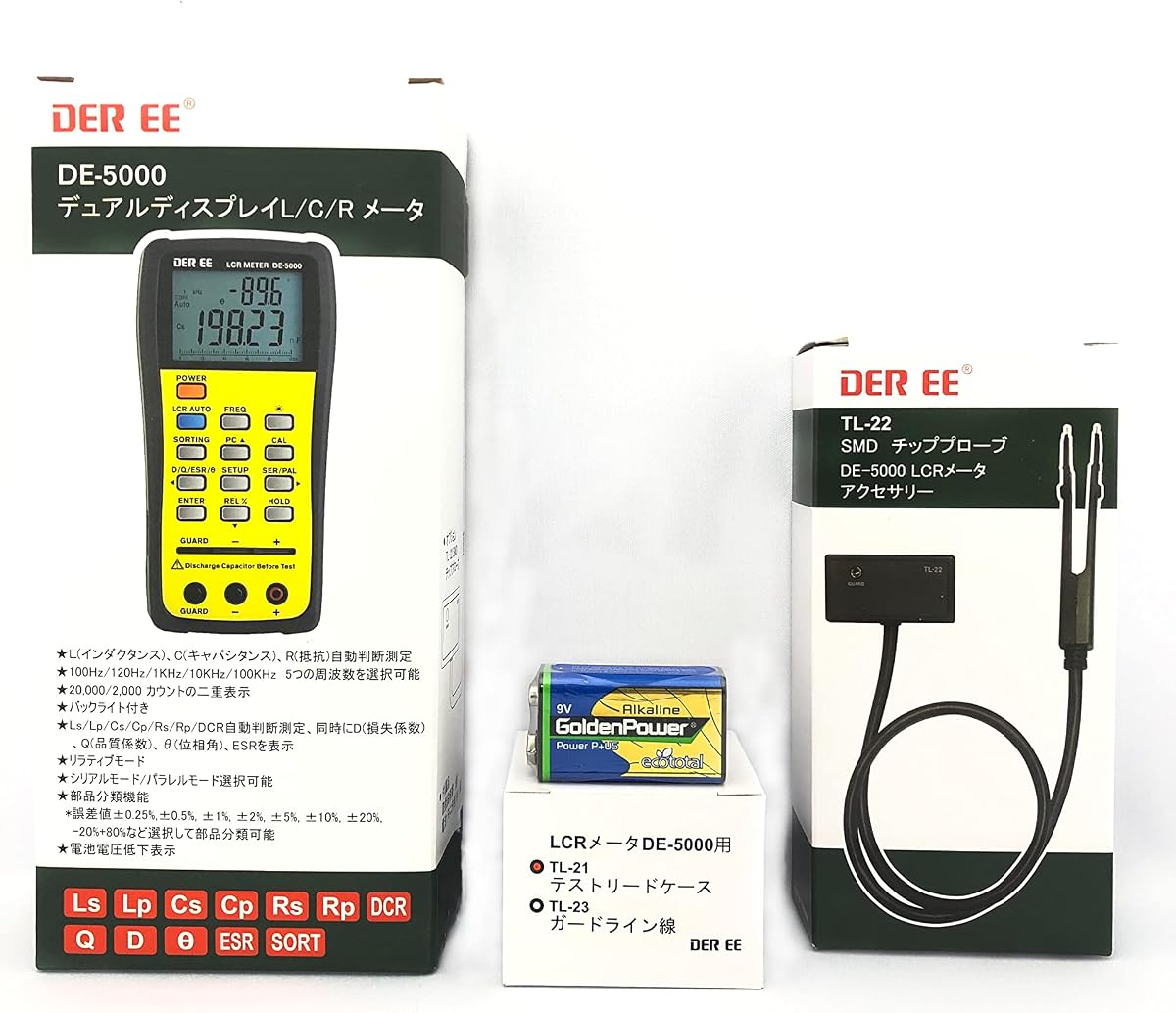
This version of the De-5000 comes as a complete kit with essential accessories. It includes test leads and a carrying case which makes it ready to use out of the box. The ISO certification adds confidence in its measurement reliability.
We may earn a commission when you buy through this link, at no additional cost to you.
It supports multiple test frequencies for accurate results across different component types. The backlit screen is helpful in dim environments where visibility is an issue. The accuracy is suitable for both hobbyists and professionals.
The price is slightly higher than basic models but you get more value with the included kit. This saves time and money on buying extra accessories separately. It is a convenient choice for those starting out.
If you want a reliable meter with everything you need included, this is a great pick. It is ideal for users who want a ready-to-go solution. The quality and features make it worth the extra cost.
The ISO 9001 certification indicates that the product meets international standards for quality management and consistency.
The package includes all necessary test leads and a case so you can start testing immediately without extra purchases.
We may earn a commission when you buy through this link, at no additional cost to you.
The Proster LCR Meter is an affordable tool for hobbyists and beginners. It provides essential testing functions without a high cost. The design is compact and easy to carry in a toolbox or backpack for on-the-go use.
We may earn a commission when you buy through this link, at no additional cost to you.
It features a rotatable LCD screen which improves readability from different angles. This is useful when working in tight spaces where a fixed screen might be hard to see. It also includes a data hold function to freeze readings.
The limited frequency range means it may not be suitable for high frequency applications. However, for standard repairs and general testing, it performs well. It is a cost-effective entry point into component testing.
This meter is perfect for those who need basic functionality at a low price. If you are on a budget or just starting to learn electronics, this is a solid choice. It delivers value without breaking the bank.
You can tilt the display to find the best viewing angle which makes reading values much easier in any position.
Freeze the measurement on the screen so you can record it or move the meter without losing the value.
We may earn a commission when you buy through this link, at no additional cost to you.
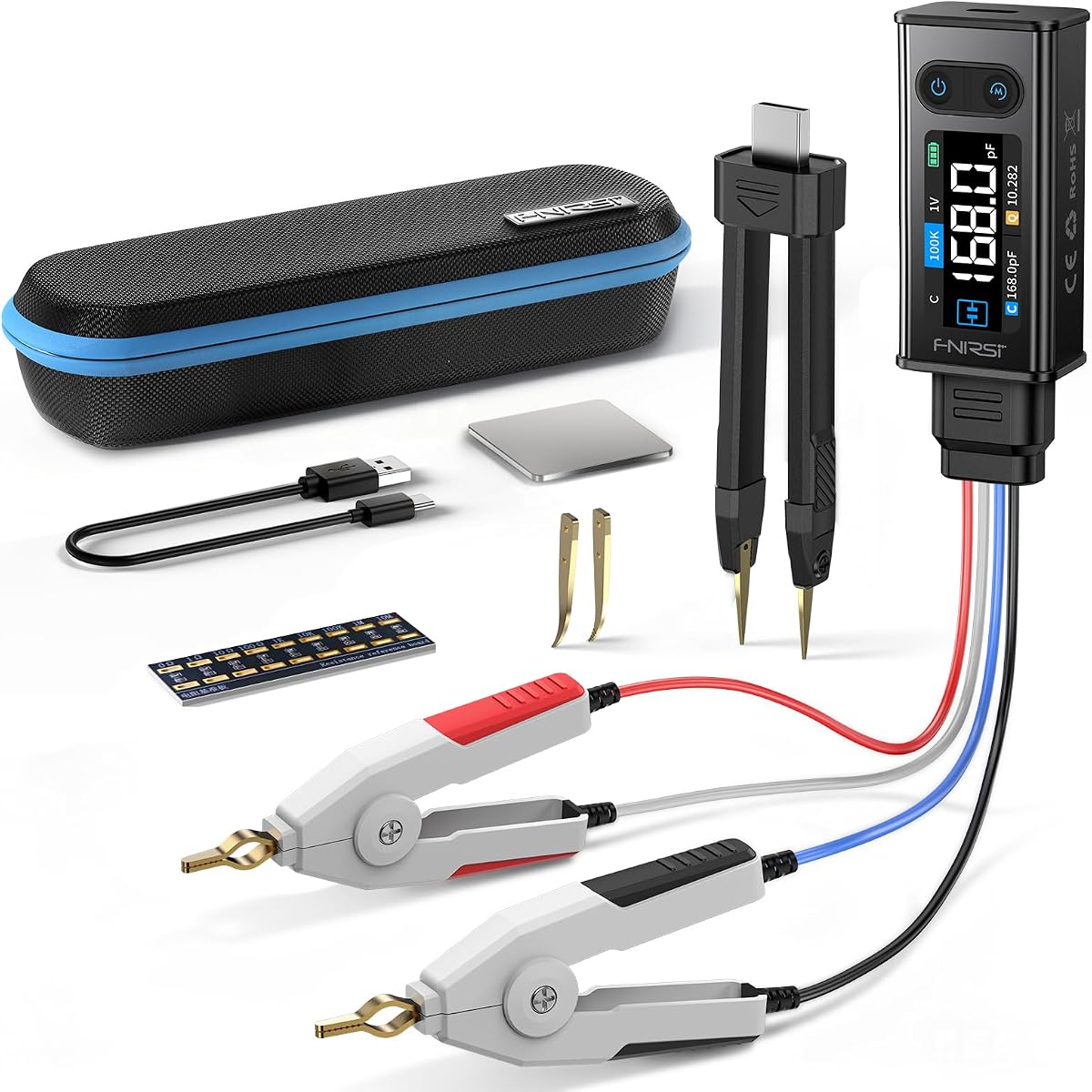
The FNIRSI LCR-ST2 is a compact tweezer tester ideal for SMD components. It integrates the testing probes directly into the device which simplifies handling. This design is perfect for tiny parts that are hard to test with standard leads.
We may earn a commission when you buy through this link, at no additional cost to you.
It supports both SMD and through-hole components with a wide range of measurements. The rechargeable battery and Type-C charging make it convenient for regular use. The built-in magnet allows it to stick to metal surfaces on a bench.
The display is smaller than larger units which might be harder to read. However, the size is a trade-off for its portability and ease of use. It is a great secondary tool for detailed work.
If you work with small components often, this tweezer tester is highly practical. It reduces the hassle of clamping small parts. Its design focuses on convenience and speed for quick verification tasks.
The metal tips of the device act as the test probes so you can clamp tiny components directly without clips.
A magnet on the back lets you stick the meter to your workbench or metal frame to keep your hands free.
We may earn a commission when you buy through this link, at no additional cost to you.
The Peak Atlas LCR45 focuses on simplicity and reliability. It offers an easy menu system that makes it accessible for users of all levels. The enhanced resolution allows for precise readings on small component values.
We may earn a commission when you buy through this link, at no additional cost to you.
It provides both manual and auto frequency options for flexibility. The hold function is included to freeze data for review. It comes with a one year warranty which adds peace of mind for buyers.
It may lack some advanced features found in higher end models. However, its core functionality is robust and straightforward. This makes it a reliable tool for routine testing tasks.
This meter is best for users who value ease of use over complex features. If you want a no fuss tool that works well, this is a good choice. Its simplicity is its main strength in daily operations.
The user interface is designed to be intuitive so you can find settings quickly without navigating complex menus.
High resolution allows you to see small changes in values which is critical for accurate component testing.
We may earn a commission when you buy through this link, at no additional cost to you.
The B&K Precision 879B is a deluxe handheld unit with a dual display. This allows you to view primary and secondary measurements at once. The backlit screen ensures readability in any lighting condition.
We may earn a commission when you buy through this link, at no additional cost to you.
It comes with an AC adapter kit which is convenient for bench work. The compact form factor makes it easy to hold and use for long periods. It is a robust tool for professional applications.
The price is on the higher side compared to similar handhelds. However, the build quality and features justify the cost for some. It is designed for users who need durability and clarity.
If you need a handheld that feels like a benchtop tool this is a strong option. It is ideal for professionals who need to see multiple data points. The dual display is a key feature for efficiency.
Two screens show different values simultaneously which helps you compare data without switching modes.
Included power adapter lets you run the meter from a wall outlet instead of batteries for long test sessions.
We may earn a commission when you buy through this link, at no additional cost to you.
The Extech LCR200 includes a built-in test fixture which simplifies component insertion. This is useful for rapid testing where speed is essential. It also supports open and short calibration for accurate measurements.
We may earn a commission when you buy through this link, at no additional cost to you.
It has a dual backlit display for clear viewing of data. The auto-power-off feature helps save battery life during use. It is a reliable tool for routine component verification tasks.
The frequency options are fewer than some other models which limits flexibility. However, for standard components, it performs consistently. The built-in fixture is a convenient feature for frequent users.
This meter is great for those who want a simple and effective tool. The fixture makes it easy to test parts without handling clips. It is a practical choice for general electronics work.
A dedicated slot on the device holds components steady so you do not need to hold them while testing.
Calibration options remove errors from test leads so the results reflect the component accurately.
We may earn a commission when you buy through this link, at no additional cost to you.
The Pro1-100KHz offers high accuracy with smart SMD tweezers. It provides 0.1% accuracy for precise measurements of components. This is ideal for detailed work where exact values matter.
We may earn a commission when you buy through this link, at no additional cost to you.
It supports diode testing and provides lifetime support for users. The design focuses on high precision in a portable form. The tweezers make it easy to handle small parts without extra tools.
The design is specific to tweezer style which may not fit all needs. However, for those needing accuracy on small parts, it excels. The support ensures you can get help when needed.
This tool is best for precision work on small components. If you need accurate data on SMD parts, this is a strong option. It combines accuracy with ease of use effectively.
With 0.1% accuracy you can trust the readings for critical components and high quality testing.
The manufacturer provides ongoing support to assist you with any questions about the device.
We may earn a commission when you buy through this link, at no additional cost to you.
Selecting the right Lcr Meter depends on your specific testing needs and budget. This guide outlines the key factors to consider before making a purchase.
Accuracy is critical for ensuring your components meet design specifications. Look for meters with high accuracy ratings especially if you work on sensitive electronics. Higher accuracy often comes with a higher price but reduces errors.
Choose a meter that offers the precision required for your specific tasks.
Different components perform differently at different frequencies. A wider frequency range allows for more versatile testing. Ensure the meter supports frequencies relevant to your projects such as audio or RF.
Select a range that covers the frequencies of the components you test most often.
A clear and large display makes reading values easier and reduces eye strain. Backlit screens are helpful for working in dim environments. Dual displays can show multiple parameters at once which improves workflow.
Prioritize a display that is easy to read in your typical working conditions.
If you need to move the meter between locations consider the size and weight. Handheld units are great for fieldwork while benchtop models offer stability. Battery life is also a factor for portable devices.
Decide whether you need a portable tool or a stationary bench unit.
Features like auto ranging and sorting can save time during testing. Diode and transistor testing capabilities add value to the device. Look for functions that simplify your specific workflow.
Identify extra features that will make your testing process more efficient.
Connectivity options like USB allow you to log data to a computer. This is useful for quality control and record keeping. Some meters offer wireless options for modern integration.
Check if the meter supports the data transfer methods you need.
A robust build ensures the device lasts longer in demanding environments. Check for ratings or certifications that indicate quality. The included accessories should also be durable and functional.
Invest in a meter with solid construction to avoid frequent replacements.
Reliable customer support can help resolve issues or questions. Look for warranties and availability of manuals or guides. Good support adds value to the purchase.
Choose a brand that offers accessible assistance and warranty coverage.
Begin by calibrating the meter using the open and short functions. This step ensures accuracy by accounting for test lead resistance. Follow the manufacturer instructions to set up the calibration correctly.
Connect the component securely to the test terminals or fixture. Ensure the component is not charged or part of a live circuit. For capacitors discharge them fully before testing to avoid damage.
Store the meter in a dry and clean environment to protect it from dust. Use the provided case for transport to avoid drops. Regularly check and replace batteries to ensure consistent performance.
An Lcr Meter is used to measure inductance, capacitance, and resistance in electronic components. It helps verify if components meet specifications during repair or design. These devices are essential for engineers and technicians working with electronics.
No, you should never use an Lcr Meter on live circuits. Testing on a powered circuit can damage the meter and give inaccurate results. Always ensure the power is off and capacitors are discharged.
Calibration frequency depends on how often you use the meter. For critical applications it is best to calibrate daily or before each session. Casual users may only need to calibrate occasionally.
L stands for inductance which measures the ability to store energy in a magnetic field. C stands for capacitance which measures the ability to store energy in an electric field. Both are measured differently by the device.
Handheld meters are convenient for portability but benchtop models offer higher stability and accuracy. Handheld units are great for fieldwork while benchtops are better for lab environments. Choose based on your specific needs.
Components behave differently at different frequencies so multiple options are needed for accuracy. Using the wrong frequency can lead to incorrect measurements. Select a frequency that matches the component's typical operating range.
Secondary parameters provide more detailed information about the component's quality. Q is the quality factor and ESR is equivalent series resistance. They help identify issues like wear or poor performance.
Many modern Lcr Meters include tweezers or fixtures for SMD testing. These allow you to test tiny components without special tools. Check the specifications to ensure it supports small part testing.
We reviewed ten top Lcr Meter models to help you find the right fit. Our top picks include options for budget users and those needing high precision benchtop units. Each model offers unique strengths to suit different testing scenarios.
Prioritize accuracy and range based on your specific application needs. If you work with small parts consider a tweezer tester for ease of use. For lab work a benchtop model with data logging is ideal.
Always verify the current availability and specifications before purchasing. Technology evolves quickly so checking the latest models is wise. Choose the meter that best fits your workflow and budget for best results.