
SNAP CIRCUITS Beginner SCB-20 STEM Electronics Toy
4.7Editor score
Perfect for ages five to nine
Simple childproofing features included
Affordable entry-level pricing
This guide compares the top circuit boards for kids in 2026, evaluating features, ease of use, and educational value to help you choose the perfect STEM gift.
Choosing the right circuit boards for kids can spark a lifelong love of science and engineering. These educational toys allow children to build real working circuits without soldering, making complex concepts accessible and fun for young minds eager to explore how electronics work.
We evaluated ten top-rated kits based on project variety, component quality, ease of assembly, and educational depth. Each product offers unique features from snap-together blocks to voice-controlled modules ensuring there is an option suited for every age group and learning style available today.
Each pick highlights specific strengths like award-winning designs or extensive project manuals. Please note that prices and availability change frequently so check current listings before purchasing. Our goal is to provide clear insights helping you find the best electronic learning tool for your child's needs.
4.7Editor score

4.8Editor score

4.4Editor score
This side-by-side comparison highlights the key specifications and unique selling points of each kit to help you quickly identify which option aligns best with your child's age and learning goals.




The SNAP CIRCUITS Jr. SC-100 stands out as the top choice for introducing children to electronics with its high rating and extensive project library. This kit allows kids to build over one hundred unique projects using safe snap together components that require no soldering or tools.
We may earn a commission when you buy through this link, at no additional cost to you.
Its standout qualities include the intuitive color coded system that helps children easily identify connections and understand circuit flow. The included instruction book guides them through building exciting gadgets like a flying saucer or sound alarms providing hands on learning that builds practical engineering skills.
While it requires batteries which are not included this is a minor trade off for the safety and ease of use it provides. The design ensures a frustration free experience allowing kids to focus on learning rather than struggling with complex wiring or tools.
Parents and educators recommend this kit for ages eight and up as it perfectly balances fun with education. It serves as an ideal gift that keeps children engaged all year round while fostering a love for science and problem solving through interactive play.
The snap together design ensures kids can experiment safely without sharp tools or heat sources.
With over 100 projects and compatibility with other kits there is always something new to build.
We may earn a commission when you buy through this link, at no additional cost to you.
This circuit board kit offers a unique twist with over five hundred QR guided STEM projects that expand learning beyond the manual. It includes five interactive modules such as fan projector and RGB light bringing motion and sound into hands on experiments.
We may earn a commission when you buy through this link, at no additional cost to you.
The progressive activities help develop logical thinking and problem solving abilities by letting kids scan codes to explore random challenges or guided tutorials. This screen free approach encourages creativity while teaching core circuit concepts through engaging functional experiments.
While it has a slightly lower rating the design focuses on reusable blocks that lock securely without soldering making it easy to adjust circuits. However small parts require adult supervision which adds a layer of safety oversight for younger users.
Ideal for children ages eight and up this kit is a great educational gift for birthdays or holidays. It provides a comprehensive introduction to electrical engineering with enough variety to keep curious minds engaged for hours.
The fan projector and music modules add dynamic sensory feedback to every circuit built.
QR codes provide endless new challenges ensuring the kit grows with the child's skills.
We may earn a commission when you buy through this link, at no additional cost to you.
This comprehensive kit boasts over twelve hundred projects making it one of the most versatile options available for young engineers. With sixty six DIY circuit parts it allows kids to create dozens of electronic gadgets instantly using a secure snap together grid.
We may earn a commission when you buy through this link, at no additional cost to you.
The colorful guide supports learning through play teaching core concepts like series and parallel circuits while building practical skills. Award winning design ensures quality and educational value fostering a love for science that lasts beyond the initial play sessions.
The sheer volume of parts and projects can feel overwhelming at first requiring a dedicated storage solution. However this depth of content ensures that children ages six and up will not run out of ideas quickly offering long term engagement.
Parents looking for a gift that offers extensive learning potential should consider this kit. It combines safety with advanced STEM concepts making it suitable for a wide age range while keeping the experience fun and accessible.
With 1200+ projects the kit remains relevant as the child's understanding of electronics grows.
Multiple awards confirm its value as a trusted tool for science education at home.
We may earn a commission when you buy through this link, at no additional cost to you.
Similar to the previous kit this set offers over twelve hundred experiments but adds unique modules like a Bluetooth speaker and levitation. The 67-page full-color manual provides structured guidance from basic connections to advanced engineering concepts.
We may earn a commission when you buy through this link, at no additional cost to you.
Its educational value lies in helping children intuitively understand core principles like current flow and circuit programming. The plug-in design means no soldering is required ensuring safety while turning on power after component replacement maintains safe operation.
The inclusion of advanced modules makes it appealing for kids aged eight to twelve who want to explore beyond basic lights. However parents must ensure batteries are sourced separately and that adult guidance is available for complex setups.
This kit is perfect for sparking deep interest in electronics and science through hands on building. It serves as a robust educational tool that encourages creativity and logical thinking for young engineers.
Modules like levitation and spray offer unique demonstrations of scientific principles.
The extensive manual ensures kids can tackle projects independently as they gain confidence.
We may earn a commission when you buy through this link, at no additional cost to you.
Designed specifically for younger children this kit introduces circuitry safely with extra childproofing features for ages five to nine. It includes simple projects and instructions making it the perfect starter set for kids new to electronics.
We may earn a commission when you buy through this link, at no additional cost to you.
The lighted color-changing fan adds a fun visual element while the vibrant colored manual uses age-appropriate diagrams. This value-driven kit focuses on foundational skills like understanding switches and basic circuit flow without overwhelming complexity.
While it has fewer projects than premium kits this is ideal for testing interest without a large investment. The design ensures safety and ease of use allowing even the smallest engineers to experience real working circuits.
Parents should choose this for their youngest budding engineers who need a gentle introduction. It is a budget-friendly way to spark curiosity and build problem-solving skills effectively.
Extra childproofing features ensure a secure learning environment for children as young as five.
Simpler projects help build confidence before moving to more complex kits.
We may earn a commission when you buy through this link, at no additional cost to you.
This arcade-themed kit brings the fun of games to circuit learning allowing kids to build over twenty games with sounds and lights. With over two hundred projects it offers extensive play value for children eight and up.
We may earn a commission when you buy through this link, at no additional cost to you.
The ability to write their own spinning LED message powered by self-engineered circuits is a standout feature. It combines gaming excitement with real engineering skills making learning feel like play every time.
As with other Snap Circuits it requires no soldering or tools ensuring a safe building process. Parents may need to supervise battery changes but the experience is largely independent for older kids.
Choose this kit for kids who love video games or want to create interactive projects. It is an excellent way to merge entertainment with education keeping engagement high.
Building actual games helps children understand how electronics power their favorite activities.
The LED spinner allows kids to create custom visual messages using circuits.
We may earn a commission when you buy through this link, at no additional cost to you.
This kit is perfect for visual learners with illustrated instructions and QR code video tutorials making setup easy. It includes 120+ projects that range from sound systems to copters offering a diverse range of electrical possibilities.
We may earn a commission when you buy through this link, at no additional cost to you.
The keyboard mode allows kids to create songs while the wire design ensures solid connections without tools. It is a safe product with kid-friendly features that maintain high quality standards from a trusted educational brand.
While the part count is lower than premium kits the focus on video guidance makes it accessible. The small parts require adult supervision but the learning value is high for curious children.
Select this kit for kids who benefit from visual aids and video guidance. It provides a fun and safe way to explore the wonders of electricity effectively.
Video instructions via QR codes make assembly much easier than reading manuals.
Keyboard mode adds an artistic element to technical learning.
We may earn a commission when you buy through this link, at no additional cost to you.
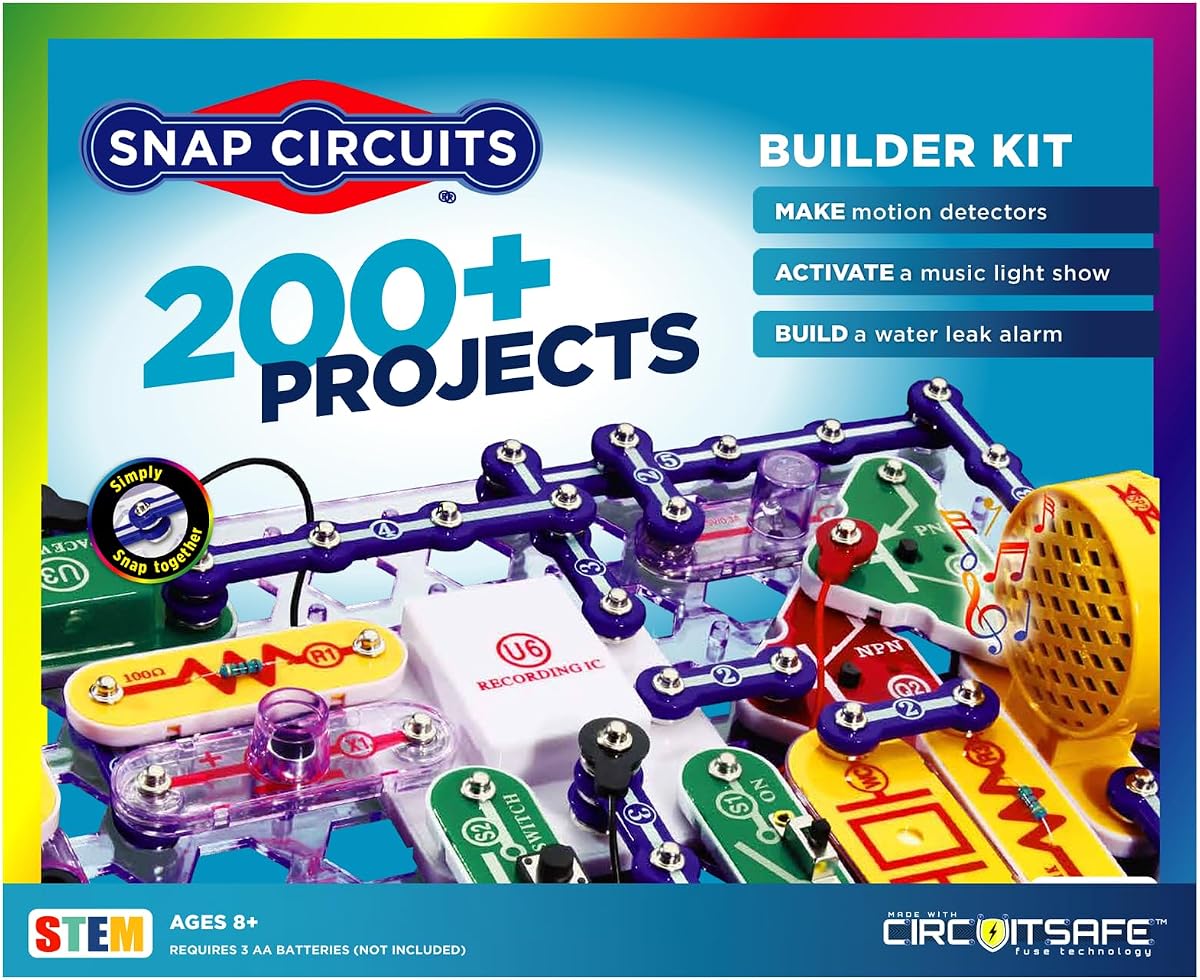
This kit offers a classic approach with over two hundred projects including burglar alarms and doorbells. It is an Amazon exclusive version of the popular series providing high value for children eight and up.
We may earn a commission when you buy through this link, at no additional cost to you.
The numbered and color-coded pieces snap easily onto the plastic grid requiring no soldering or tools. It focuses on foundational skills with a proven design that educators and parents have trusted for years.
While it lacks unique modules like Bluetooth or voice control the reliability of the core experience is unmatched. Parents will appreciate the easy setup and the ability to combine with other kits.
Choose this for a reliable standard learning experience without unnecessary complexity. It is perfect for kids who want to focus on mastering basic circuitry.
The classic design ensures a straightforward path to understanding electrical circuits.
This version offers specific project variations available only through Amazon.
We may earn a commission when you buy through this link, at no additional cost to you.
This kit stands out with smart voice control allowing kids to command circuits with voice prompts. It includes 120 projects designed for ages eight to thirteen teaching core concepts through interactive build-and-play activities.
We may earn a commission when you buy through this link, at no additional cost to you.
The low voltage components ensure safety while the full-color manual provides detailed guidance for real working projects. It is designed to be child-safe and tool-free making it easy to start building right out of the box.
The voice control feature is innovative but may require precise commands which can be a hurdle for some. However it provides a unique tech adventure that distinguishes it from standard kits.
Parents looking for a modern twist on electronics should consider this for its interactive features. It is an ideal gift for older kids ready to explore advanced circuit concepts.
Commands can make lights flash or motors run adding a tech layer to circuits.
Manuals guide young engineers to understand real circuitry deeply.
We may earn a commission when you buy through this link, at no additional cost to you.
This kit focuses on sensory exploration with light sound and touch controls creating a unique hands-on experience. It includes over twenty five experiments such as an AM/FM radio and flying ball for children eight and up.
We may earn a commission when you buy through this link, at no additional cost to you.
The 64-page manual supports assembly and learning while the wired design allows kids to test magnetic and structural concepts. It is an educational tool that demonstrates STEM concepts effectively through real-world applications.
Younger children may need parental supervision to set up the complex wiring safely. While it has fewer projects the variety of sensory inputs makes it engaging for those interested in physics and engineering.
Select this for kids who enjoy experimenting with sound and touch. It provides a solid introduction to electrical engineering through interactive sensory feedback.
Light touch and sound controls make every experiment engaging and distinct.
Building a functional radio shows kids how electronics work in real life.
We may earn a commission when you buy through this link, at no additional cost to you.
Selecting the right circuit board kit depends on factors like age range project variety and specific learning goals to ensure a successful educational experience.
Consider the recommended age range carefully as kits vary from toddler-safe designs to advanced teen experiments. Look for kits with childproofing features and simple instructions for younger children while older kids may enjoy more complex components.
Always check the manufacturer's age guide to ensure safety and engagement levels match your child's abilities.
A good kit should offer a wide range of projects to keep interest high. Look for numbers between 100 and 1200+ projects ensuring there is enough content to explore different circuit types.
Variety prevents boredom and encourages repeated use over time maximizing educational value.
Check if the kit requires soldering or tools. Most kids kits use snap-together parts which are safer and easier for beginners to handle.
Avoid complex setups that may frustrate younger children during initial experiments.
Clear manuals with color coding and visual aids are crucial. Video instructions via QR codes can also enhance understanding for visual learners.
Look for detailed guides that explain concepts rather than just listing parts.
Ensure the kit uses low voltage and safe materials. Components should not overheat or have sharp edges that could cause injury.
Always supervise younger children even with safety-rated kits.
Choose kits that teach core concepts like series and parallel circuits or current flow. Look for awards or educator endorsements confirming educational quality.
Prioritize learning over simple play to ensure long-term benefit.
Consider if the kit can be combined with others. Some brands allow adding parts to expand the number of projects available.
Expandability extends the life of the kit as skills improve.
Compare the cost against the number of components and projects. A higher price may be justified by unique modules like voice control or Bluetooth.
Set a budget but prioritize quality materials to ensure durability.
Before starting any project read the manual thoroughly to understand the components and safety warnings. Ensure all snap-together connections are secure to prevent short circuits or malfunction.
Keep the kit organized by storing pieces in the provided container or labeled boxes. This prevents loss of small parts and makes setup easier for future experiments.
Turn off power before swapping components and replace batteries regularly to maintain performance. Avoid exposing the kit to moisture or extreme temperatures which can damage electronic parts.
Yes most kits are designed with safety in mind using low voltage components and requiring no soldering or hot tools. However always supervise small children and keep small parts away from toddlers to prevent choking hazards.
Most kits do not include batteries in the box. You will typically need AA or AAA batteries depending on the kit's design so check the product details before starting.
Many older kids can work independently especially with clear instructions or video guides. Younger children may need some adult guidance to connect wires correctly and understand concepts fully.
Children develop problem-solving logical thinking and basic engineering skills. They learn about circuits current flow and how electronic devices work in the real world.
Most reputable kits use high-quality durable plastic parts. However the should be handled with care to avoid breaking connectors or damaging components during assembly.
Many brands allow mixing parts from similar kits to expand projects. Check manufacturer guidelines to ensure compatibility before combining different sets together.
We reviewed ten excellent options ranging from budget-friendly starters to advanced premium kits. The top picks offer a balance of safety project variety and educational value suitable for different age groups.
Prioritize safety features and ease of assembly when choosing a kit for younger children. Older kids will appreciate more complex modules and extensive project libraries.
Always check current prices and availability before purchasing as these can fluctuate. Investing in a quality kit today will provide hours of educational fun and spark a lifelong interest in science.